Sungai Buloh – Kajang MRT line is not perfect but it connects people from far flung areas of the Klang Valley together. Despite the teething problems it provides a great comfortable ride. All it takes to make it more attractive to car drivers is a more comprehensive “last-mile” connections of feeder buses that cover many more areas and run on more frequent scheduled services.
The launch of the MRT first complete line from Sungai Buloh to Kajang was done with much funfair on and prior to D-day of July 17, 2017.
As an avid public transport user and advocate, I too went on to test out the MRT line. My wife, daughter and I fancied having our favourite satay at Restaurant Malaysia, Kajang. So we took the LRT from Taipan station to KL Sentral to change to the MRT at Museum Negara.
Instead of writing a long story, I shall let the pictures speak a thousand words each! [but with my captions!]
Where is the link way?
So which way is Museum Negara MRT station?
Coming from Nu Sentral mall’s direction, the link way to Museum Negara MRT station is just beside McDonald on the right. But you will need to walk right near the entrance to spot the MRT logo.
Spot the MRT logo & you will know where to go!
Once inside, you will need to have very good eyesight to spot the tiny MRT logo on the signage inside the huge hallway (which was partly the waiting area for the ERL previously). Then it is a matter of “follow the crowd”. You will reach the “very deep” underground Museum Negara MRT station.
Where’s the contingency plan when technology fouls up?
Where the heck are we?
The MRT train that we boarded at Museum Negara had problems with its “station indicator” LED screen. This was made worse by the fact that the audio announcement of impending station was linked fully with this. So if one kaput, all kaput!. The MRT coach was well lit. So when we stopped at an underground station, one would have to literally step out of the coach quickly, and look for the signs that tell us which station we were at. There was also not a single Sungai Buloh – Kajang MRT line map inside the coach (there would be many places to stick this), so we could not even use the age-old system of counting station to know where we were!
When it is working, this thing is great!
A tried and tested, simple map to show the MRT line like this on the old LRT coach will be great!
We should not place so much faith in technology working every time. A simple map of the MRT line like that found in the older LRT coaches would “insure” against the electronic announcement system (both audio and visual) failing.
Plenty of space in MRT coach to stick more useful information like stations along the line!
Instead of these self-congratulatory stick-on posters, why don’t we have useful information like a line map, bigger sized full RapidKL rail system map etc. put up?
One of the side benefits of the MRT line – Kajang satay vendors could not cope with demand!
Kajang satay, it’s worth the trip!
We reached Kajang and went straight to Restaurant Malaysia for our favourite satay. We were lucky to have arrived 5 minutes earlier than the crowd. Many were eyeing our table! The MRT line really shortens the distances between towns within the Klang Valley and the first economic benefits felt in Kajang is the sale of satay! Many more economic benefits shall follow!
Seamless transfer between MRT and LRT, a great feature
We went home from Kajang Stadium to USJ by changing form the MRT to LRT (Kelana Jaya line) at Pasar Seni. The sight was great but I was more attracted to the seamless transfer between the two lines. This is the most crucial factor to ease the congestion (of people getting out of one line and joining into another). You will also be fully protected from the elements getting from the MRT line to the LRT. I feel that if more seamless transfer can be made available, it will make life a lot easier. One candidate up for seamless transfer will be the Monorail and LRT at KL Sentral.
My take on the MRT
Despite what the critics have said, I think the MRT system is a great addition to the Klang Valley public transport system. It will surely bring up the economic value of properties around the stations. Kajang folks have already seen more visitors than before!
If the teething issues highlighted by yours truly can be looked into, I think the MRT system, which has broader coaches (thus steadier to ride) will help to convince more people to follow yours truly, to take public transport as the first option. The only thing that is stopping this is the last-mile linkages which is still very rudimentary. Feeder bus service (more lines and more frequent services) need to be extended in coverage and hours of operation. It is often the last-mile issue that forces people to have to drive.
RapidKL could have avoided this botched up if those in charge have done some simple mathematics like what I had done. It does not need a Ph.D. in Operational Management for one to figure this out and plan accordingly. It is clear from my calculation that RapidKL will not be able to complete the issuance of all 68,000 new MyRapid concessionary cards before the deadline of mid July 2017. I think the sooner that RapidKL owns up to this fact and makes an contingency plan, the better it is to salvage its tarnished reputation.
The much anticipated changing of MyRapid cards to the new version to coincide with the launch of the full first MRT line in the country started in earnest from mid June 2017.
No issue with changing of non-concessionary MyRapid cards
As one of the first holders of the original version of the MyRapid card, I went to USJ 7 LRT station and changed this to the new version on June 16, 2017 without any difficulty. The entire process, inclusive of waiting time (with 2 persons ahead of me) was around eight minutes.
Chaos reign in changing of concessionary MyRapid cards
But no sooner that this exercise was announced, the press had been receiving and reporting a severe botch up by RapidKL in the changing of concessionary MyRapid cards. This author’s daughter who holds an original version of the college student’s concessionary MyRapid card, which she just obtained less than two months ago, on hearing the chaos at Pasar Seni LRT station had decided to wait.
The social media was rife with horror stories of people, especially senior citizens having to wait for hours, often without any seats and still could not get their old MyRapid cards replaced. There were also announcements that only 200 concession cards would be issued at Pasar Seni LRT station each day and after the queue numbers are taken up, commuters would have to make another trip and try their luck the next day. Someone announced that there are only three new card processing machines at Pasar Seni. My wife who had been monitoring the social media on this issue also spotted a student whose old MyRapid concessionary card was due to expire soon being told that he must change to the new card, which will carry the same impending expiry date and when this card expires, he will be required to apply for another card.
My wife was fast in spotting the announcement on June 21, 2017 about the setting up of two additional card processing centres, one at Subang Jaya and the other at Awan Besar and alerted my daughter who got her MyRapid student concessionary cards done within 30 minutes. So did a couple of her friends but others were not so fortunate. By then, my daughter spotted chairs being decked out for applicants and RapidKL’s staff even provided free biscuits to her while she was waiting. While these acts of providing convenience to commuters waiting for their new cards to be processed are commendable, they came a little too late, the reputational damage to RapidKL had already been done.
A little maths would have spotted the impending chaos
I wonder if those who are responsible for this entire concessionay cards replacement exercise at RapidKL really employ any simple operation management practices to estimate the size of the job and thus the time needed to complete the exercise.
I had used a simple spreadsheet to estimate the number of days needed to replace all 68,000 concessionary MyRapid cards in Tables 1, 2 and 3 below. It was reported that each MyRapid card processing machine takes around three minutes to process and issue a new card. However, if we take into account the time needed to key in the command (assuming the data migration from the old to the new card would be seamless) and physically handling of the card during the process, this could easily add two minutes to the process, making it a five minutes job. This does not include the actual time taken for the applicants to present the old card, checking of credentials etc. On social media, a figure of 15 minutes was quoted as the “actual” time for a new card to be produced, from the time the applicant hands in the old card. Given that it takes 3 , 5, or 15 minutes to process a new card, I ask a few simple questions:
How many cards can be issued a day if the machine is made to work 8, 10, 12, 14, 16, 20, 24 hours?
How many cards can be issued if RapidKL has 1, 3, 6, 9 or more machines on seven different total working hours per day?
How many days will it take to issue all 68,000 concessionary MyRapid cards in each of the different scenarios as given in (1) and (2)?
Note:I have published a Google Sheet containing the data for Table 3. Readers can play around with two of the key parameters, no. of cards to process and how long to process each card to see how these affect the outcome.
Why the rush?
It is clear from my calculation that RapidKL will not be able to complete the issuance of all 68,000 new MyRapid concessionary cards before the deadline of mid July 2017. I think the sooner that RapidKL owns up to this fact and makes an contingency plan, the better it is to salvage its tarnished reputation. I wonder why was the rush to complete all concession cards replacement within 30 days from June 16, 2017 given the estimation in the tables above that even if it takes only 3 minutes (which is just how fast the machine works) to complete the processing of one new MyRapid concessionary card, it would take 9 machines working fourteen-hours-day a good 27 days to complete the job. If we put in extra couple of minutes, the 9 machines would have to work 24 hours a day to churn out 68,000 new cards within one month. If it takes 15 minutes of total processing time (including physical handling of the cards, sorting etc.) as has been reported recently, the 9 machines working 24 hours a day would not be able to complete the job in 30 days. In fact, with a 15 minutes turnaround time, it would take 24 card processing machines and the whole replacement card exercise to run 24 hours per day (assuming applicants and staff will be willing to get this done 24 hours a day) to churn out 68,000 new cards within 30 days! And if RapidKL just stick to 9 machines working non-stop with a processing time of 15 minutes, it will take 79 days to process all 68,000 new cards!
What should RapidKL do?
Here are some of the suggestions I can make to tackle this issue:
Own up that someone at RapidKL did not do his/her homework and bungled the whole thing.
Set up an online application system for replacement of MyRapid concessionary cards for students ONLY and drive them to use the online application, thus taking them (I would assume that this group is the largest of all concessionary cards holders) off the queue.
Continue to process MyRapid concessionary card replacement exercise at the three centres for senior citizens and the disabled. Open up the online application system to these two groups of people so that those who are tech-savvy will be removed from the queues.
Let all holders of MyRapid concessionary card use their old cards for another two month and continue the “token” system at the MRT system for these commuters. This will also remove the rush for all other concessionary card users to get their cards replaced by mid July 2017, thus removing the long queues at the three designated card processing centres of Pasar Seni, Subang Jaya and Awan Besar LRT stations.
Let the students nominate the most convenient LRT or MRT station to collect their new cards, thereby further reducing the crowd at the three replacement card processing centres.
With the students all applying online (this group should be the most tech savvy and will not have any issue), the overall processing time of the cards for this group will not be 15 minutes, as there is no need for the applicants to wait and the initial processing/ data crunching and verifications etc. are all done online and upfront. Thus if all the 9 machines (plus staff on shifts) working 24 hours a day, it will take an additional 45 – 60 days (i.e. total of about 75 – 90 days) to complete the exercise.
Why we need to round up the value to multiples of RM5?
In fact one odd thing that I noticed when I changed my old MyRapid card to the new one was the strange request from the nice RapidKL staff at USJ 7 LRT station for me to top up my card to RM45 (from something like RM37). She told me that the system would work better if the migration of data was done with stored value in multiples of RM5! This, I think added to the waiting and processing time, especially if the card holders (of both types of MyRapid cards) are not informed of this. Why we need the tail to wag the dog is one mystery that RapidKL needs to explain.
Have “organizational memory” and not repeat this botch up!
RapidKL could have avoided this botched up if those in charge have done some simple mathematics like what I had done. It does not need a Ph.D. in Operational Management for one to figure this out and plan accordingly.
Having more card processing machines than the 9 at present may help to speed things up, but it may break the budget and may be wasteful when there is another change in the technology that mandated another round of upgrades. Thus planning and using logical thinking is the key!
Why was the MRT ticketing system being allowed to be incompatible with the first version of MyRapid card shall remain a mystery. More intriguing was, why the first version of MyRapid cards were allowed to be issued in the first place since these were clearly not fully compatible with the Touch N Go system which caused the replacement exercise? I think that RapidKL owes the taxpayer an explanation on both counts.
Of course if the intention was to reduce the 68,000 concessionary cards holders substantially, then the chaotic way the whole exercise is carried out and the short processing period are the “right” things to do!
With almost every working adult in Malaysia now owning a smartphone, it is not surprising that work has been creeping into the “smartphone” during family / leisure time after work. So if you see an adult of working age, keeps his/her down while having a shopping mall outing with his/her family on a Sunday, it is not surprising that it could be work-related. The boss’s expectation aside, it is often the smartphone user’s inability to disconnect his/her mind that prompts him/her to use the smartphone to check work-related stuff, even on a rest day.
[show_post_categories show=”tag” hyperlink=”yes”]
Commentary (Mar 31, 2018):
This article was first published in June 2017 in theplantcloner.com. Subsequently, it was also published in the newsletter of Penang Chinese Chamber of Commerce. Since then, there have been many mentions of the issue of the right of employees to disconnect from work after hours. The latest development on this issue has traveled across the Atlantic from France to New York City council. But all discussions seem to centred upon the perspective of the employer or employee’s obligation, no one seems to have asked the same question as did I, “will the employee, even if he/she has the right to disconnect, choose to do so?”
When the rumour of a new French law to grant employees the right to be disconnected from the obligation to answer work emails after office hours hit the English press in 2014, there were lots of reactive comments. What really happened in 2014 was not a new law being passed, but in fact a collective agreement for certain categories of French workers whose worked was counted in days rather the 35-hours working week. So everyone thought that the English press overreacted to the rumour, and the Economist’s Paris correspondent took pain to explain this. And the British media had eggs on their faces! So it seemed!
The right to disconnect is real from 2017!
Fast forward just about three years on, in January 2017, France really DID make this “right to disconnect” into a law! Perhaps this could be tied to the phenomenal growth of the use of smartphones everywhere in the world during the past three, four years. Smartphones ownership in France was already at 64.1% in Quarter 1 of 2014, by the same quarter in 2017, this has risen to 71.1%. For the USA, smartphone ownership in January 2017 is around 77%. In Malaysia, smartphone ownership has already reached 65% as reported in February 2016 and is set to reach 17.8 millions people in 2017.
Can Malaysia adopt the “right to disconnect”?
With almost every working adult in Malaysia now owning a smartphone, it is not surprising that work has been creeping into the “smartphone” during family / leisure time after work. So if you see an adult of working age, keeps his/her head down while having a shopping mall outing with his/her family on a Sunday, it is not surprising that it could be work-related. The boss’s expectation aside, it is often the smartphone user’s inability to disconnect his/her mind that prompts him/her to use the smartphone to check work-related stuff, even on a rest day.
Asian bosses are notorious for being the “slave drivers”, the bulk of Malaysian bosses are no exception. By bosses, I don’t mean just those tycoons but immediate superiors, managers and even supervisors of the working masses today. In my experience, the expectation of bosses is simple, staff are expected to reply to emails or SMS or Whatsapp messages even long after the work hour is over. The days before the smartphones was better for staffers, at least you only have SMS messages to worry about, there is no spreadsheets to open, photographs to download, Facebook post to check etc.
Not all “tycoon-class” bosses are slave drivers
In fact not all tycoons have this “no right to disconnect” mentality. My former boss who belongs to the “tycoon class” is one fine exception who practiced, to a great extent, this “right to disconnect”.
During my stint as Tan Sri Clement Hii’s special assistant, it was between 2012 – 2014, before smartphones are so ubiquitous as today. So Whatsapp and other instant messaging platforms were not common. I was only given one special requirement from him, when I was off duty I was to keep the mobile phone switched on at all times.
My boss just wanted to send out SMS messages to his team as and when he had ideas and instructions for us, regardless of the time of day. The reason for him to have his team keeping their mobile phones switched on has got to do with the “double ticks” that we now see on Whatsapp. All he wanted, was to be sure that his instruction was delivered via SMS, he did not need to see the “double blue ticks”, i.e.; if the message was delivered, it would be fine, he did not need to see if the recipient had read it.
Once delivered however, the problem, task, or instruction was now became the accountability of the recipient! We were specifically told by him that we would not be required to respond to his SMS unless the matter was urgent, for which he would call the staff concerned instead of sending an SMS. To his credits, Tan Sri Clement only called me a few times during my stint with him and on all occasions it was really something urgent that needed to be taken care of immediately.
Bosses should observe ‘right to disconnect”
Here is a very smart man who knows how to maximize his brain power by clearing from his mind the least important stuff: remembering a “to do list”, about tasks, problems etc. which he could delegate to his team. By offloading these, as soon as possible, his mind power could be deployed on more productive tasks, such as strategising on new projects, thinking through new ideas or just simply to relax, to recharge. By not requiring his staff to respond immediately, he observes the staff’s “right to disconnect”. Of course, all bets are off when there is an emergency or something really urgent, such as guarding the company’s reputation on social media which is something that needs to be taken care of immediately.
I wonder how many “tycoon class” bosses are as understanding and wise as my former boss! By minimizing the intrusion into his staff’s leisure time, Tan Sri Clement stands to gain more by having his team members better recharged and refreshed to ‘fight another day”!
A couple of questions to ponder
Even if Malaysians working adults are given the “right to disconnect” as did their French counterparts, I wonder how many of us will judiciously exercise this right? Exactly how many of us can disconnect our mind fully from work after we have clocked off? I think both question are subject to further debate!
It is necessary for any foreign higher education institutions (especially Taiwanese universities who are the newbies to the Malaysian market) to respect the law of the land and only collaborate with approved private colleges and universities and do so within the confine of ACT 555!
Setting up your teaching centres in Malaysia without adhering to ACT 555 is like you setting up a barbecue party at someone’s backyard without the owner’s consent and without inviting the owner!
If one has been reading the Chinese press in Malaysia over the past few weeks and is, like me, very interested in higher education matters, one will not have missed two stories detailing foreign universities (from Taiwan & China) collaborating with Chinese non-governmental-organizations (NGO) in delivering academic degree programmes partially in Malaysia.
The sudden interest by Taiwanese universities to establish a foothold in Malaysia is understandable, given the excess capacities that they collectively had. In fact this author, through the grapevine has been informed to “expect more to come”.
However, the law of the land (that is the Private Higher Education Institution Act, ACT 555) will only permit a foreign university to offer its academic programme here under two circumstances:
It is an approved branch campus such as Monash University, Nottingham University, Curtin University etc. under the ACT 555; or
It is collaborating with a private higher education institution in Malaysia that is approved under ACT 555.
Thus, if you are responsible for bringing a foreign institution into Malaysia to deliver, even partially, an academic programme, and your organization or the foreign institution does not fall into either of the circumstances above, you are then committing an offence or offences under ACT 555!
Teaching in an unapproved institution is also an offence
Article 81 (1) (c) of ACT 555 states, “Where – (c) any person is working or is a teacher in a private higher educational institution which is not approved and registered under this Act;… such private higher education institution or chief executive or person shall be guilty of an offence and shall, on conviction, be liable to a fine not exceeding ten thousand ringgit or to imprisonment for a term not exceeding one month or to both.”
Although I have not been to law school, but my reading of ACT 555 over the last 20 odd years tells me that Article 81 (1) (c) specifically requires that anyone teaching in any academic programme, be it a diploma, bachelor degree or Master’s must make sure that the said programme is offered by a private higher education institution that is approved under this Act. Under Article 51 of ACT 555, a teaching permit is mandatory for anyone delivering a higher education class. Thus any foreign professors delivering their classes in Malaysia will violate not only Article 81(1)(c) but also Article 51.
It also implies that any foreign institution which is not approved under ACT 555 to operate in Malaysia and conducts a course of study leading to an academic award, whether to be conferred in Malaysia or not, is deemed have violated this act.
You may teach in English or Arabic ONLY with special approval!
Further, Article 41 (1) and (3) (a) place restriction on the medium of instructions where it states, “41 (1) All private higher educational institutions shall conduct its courses of study in the national language.
…(3) Notwithstanding subsection (1), the private higher educational institution may, with the approval of the Minister— (a) conduct a course of study or a substantial part of a course of study in the English language; or (b) conduct the teaching of Islamic religion in Arabic.”
Any veteran of the private higher education industry will tell you that it will be a “matter of course” for a private higher education institution to obtain the approval to conduct a course of study in English or Arabic.
Delivering academic programme in Chinese is a different kettle of fish all together. There are only five private higher education institutions among close to 500 in Malaysia that have obtained approval to offer academic programmes that are delivered in Chinese. And these are all in the area of Chinese studies which, has been argued successfully, must be delivered using the Chinese language. Thus offering programmes such as sport science, management, MBA etc. that are fully conducted in Chinese, will contravene Article 41(1) of ACT 555.
Providing your premise to unapproved institution is an offence!
Further, Article 80 which states, “Any— (a) person who, being the owner or occupier of any house, building, premise or place, has failed to take all reasonable steps to prevent the same from being used as a private higher educational institution in contravention of this Act…….shall be guilty of an offence and shall, on conviction, be liable to a fine not exceeding two hundred thousand ringgit or to imprisonment for a term not exceeding two years or to both.”
Essentially, Article 80 means that any organization, NGO, persons who let their premise to be used as a private higher education institution that is not approved under ACT 555 will be deemed to have committed an offence. Thus the use of the premises of Chinese guilds and clan associations for this purpose is illegal.
There are some amendments to ACT 555 that have been passed by the upper house of the Parliament (Dewan Negara) which will further tighten the rule books. More amendments to ACT 555 can be expected in the near future.
What about the Malaysian learners?
For learners, they should be made aware by these foreign universities and their local collaborators who are not approved under ACT 555 that any qualifications earned, even though these are conferred overseas, will not received any accreditation and recognition by the Malaysian Qualifications Agency. Thus any local learners who aspire to use such academic qualifications for career advancement, or for higher level academic studies stand a chance of being disappointed. Furthermore if such academic qualifications are to be used for admission to professional bodies and for licensing purposes, the relevant bodies or agencies which often require a detailed career information will discover that the qualifications offered (which was partly delivered in Malaysia) were not awarded in accordance to ACT 555. These learners will have the option then to seek legal redress from the foreign university and its collaborator for having misinformed them! Hence foreign universities which deliver academic programme fully or partially in Malaysia without adhering to ACT 555 should also be aware of the legal risks that they are exposed to, which will extend beyond being pursued by the authorities in Malaysia!
What can foreign universities do?
It is necessary for any foreign higher education institutions (especially Taiwanese & Chinese universities who are the newbies to the Malaysian market) to respect the law of the land and only collaborate with approved private colleges and universities and do so within the confine of ACT 555!
Setting up your teaching centres in Malaysia without adhering to ACT 555 is like you setting up a barbecue party at someone’s backyard without the owner’s consent and without inviting the owner!
For those who are interested, a copy of ACT 555 (in Bahasa Malaysia) is available here with the approved amendments in 2012.
To be appropriate for corporate training use, MOOC players need to identify MOOCs that both they and their supplying institutions are able to re-purpose for corporate learning and market just these.
Asking corporate training practitioners to accept the academic MOOCs as the basis for their corporate learning programs is like trying to put a square peg through a round hole.
Just two months short of three years back, I wrote about creating tangible revenue channels for Massive Open Online Courses providers. I gave a few suggestions about how MOOCs players can generate revenue in articles I wrote on MOOC which were published even earlier.
Udacity, one of the three pioneer MOOC players(and the three largest players) , departed from the “fully free” model in 2014 and announced its highly successful “nanodegree” programs. The success formula of Udacity, the platform built by the father of MOOCs, Sebastian Thrun, is relatively straightforward: provide what industries need. Instead of being the “Jack of All trades” of MOOCs, Thrun steered Udacity towards providing for the technology companies which collectively have the most ferocious “appetite” for tech-savvy workers with Udacity serving as the “supplier” by training and job-guaranteeing pledge to all takers of its nanodegrees.
By focusing on the area of MOOCs that Udacity has an edge, that is the “tech” area, and linking up with high profile “tech” players like Google, BOSCH, Facebook, Amazon, AT&T etc., Udacity has been successful in attracting learners who have been willing to pay the fees (which is still modest in many ways) to get the knowledge and get certified by Udacity with a promise of jobs at the end of the training or “half your money back” guarantee by Udacity.
It is therefore not surprising that just over a year after the launch of nanodegrees, Udacity was able to announced to the world that it was the first MOOC player to show profit in August 2015.
In the meantime, the other MOOC players like Coursera, edX and Futurelearn have been relying solely on charging for certification as the main revenue stream. Concurrently, there are increasingly many smaller players which have “pay to learn” model like Udemy which provide many shorter courses and at pricing that are more attractive. Charging companies for access to MOOC students’ data as announced in 2012 seemed not to bear much fruit. This is not surprising with privacy protection being so prominent these days!
Recently, this author stumbled upon Coursera’s latest business model, aptly named, “Coursera for Business” (CFB) which was launched in August 2016. The Enterprise version of Coursera provided for co-branding of learning and certification as well as an attractive suite of packages for businesses of different sizes.
While it is still early days to judge the success or otherwise of Coursera’s model at this stage (at the time of writing, late April 2017, Coursera for Business is only eight months old), this author has done an evaluation on CFB based on what he has learned about Udacity’s nanodegrees and his being a “veteran” of over 35 MOOCs successfully completed.
Nevertheless, like Udacity, Coursera was able to rope in some big names from industry to be CFB’s pioneer clients, such as AirFrance, KLM, PayPal, Axis Bank, InGram, VIPKID, BCG, telenor, and L’Oréal.
On the “supply side”, blue-chip universities such as:
have been recruited to provide the necessary MOOCs that Coursera’s clients required. CFB boasts 1,800 MOOCs etc. as shown in below:
The billion US$ dollar question is this: Will these two seemingly ‘Udacity-like” features of CFB (having blue-chip clients and universities) again do the mojo for Coursera as they did for Udacity?
This author will provide a ‘cautious YES” to CFB which, as he had suggested in October 2013 for MOOC players to tap a lucrative revenue channel by moving to the corporate learning segment. To be successful like Udacity’s nanodegrees, Coursera perhaps need to consider the followings:
Udacity’s nanodegrees are very industry and skills focused which Udacity has deliberately targeted at the arena that it has an edge: the “tech” sector. Thus by specializing, Udacity created its niche in the MOOC arena which is difficult for other players to steal a slice of its cake. Coursera on the other hand, is a “Jack of All Trades”. It’s portfolio of MOOCs cover a very broad area. It has made the mistake of putting all its 1,800 MOOCs on the table. It is not possible for Coursera or rather its “supplier institutions” to be best in all of the study areas. More important, it is impossible to expect company learning departments to check through all 1,800 MOOCs to identify the ones that they want, which will be different for different industries. Not all 1,800 MOOCs are compatible with corporate learning needs of the prospective clients.
Academic courses, especially those that involve abstract thinking and not skill-based are notoriously difficult to adapt to corporate training norm. Academic assessment items are often too “academic” for many to be applied in the corporate training sphere. Similarly, the bulk of Coursera courses are at least four weeks in duration. Unless a systematic system of classifying and structuring MOOCs is applied to Coursera’s plethora of MOOCs to make sure that there is a common measure of “one learning unit” that is say, four hours of learning time in length, it is not really practical to “mix and match” or personalize the learning as required by sponsors or even the individual learners. It is a double-edged sword. If rigidity in this sort of structuring of MOOCs is applied, there will be “academic freedom” issue with the academic staff powering the MOOCs. However it is still not too late for Coursera to, for those MOOCs to be placed under CFB, to be compliant with a new “learning unit” measure.
This author suggests that CFB be more narrow focused (Udacity’s model is proven in this aspect). Instead of 1,800 MOOCs, , Coursera perhaps could identify MOOCs that both it and the supplying institutions are able to re-purpose for corporate learning and market just these.
Asking corporate training practitioners to accept the current Coursera’s academic MOOCs as the basis for their corporate learning programs is like trying to put a square peg through a round hole.
Commentary:
Unknown to this author, while he was preparing and researching for this article, edX announced the launching of 15 Professional Certificate programs on Apr 25, 2017 (about 2 days before this article was first published, after adjusting for the time difference).
edX which has, for a long while branded some of its more prestigious or better participated MOOCs into a “Xseries”. It has been marketing verified certification for individual MOOCs as well as a series of MOOCs (as in XSeries). Many of the “Xseries” courses are in fact not in the “free to learn” category. Then in September 2016, it had packaged some of the MOOCs into Micromasters which essentially gain learners academic credits if they have taken verified certification where many of the MOOCs under Micromasters still are available on the audit mode (aka “free to learn”). To complete a Micromaster, one would need to take all the prescribed MOOCs which collectively could take at least 6 months. The Professional Certificate from edX is a stripped down version of the Micromaster which would take learners about 2 months to complete.
Of the 15 Professional Certificate programs, it is interesting to notice edX at least value the flexibility that “self-paced” MOOCs confer. Most of the 15 are indeed delivered in self-paced mode with a few still sticking to the “set timing” as before. Most also provide a “free to learn” option but notably the more business and management oriented ones are strictly fees-based such as those offered by New York Institute of Finance and Wharton.
edX’s latest offerings are still very academic-based and are mainly repackaging current entire MOOCs into different badges. It does not have the mix-and-match, small learning units (to allow for the mix-and-match) etc. mentioned by this author in the article above. The fact that more and more self-paced MOOCs are being offered does go some way to provide for the flexibility of starting that is lacking in many MOOCs.
Nevertheless this is a first step in the right direction for edX, but this author would have liked to see an offer of a program that comprises of a mix-and-match of components of MOOCs from different institutions which is what MOOCs, if designed in “standard” learning units would have allowed! This way, edX will be in the best position to customize the MOOCs (and components of individual MOOCs) to suit the needs of the market. It would be interesting, if this should happen, to see which institution will be offering the certification! Or perhaps it would be kind of joint certification by key employers, the institutions contributing the elements to their MOOCs to the program and edX?
Similar to their seniors of the past few years, SPM 2016 cohort is also in the “buyer’s market” but with one distinct advantage. The SPM 2016 cohort is enjoying greater scholarship awards at more generous terms in 2017. With private institutions of higher learning in 2017 facing more severe competition among themselves he common strategy seems to be to offer scholarships to attract the best students. SPM 2016 cohort who are college hunting perhaps are well advised to follow the six tips offered by this article.
The entire private higher education sector, especially those working on student recruitment was thrown into major chaos when the Ministry of Education announced suddenly in mid February 2017 that there was a delay by two weeks on the release of Sijil Pelajaran Malaysia (SPM – Malaysian Certificate of Education) for 2016 cohort. Education fairs had to be rescheduled, marketing plans and newspaper advertising insertion plans etc. all had to be re-worked. Although most major players interviewed by The Star put on a brave face and said that their intakes would not be affected, signs as received from the ground (i.e. education fairs) are indicating otherwise. However the reason may not be the delay in the release of SPM 2016 results as will be explained later.
In my humble opinion those who told us not to read too deep into this delay did not take into considerations on the huge costs incurred for this sudden change of date for the release of SPM 2016 results. People who work in the student recruitment area would have had their personal plans messed up, hotel & transport bookings re-booked and at the company level, extra cost would have to be borned. One such “casualty” of this affair is the Star Education Fair in Penang which had to be postponed from March 4 – 5 by three weeks. One can only sympathize with the people who handled the logistics, installation and setting up for this event as well as the people who have to pay the exhibition venue owner for the sudden change of dates.
On the fateful day, March 16, 2017 many from the SPM 2016 cohort went to their respective schools with anxious anticipation. This author’s daughter (including her father and mother!) waited with great anticipation for the release of her SPM result, one which would have the effect of defining her next education path and perhaps her entire career path. When my daughter called back and sobbing heavily and semi-comprehensibly, my first thought was, “gee, she must have done badly” and I consoled myself with the fact that as a contingency plan, I had sussed out a vocational training programme equivalent to the learning pathway chosen by my daughter if she “tanked” her SPM. But as it turned out, my worried was unfounded. My daughter did not shame her grandfathers (both her paternal and maternal grandfather, as well as her mother were hailed from the teaching profession). She scored straight A’s (i.e. ten grade A’s). She was simply too happy and could not believe her own attainment. [For anyone who is unfamiliar with the SPM grading system, here is a quick explanation: SPM grades are split into nine grades with “grade A” having three sub-grades starting at the top with A+, A and A-, then “grade B” and “grade C” both having just two sub-grades of B+ or C+ and B or C followed by “single” grades in descending order of “grade D”, “grade E” and “grade G” which is a “failed” grade.]
Armed with my daughter’s official result slip, I went with my family for a visit to an education fair at Mid Valley Exhibition Hall on Mar 19, 2017. The plan was to visit the shortlisted colleges and find out with 10 grade A’s which are not all in the highest “A+” category how much in terms of scholarship would this young student manage to secure (this is because my daughter, did not score A+ in all ten subjects). All three institutions approached offered the same level of scholarship: 100% tuition fees waiver. Of course some would be more generous with the other fees such as laboratory fees, facilities fees etc. but the base line was the same.
As I have been serving in the private higher education sector for over two decades, it was natural for me to meet some of my old friends and acquaintances at this education fair. One of my old friends mentioned the severe competition he observed and that the “body snatching” was the reason why almost all players were very generous in giving out scholarships this year.
In 2013 when this author’s son was at the same stage of college hunting as his younger sister, computation for grade A’s for the purpose of scholarships was done by recognising only subjects where the students scored the magic grade A+ and sometimes grade A. Almost all institutions did not recognize grade A- as “grade A” for the purpose of deciding on scholarship awards. The fact that four years later in 2017, there is a “downward revision” in the definition for “grade A” to include grade A- means only one thing: there is intense competition in 2017 which is more severe than 2013. Each institution which offers this more generous definition of “grade A” for scholarship awards is hoping to grab as many students as possible.
Higher education business is essentially a number’s game. Each class / programme in a cohort will have a magic “break-even” number. Once you have breached this magic figure with full fees equivalent number of students, any further students that you add to the cohort (subject to the regulatory upper limit of student to lecturer ratio; 25 : 1 for non-technical programmes; 15 : 1 for technical programmes down to 7 : 1 for medical related programmes) you are going toward the surplus territory even if this extra student pays virtually no tuition fees. This is because of the fact that most scholarship awards do not cover miscellaneous fees, laboratory fees and facilities fees and thus providing a source of revenue to the institution even from those students having 100% tuition fees waiver. A lot of people do not know that in higher education, there is no marginal cost, it is just fixed cost and variable cost. For classroom-based classes, once the fixed cost has been covered by the break-even number of students, the variable cost for any additional students is virtually zero. For laboratory / workshop-based classes, this variable cost will be easily covered by the lab fees and other fees that each student, regardless of their scholarship status, must pay.
In actual fact, scholarships and bursaries as provided by the private higher education institutions in Malaysia are just product discount. A broad analogy can be made with the budget airline industry, once a plane (in this case a class / cohort) has filled up to the break-even number, revenue from any further passengers (students) will be the surplus, even if these people pay a very reduced fare (fees) disguised in one form or another. The higher education business model does sound very much like that of the budget airline industry does it not?
Similar to their seniors of the past few years, SPM 2016 cohort is also in the “buyer’s market” but with one distinct advantage. The SPM 2016 cohort is enjoying greater scholarship awards at more generous terms in 2017. A player informed this author that even those applicants offering just a single grade A (again it doesn’t matter if it is a A+, A or A-) would be qualified to receive some scholarship starting from RM500!
With private institutions of higher learning in 2017 facing more severe competition among themselves (having to compete with many “branded” institutions such as Xiamen University, Newcastle University, Reading University and Heriot-Watt University among many which have entered the market recently), the common strategy seems to be to offer scholarships to attract the best students.
The economic uncertainties faced by many in Malaysia together with the new and better structured Sijil Tinggi Persekolahan Malaysia (STPM – Malaysian Higher School Certificate) will have the effect of attracting more SPM 2016 cohort to take up STPM. This author expects more than the usual forty five thousand or so of the SPM cohort to take up STPM. He further predicts that there may be fifty thousands or more students from SPM 2016 cohort opting for the STPM this year, draining at least a further 5,000 students from the private institutions’ market.
The increasingly attractive offers from Taiwanese universities (with increasing number offering programmes that are delivered in English) which have tuition fees level that are lower than many Malaysian private institutions of higher learning is another pull factor on the SPM 2016 cohort. This is especially so among the forty four thousand of the SPM 2016 cohort who took and passed SPM Chinese.
It is therefore a better buyer’s market for SPM 2016 cohort than ever. Students from SPM 2016 cohort who are college hunting perhaps are well advised to follow the following six tips:
Check what level (and thus the absolute value in terms of tuition fees waiver) of scholarships the various colleges shortlisted by you can offer. Weigh this against No. 2 to No. 6 below.
Check the conditions for the scholarship awards. Institution A may insist on you maintaining a CGPA of 3.7 throughout your studies compared to Institution B that demands only a CGPA of 3.0. This means that in order to continue to receive your scholarship, you will need to score a lot of grade A’s if you opt for Institution A, while for Institution B, you just need an average B+. Unless you are very confident of doing well, it will be risky to take up the offer from Institution A!
Check what are the miscellaneous fees, facilities fees, laboratory fees, computer fees etc. that you have to pay. Often these could add up to a substantial sum. If any institution is unable or unwilling to provide data on these fees, your alarm bell should start ringing!
Check what sort of college services or “community services” that a scholarship holder of an institution needs to contribute. While most institutions are only interested in using their scholarship holders to help with marketing and recruitment activities, some do have high demand of the said students to serve during term time. Some even demand their scholarship holders to work during term breaks. In general, the workload should not affect one’s studies. The good point for this is, you will have some working experience while studying, even if you do not get paid!
Check what are the penalties if you decide to withdraw from the programme after you have commenced studies. To protect themselves and to ensure that the recipients are serious about accepting their scholarship offers (and serious about studying) almost all scholarship providers impose a penalty for scholarship holders who withdraw from their studies. The penalty could be substantial as you, by withdrawing is taking away the opportunity for another student and would mess up the financial projection for the institution too. This situation may arise should you, after commencing studies, receive a “better” offer somewhere else, a similar offer closer to home or there is a change of your family’s circumstances.
Check that the programme that you are interested in is accredited or provisionally accredited (PA) by the Malaysian Qualifications Agency (MQA). A programme generally will receive a PA from the MQA after it is approved to be offered and the said programme will be eligible to be accredited only when the first cohort of students are nearing completion of their studies. Thus an institution holding a PA for a diploma programme should have this programme accredited by the MQA at the third year of its being offered. You should check MQA’s lists of accredited programme and provisionally accredited programmes for the institution that you are interested in. However, MQA has not been fast in updating the data of these lists. So do ask to have sight of the letter of accreditation or PA if the programme you are interested is not on either of MQA’s lists.
For those from SPM 2016 cohort who did not obtain the required grades to enter academic studies at tertiary level, there are plenty of options for you in the vocational education sector where there are still many private colleges and public training institutions which provide good alternatives. The Perbadanan Tabung Pembangunan Kemahiran (PTPK – Skills Development Fund Corporation) provides loan which covers training fees and living expenses to trainees taking approved courses. It is worth noting that not all SKM courses are eligible for PTPK funding. However all SKM programmes will need to be approved by the Department of Skills Development whose database of accredited centres and training programmes are worth checking prior to signing up.
In general, those who take the Sijil Kemahiran Malaysia (SKM – Malaysian Skills Certificate) route up to SKM Level III, if possess one credit and a “pass” certificate in SPM will still be eligible to enter academic diploma upon completion of the relevant SKM training. However individual academic diploma programme will have slightly different specific requirements for holders of SKM Level III and there is a need to double check with MQA. Indeed many vocational institutions are offering SKM up to Level IV (Vocational Diploma) and above with a few premier public polytechnics given the right to offer vocational-based degree programmes, the prospect for students from the vocational sector to earn academic degrees is getting better each day.
Good luck to all in the SPM 2016 cohort in their hunt for higher education. Be a smart higher education consumer, ask lots of questions and do your “homework” before committing, and whatever you do, don’t rush into a decision until you (and your parents) have analyzed all the facts and figures!
A comment was made by Tun Tan Siew Sin in 1969 relating to the issue of Merdeka University (MU), “It is easier for hell to freeze than the Merdeka University to be established in this country.” He received a lot of negative feedback for his comment. MCA subsequently fared badly in the General Election of 1969. On hindsight, was Tun Tan Siew Sin just being pragmatic? 48 years on who would have thought that Malaysia of today can have around 40% of her youths enrolled in tertiary institutions, over 150,000 international students and indeed is the 9th ranked country for higher education! And hell need not freeze over for all these to be attained too!
An article in Mar 05, 2017 edition of the Chinese press, Oriental Daily entitled, “Ong Ka Chuan laments on injustice to Tan Siew Sin” [黄家泉为敦陈修信打抱不平] caught this author’s eye. It was related to a comment made by Tun Tan Siew Sin in 1969 relating to the issue of Merdeka University (MU), “It is easier for hell to freeze than the Merdeka University to be established in this country.” Back then, Tun Tan Siew Sin, the leader of the Malaysian Chinese Association (MCA), the component party of the ruling Government of Malaysia received a lot of negative feedback for his comment. MCA subsequently fared badly in the General Election of 1969. But hindsight is always 20/20 as they say. Today if we take an objective look at the subject matter, we might have a different conclusion or at least acknowledge the differing viewpoint.
The Merdeka University saga was played out for close to fifteen years from 1968 when the idea of Mederka University was mooted by the Chinese educationist movement till July 02, 1982 when the Federal Court decided against the case of MU. The advocates of MU wanted to establish a private university which would use Chinese as the core medium of instruction.
(a) that the establishment of MU would violate article 152 of the Federal Constitution;
(b) that any university – whether public or privately sponsored – established under the Universities and University Colleges Act 1971 (UUCA) is a public authority and thus MU which would use Chinese as the core medium of instruction would be, if allowed to establish, in violation of UUCA.
While contemplating writing this article, this author had a long discussion on this matter with his long time friend and fellow learner, TPK who is more learned than this author in the area of the history of the Chinese educationist movement. TPK said these wise words, “历史事件放在不同的时代背景有不同的解读和意义” [historical event, if placed under different settings and era would have a different interpretation and meaning]. Although, in the writing of this article, this author has tried his best to stick to “”what has happened” and did not analyze “what could have happened”, some degree of expressing one’s own opinion especially in interpretation of facts and information that could be a bit fuzzy, is inevitable. I shall leave it to my readers to decide on whether they agree with my interpretation on the issue of Merdeka University or other wise!
For those who wish to learn more about the MU saga, Dr. Ang Meng Chee’s PhD thesis (in English) and Professor Tsau Shu Yao’s paper (in Chinese) provide excellent insights.
Basically the MU advocates who were mainly from the Chinese educationist movement wanted to set up a university to cater to the needs of Chinese Malaysians in the sixty independent Chinese secondary schools (ICS) who did not (still do not) follow the national curriculum. As such, unless these ICS students also present the Malaysia Certificate in Education (MCE) and the Higher School Certificate (HSC) [both MCE and HSC used mainly English as the medium of instructions which was replaced with Bahasa Malaysia for those, including this author, who entered Form One in 1976. In 1980 Sijil Pelajaran Malaysia which is conducted solely in Bahasa Malaysia replaced the MCE], they would not be eligible to enter public universities in Malaysia. Thus traditionally, ICS students who would usually only take their own Unified Examination Certificate (UEC – which is conducted in Chinese and later in English as well, is the equivalent to the HSC) would need to leave Malaysia in search of tertiary education, with Singapore and Taiwan being the main beneficiaries of the talents of the ICS since the early 1960s.
It is worth noting that during the 1970s to 80s (and it is still true today), the majority of Chinese Malaysians would go to national or national-type secondary schools where both types of schools offered the national curriculum. In addition, in the era of the 1960s to early 1980s, the majority of Chinese Malaysians (I would offer a guess that this constituted about 60% on average of this group of people) simply were not Chinese educated. This meant that they did not go to Chinese primary schools and thus do not read or write Chinese. Even many who did go to Chinese primary schools would not have taken Chinese language as a subject at lower secondary or at MCE / SPM level. Hence during the saga of MU, the majority of Chinese Malaysians would not have qualified to enter it if the core language of instruction was Chinese. Even this author, who learned Chinese up to upper secondary level (and hold a Grade B in Chinese at GCE “O” level) would find it challenging to study at university level if the medium of instruction is solely in Chinese. Although some of the Chinese educationist leaders proposed that MU should adopt a multi-languages approach to the delivery of teaching and learning, the final decision made by the MU advocates was for the proposed university to have Chinese as the core medium of instruction.
This author was privileged to be invited to deliver a public lecture at Tunghai University, Taiwan on July 28, 2016 where he gave two key reasons for MU being a gallant but failed initiative.
MU advocating the use of Chinese as the core medium of instruction.:
MU as an initiative was overly ambitious. By stating that MU would have Chinese as its core medium of instruction, about 60% of Chinese Malaysians who were not conversant in the language would not be able to enter MU. Thus the support from the “English educated” Chinese Malaysians would have been hard to come by. The judgment of the Federal Court in 1982 put paid to the use of Chinese language as the main medium of instruction as this would have violated article 152 of the Federal Constitution.
The rise of Malay nationalism and increasingly politicization of education post May 13, 1969:
As we have seen in the Federal Court judgement, to allow MU to be established both the Federal Constitution and the Universities and University Colleges Act would need to be amended. While number wise, the sitting government had more than the two-third majority to table the required amendments, in reality, it would be a political suicide for any ruling politician, especially those from the United Malay National Organisation (UMNO) to vote for such sensitive amendments in light of the rising Malay nationalism and the push by the government to the use of Bahasa Malaysia as the sole medium of instructions at public institutions of higher learning.
The two key reasons above, on hindsight, showed the pragmatism of Tun Tan Siew Sin in his statement in 1969 which caused him so much reputational damage at that time. In reality in the Malaysia of 1969, it would have been really impossible to have a private university, let alone one which would use Chinese as the core medium of instruction.
In 1979, this author and a bunch of friends asked a very learned secondary school senior teachers (who has now passed on) who belonged to the 60% Chinese (that is, he was not Chinese educated) on his take on the Merdeka University saga. Here is what this author remembers educationist, Mr. SC said: “If the intention of the advocates of MU was to create more seats at universities for Chinese Malaysians in the face of increasingly unbalanced admission quota, this people should have approached the issue differently,” Mr. SC went on to tell us what he thought was a better strategy. The MU advocates should have, first asked the Government to set up more universities. This would have created more seats for Chinese Malaysians even with the admission quota. However, the Government might have said that financially it would not be in the position to do so. The MU advocates should then offer to pay for the setting up of a new university which would mirror the academic, organizational structure and governance of either University Malaya or Universiti Sains Malaysia, using the same language of instruction but with one key proviso, that its admission would be solely based on merits. It would, according to the very learned Mr. SC, be very difficult for the Government to reject this idea. For good measure, the MU advocates could propose to the Government that they would want to have a Faculty of Chinese to promote the learning and growth of the Chinese language proficiency of Malaysians. This opined Mr. SC would not have bound the hands of the politicians and would not have MU violated article 152 of the Constitution. Most importantly, more Chinese Malaysians would have seats at universities.
It took another fourteen years for what Mr. SC advocated to become reality when a new act, ACT 555 (Private Higher Institutional Act) was enacted where private colleges and private universities were allowed to offer diploma and degree programmes of one form or another. That was the beginning of the boom phase of Malaysia’s private higher education industry which today number 495 institutions, with 20 public universities, 36 polytechnics and 20 other state-funded institutions making around 571 tertiary institutions of higher learning offering diploma and degree courses. With the enactment of ACT 555, the Government also allowed the private colleges and private universities / university-colleges to take in students from ICS offering UEC as an entrance qualification thus providing a local route for ICS students since 1996. ACT 555 also made provision for private institutions of higher learning to apply to the relevant Government department in the Ministry of Education to use English and Arabic as the core medium of instruction. However for the use of any other languages, a private college / university would need the specific approval of the Minister of Education. [In 2004, the Government of Malaysia seeing the importance of the higher education sector, split off the higher education portion from the Ministry of Education to form a new ministry, the Ministry of Higher education. Aside from a short period between 2013 – 2015 where the two ministries were re-merged, the Ministry of Higher Education governs the entire higher education sector of the country]
In addition, in the aftermath of the Merdeka University saga, three Chinese Malaysian community established colleges were approved by the Government. These three institutions were formed between 1996 and 1999, where each has its own faculty of Chinese, thus providing additional seats for those who wish to learn Chinese at university level. Today, two of these institutions, namely Southern University College and New Era University College have attained university-college status in 2012 and 2017 respectively. Han Chiang University College of Communication, where this author served a stint as its Principal & designated Vice-Chancellor though which was granted and established as a university-college in 2014, is still working on the requirements for registration of Han Chiang University College at present and attained full registration on Nov 03, 2017. These three institutions collectively are often viewed by many in the Chinese educationist movement as the “phoenixes” of the demised Merdeka University and that of the original but now defunct Nanyang University founded in Singapore in 1956 by the Chinese communities of Malaysia and Singapore which was restructured as the Nanyang Technological University by the Singapore Government in 1980.
More significantly, the MCA, in light of the sentiment of their supporters drawn mainly from Chinese Malaysians did manage to extract a major concession from the Government in the form of Tunku Abdul Rahaman College which was set up in 1969 and attained university-college status in 2013 (TAR-UC). In addition, the Government also allowed the MCA to set up a full-fledged university, University Tunku Abdul Rahaman (UTAR) in 2002 where an Institute of Chinese Studies was approved to be established offering Chinese studies at both bachelor’s and Master’s levels. Today, TAR-UC has six campuses across Malaysia with 28,000 students while UTAR has three campuses educating 26,000 students.
Although the advocates of MU did not achieve their aim of establishing a fully private university with Chinese as the core medium of instruction, it will be unfair to deny their place in history as the catalyst that started the entire private higher education industry in Malaysia.
Today, with so many seats in Malaysian private colleges and universities chasing the ever decreasing pool of local talents, academically qualified Chinese Malaysians will no longer be denied a chance of studying at college level. The extension of the provision of funding by the National Higher Education Fund (PTPTN) to students of private colleges and universities in 1999 also helped to finance the studies of many Chinese Malaysians at private institutions of higher learning thus removing another major hurdle for any Malaysian seeking higher education at private colleges and universities..
It is the humble opinion of this author that without the struggle and advocacy of the Chinese educationist movement of the 1960s to 1980s, the private higher education sector in Malaysia which today educate about 45% of young Malaysians, would not have flourished from the mid 1990s to mid 2000s and matured to the level of today.
With the seemingly hostile environment for the establishment of any private institutions of higher learning in 1969, who would have thought that Malaysia of today can have around 40% of her youths enrolled in tertiary institutions. Furthermore, Malaysia is also home to over 150,000 international students and indeed is the 9th ranked country for higher education! And hell need not freeze over for all these to be attained too!
Plagiarism is an act of presenting other people’s work or findings as one’s own. Plainly speaking, the perpetrator is a CHEAT. Nothing more and nothing less. In this article I will share with you my first hand experience as a victim of plagiarism inflicted with a double whammy of receiving a large dose of bullying and intimidation added in by the perpetrator to spice things up!
Commentary (Mar 07, 2017): I thought about writing something about my experience of being a victim of plagiarism plus bullying when I was working on my PhD. So in May 2016 I dug up all the facts and put together this article which first appeared in Han Chiang News where I served as the editor-in-chief cum Principal & CEO (well I needed to multi-roles to conserve cash for the college).
It was around late 1989 / early 1990. I was frantically getting as much of my laboratory work done, data taken and analysis completed as possible in order to beat the deadline set by the end of my scholarship funding. Then someone, whom I had held with great respect did the unimaginable: he plagiarized my work. When confronted by me, he further issued a personal threat to me. It was more hurting for the fact that this bully, plagiarist and cheat came from my supervisors’ group. Here it was, a man I looked up to when I was an undergraduate when he was one of my laboratory class demonstrators and a friend did this to me. I had literally helped this man get his job by giving him a quick tuition on the arts and science of plant tissue culture just a year before when he attended his job interview for a job opening that had my name to it (as it was in my area of expertise, but I did not qualify due to my status as a student). So I was pretty pleased when I learned that my so-called friend got this job. Little did I know that this “friend” would plagiarize my work later and put so much anxiety on me at the final leg of my PhD studies.
If I can arouse the courage and alertness of fellow victims of plagiarism to stand up like I did amidst personal threats and intimidation, then I have achieved my aim of writing this article. Hence I hope more plagiarists will have their acts of cheating exposed in the future if their victims take courage from what I did in 1990. With today’s modern anti-plagiarism tools such as Turnitin and powerful search engines like Google, it is getting easier to catch the cheats. I do hope more plagiarism scandals can be exposed!
University-endorsed plagiarism?
The recent case of a well known public university seemingly endorsing official plagiarism by its students hogged the headlines of the print media for a while.
What this story did was put forth the greatest of all academic sins; cheating.
Plagiarism is an act of presenting other people’s work or findings as one’s own. Plainly speaking, the perpetrator is a CHEAT. Nothing more and nothing less.
In the digital age of today, academic plagiarism can be committed easily. You just have to Google the topic of your quest and viola! You will get pages upon pages of links from Google to copy from.
I feel that we need to teach students right from primary school (even primary 1 or 2 is not too early a start) that simply copying things from the internet and presenting it as your own is wrong. Since this obviously has not been the case, we now have university students and graduate students committing this act of cheating and not thinking twice about it.
The recent plagiarism case only came to light after one of the original owners/writers of the Master’s theses spotted his and his course mates’ work being branded as copyright of the said public university.
These victims’ work was submitted to another institution over a decade ago. Precisely since these original work was not “that old” (my thesis is 25 years old and it is still held in electronic format by the British Library), these work would have been indexed by anti-plagiarism services, the most famous of which is Turnitin.
One question begs an answer from this public university: did their staff put their students’ work through Turnitin (or similar services) before accepting them as the real McCoy? If not, why not?
In my humble opinion, this institution is just as guilty as their students or more so since they seemed to have condoned this act of plagiarism until the crime was exposed by one of the original authors.
Was it just an act of carelessness on the part of this public university’s official involved or is there a big loophole that students of this particular institution have been exploiting?
Narcissus as depicted by Van Gogh’s painting as the undergrowth. My PhD work was on how to clone massive numbers of the bulbs of this plant for it to be commercialized in Northern Ireland.
I feel that the power that be must seek a detailed explanation from the highest official of this public university. Failing which all the academic awards, accreditation and hence the reputation of this public university (and more importantly, its graduates all through the years) are in jeopardy.
How does a victim of academic plagiarism feel?
So how does a victim of an act of plagiarism feel? I will share with you my first hand experience.
Towards the final phase of my PhD studies at Queen’s University of Belfast (around April/May of 1990), my supervisors, fearing that I would not have enough time to write up my thesis, practically banished me from my laboratory, as far as doing more laboratory work was concerned. I was however allowed to visit my beloved narcissus cultures in test-tubes and to monitor the growth room’s facilities housing these periodically.
One day, I was watching the BBC documentary programme on science on TV and was surprised to see a familiar face being interviewed. SMT was working on commercialisation of a variety of plants by tissue culture and the programme was about the work of my department.
What was shocking to me was this: 4 racks (each with about 20 test-tubes) of my beloved narcissus cultures were prominently shown behind SMT’s head along with a few other bottles of cultures that were SMT’s.
The worst was to come
SMT presented to the interviewer that all the cultures, especially pointing at mine, were his work. Hence the plagiarism was shown on the BBC! My work was shown on the BBC but the credit was claimed by SMT!
I was furious to say the least. I confronted SMT at the next day. Since both of us worked in the laboratories of my two supervisors’, if SMT were to apologise and had bought me a cup of tea at the canteen, I would have let the case rest.
After all, my work got the be shown on the BBC.
However what came out from SMT when I confronted him in front of a couple of witnesses was even more shocking.
“Chow, you are just a bl***y student. You are a bl***y foreigner.
“I am a staff and I shall do as I please. If you push on with this, I shall get the Home Office (the British term for immigration office) on you”, said SMT
He further told me that as a student I had no right to my work and that my supervisors had given their consent for him to use my cultures for the BBC interview. I later checked with both of my supervisors who informed me that they collectively had no objection to SMT approaching me to borrow my test-tubes to appear on the BBC show. They did not however permit SMT to claim my work as his.
I knew that my supervisors would be in a dilemma if I filed my complaint with them as SMT was one of their subordinates.
Finding a saviour & protector
Luckily for me, I was taught in my Master’s studies in biotechnology by Professor Li Wan Po who had helped many foreign students especially when it came to their welfare.
When I approached Professor Li, his advice was simple: lie low, keep away from SMT, get the PhD thesis written as fast and as best as I could and get through my viva vorce first.
Since by early 1990 I was given the permission to remain in the UK for an indefinite period, in simple words, the right of abode in the UK, SMT’s threat of sending the Home Office on me did not pose any real danger to me.
But, messing up my PhD studies was a huge threat indeed.
“Prof, what happens if SMT tries to sabotage my PhD viva vorce or something like that?” I asked, fearing for the worse.
Professor Li told me the fact that I had reported the case to him was good enough and if I faced any further threats from SMT, he will take me to see the vice chancellor directly.
With that assurance, I buried my head in my writing and completed my PhD thesis and passed my viva vorce with minor corrections a few months later.
Getting a pound of flesh?
When I received a letter from the Queen’s University’s Academic Council advising me that I had been admitted for the Winter Graduation for 1990, I finally was able to breathe a sigh of relief, one which I was holding for over 6 months.
I printed seven extra copies of my thesis and distributed these to the researchers and professors in England, Scotland and Holland who had helped me to formulate my research plan and generously shared their knowledge with me.
Next I waived the moratorium on the circulation of my PhD thesis, thereby putting my work literally in the public domain. All these were done with one thing in mind; to prevent SMT from further claiming my work as his.
I then lodged a formal complaint against SMT to the Deputy Chief Scientific Officer of the Northern Ireland Department of Agriculture (DANI), Professor Marks who was the second highest official of DANI scientific services.
DANI made joint appointments to academic staff to the Faculty of Agriculture and Food Science with Queen’s University of Belfast and essentially I was working in DANI’s laboratories for my PhD.
Plagiarist’s lucky escape
But before I had the chance to push my case fully to get “my pound of flesh”, I had to leave Northern Ireland suddenly.
I managed to secure a post-doctoral position at the National University of Singapore. I needed to relocate to Singapore fast if I wanted that job!
SMT got away with his crime with a rap on the knuckles. He wrote me a letter of apology very reluctantly as demanded by me.
My story is one in which the victim had to endure months of anxiety and the perpetrator of plagiarism did not get the punishment that he fully deserved.
Perhaps SMT was lucky that 1990 was still in the pre-internet era and I did not have the means to expose his crime further.
In addition, out of respect to both my supervisors (who had to continue working with SMT), I did not pursue this further with Queen’s University. The case was viewed as “settled” at the Department of Agriculture, Northern Ireland level.
One of the reasons for my bringing the case up was the fact that SMT was prepared to bully me in full knowledge that I was the “de-facto” leader of all the postgraduate students in the faculty.
I had spent about eight years at the university by 1990 and thus was the most senior of all the postgraduate students.
My altruistic instinct was to protect my fellow students, especially overseas postgraduate students from falling prey to SMT.
This I was proud to learn later that I had attained!
The flow of tertiary students has been only one-way: only from Malaysia to Taiwan. Very few Taiwanese students are found in Malaysian colleges and universities. This article set out to find ways in which a more balanced and mutually beneficial framework of relationships between Taiwanese and Malaysian institutions of higher learning could be forged.
There must be ways to check the current one-way flow of students from Malaysia to Taiwan for the benefit of institutions and students of both nations. The prospect of losing another 5,000 high school graduates students each year will be bleak for the private colleges in Malaysia. The cut-throat competition is getting deadlier this year!
Commentary (Feb 26, 2017):
This is the third and final part of my series of articles based on my public lecture, “Malaysian higher education: past, present and likely future” delivered at Tunghai University, Taiwan where I was a guest of Professor Lin Hsiou-wei.
The aggressiveness and seemingly well-funded campaigns by Taiwanese universities (including high-ranking ones) to recruit Malaysian students to fill up the large gap in capacities to student had mainly only receiving good attention in Malaysia’s Chinese press with the English press giving it scanty reports. The majority of the private colleges in Malaysia still do not have strong relationships with Taiwanese universities. This could be based solely on the uninformed assumption that students must be very proficient in Chinese language in order to study at tertiary level in Taiwan. Well, many Taiwanese universities, in line with the trend in China, have been having undergraduate and postgraduate degree programmes entirely delivered in English for some years now. In addition, despite the difficulties in scoring grade A+ for Chinese language at national senior high school examination in Malaysia (Sijil Pelajaran Malaysia or Malaysian Certificate of Education) there are still a substantial number of students taking the subject each year. Hence there would be many high school graduates with the requisite proficiency in Chinese each year to study in Taiwan. Of course some very savvy private colleges have woken up to this Taiwanese “fear factor” lately.
I had done a bit of research on the data I obtained from various sources which showed a very disappointing trend: the flow of tertiary students has been only one-way, that is from Malaysia to Taiwan. Very few Taiwanese students are found in Malaysian colleges and universities. I then set out to find ways in which a more balanced and mutually beneficial framework of relationships between Taiwanese and Malaysian institutions of higher learning could be forged.
I presented this in my public lecture but I am not fully convinced that my message was getting through to right people in Taiwan. I do hope that somehow someone will see the imbalance and try ways to address this. I for one do not subscribe to the notion that Taiwanese universities would intentionally bring about the decimation of private higher education industry in Malaysia. Hence this seemingly zero-sum game will need to be altered, and altered fast for the long term betterment of people of both Taiwan and Malaysia.
I have been asked by some of my readers and friends to translate this article into Chinese in order to attain my aim. You never know, I might take up the challenge later!
An article entitled, “Facing brain drain, Taiwan looks to poach Malaysian students” appeared on September 15, 2013 in Malay Mail Online. It was in response to the push by Taiwan to target Malaysia for new students to fill in excess seats available in their 160 or so universities and colleges. The alarm bells were starting to ring in the recruitment offices of many Malaysian private colleges in reaction to this news.
Dr Chow Yong Neng (second from left) receiving a warm reception from Professor Lin Hsiou-wei (fourth from the eft) and his staffs at Tunghai University in Taichung, Taiwan
With the “drought” of students hitting the industry in 2016, the Malaysian private higher education sector is already facing a collective lowering of enrollment caused mainly by the increased in Sixth Form enrollment for 2016. The further prospect of losing another 5,000 students on average caused the alarm bells at the recruitment offices of private colleges in Malaysia to ring non-stop ever since!
One cannot begin to imagine the impact of losing another 5,000 high school students each year will do to the private higher education sector in Malaysia. Table 1 shows the number of Malaysians studying in Taiwan from 2013 to 2018 (2016 to 2018 figures were projected).
able 1: The number of Malaysians studying in Taiwan from 2013 – 2018 (Data Source: 2013 – http://focustaiwan.tw/news/aedu/201412230014.aspx and 2014 & 2015 – http://english.moe.gov.tw/ct.asp?xItem=16738&ctNode=11414&mp=1)
The Taipei Economic and Cultural in Malaysia kindly shared with this author the number of Taiwanese studying in Malaysia (provided by the government of Malaysia in October 2015). A total of 116 Taiwanese students were studying in Malaysia in 2015 with only 96 students being in private colleges. These figures show the severe imbalance in the movement of students between the two countries.
So what chances do small and medium sized Malaysian private colleges (and even some of the larger ones) have in competing against well funded and highly reputable Taiwanese universities and colleges which have been very liberal in awarding scholarships lately? This is made worse by the fact that the only silver lining that Malaysian private colleges had, which is the delivery of academic courses in English is also being eroded. Many Taiwanese universities and colleges with teaching staff who are trained in USA, UK or Australia are offering international academic programmes that are fully delivered in English.
Can this seemingly zero-sum game of student recruitment be reconfigured for the long term mutual benefits of the students and institutions of both countries?
This author believes that it is not the intention of Taiwan to create the “fear-factor” in Malaysian private higher education. A zero-sum game will always have a winner (Taiwan) and a loser (Malaysia). However, given the strength in the “New Go South” policy of President Tsai Ing-wen, is there any way players in higher education in both Taiwan and Malaysia can collaborate on a “1 + 1 = 4” principle?
“Collaboration outweighs competition” should always be the motto when it comes to Taiwanese-Malaysian higher education institutions’ relationship. For the “1 + 1 = 4” principle to be realised, there must be a think-out-of-the-box collaboration model between the two countries’ universities and colleges.
A “think out of the box” model of collaboration between Malaysian and Taiwanese colleges and universities will replace the one-way flow of students from Malaysia to a bidirectional flow of students between Taiwan and Malaysia to the benefit of both nations.
Something must be done by both countries to address the severe imbalance in the flow of students which at present, for all intent and purposes is unidirectional: only Malaysian students would go to Taiwan and essentially there is insignificant flow towards Malaysia.
Hence for an equitable collaboration to work, the flow of students MUST always be bi-directional. “Share and share alike” shall be the key to successful collaboration efforts between institutions of higher learning of both countries.
To make this work, Taiwanese universities and colleges must not treat their Malaysian counterparts as “feeder colleges” but as equal partners in the sharing of students. They must be prepared to send to their Malaysian partners an equivalent number of Taiwanese students to make this work.
By having (and sharing) Taiwanese and Malaysian students we can create the “1 + 1 = 4” principle. For starter, instead of recruiting Malaysian students directly to attend all 4 years of undergraduate studies in Taiwan, we can have a modified “2 + 2 model”. Malaysian students will be recruited by a Malaysian institution partnering a Taiwanese university or college. These Malaysian students will stay in Malaysia to complete the first part of their studies (either in diploma or in a homegrown degree programme) before credit transferring to the Taiwanese university. At the same time, the Taiwanese university partner will send a similar number of its students to the Malaysian counterpart. These Taiwanese university students could be studying on a “student exchange”, “study abroad” or credit transfer mode. So long as there is an equitable flow of students each year, both institutions stand to gain extra headcounts. Thus both institutions will have an additional student for everyone that it has sent to its partner institution, thereby creating two student headcounts on both sides, making the “1 + 1 = 4” principle a reality.
There are also other variations to this model aside from the example above where a bidirectional flow of students between Taiwan and Malaysia can be effectively implemented:
Setting up dual awards in undergraduate and postgraduate programmes between institutions of higher learning in both countries (students from both countries can opt to take up both or one of the academic awards).
Taiwanese universities leveraging on their Malaysian partner colleges/universities to tap into the non-Chinese speaking students market (instead of just targeting the Chinese Malaysian, Taiwanese universities, through their Malaysian partners can widen their reach). These students can be placed in the Malaysian partner institutions for preparatory courses (e.g. Chinese proficiency classes) before their stint in Taiwan, thereby sharing of such students between the two partners.
Tapping into “seniors” and “executive development” markets in both countries by co-branding of programmes and deliver part of these programmes in the partner’s institutions on “short study visits” basis for example utilizing Malaysia’s Mobility Programme.
With a deeper collaborative relationship, both the Taiwanese and Malaysian institutions can then leverage on each other’s strength, brands and reputation to tackle other non-traditional areas of collaboration. Research and development, consultancy projects, bidding for research funding and commercialization of research are some of the “offshoots” of such collaborations. Essentially the Taiwanese and Malaysian institutions can then leverage on each other to expand their “market” and effectively reach into each other’s territory to be fully transnational.
Having bidirectional flow of students will benefit Taiwanese students by giving them exposure to Malaysia in an in-depth manner which would increase the cultural and economic intertwining of both nations, directly increasing the sphere of influence of Taiwan and still adhere to the New Go South policy of President Tsai, albeit with some modifications.
All it takes now is the collective willpower of the leaders of Taiwanese universities to put this into action and to engage with their counterparts in Malaysia (mainly the private colleges and universities) to put the current zero-sum game to bed.
The bulk of the content of this article came from a talk given by the author as a guest speaker of Tunghai University, Taichung, Taiwan on July 28 2016 entitled “Malaysian higher education: past, present and likely future.”
3 Key Questions are raised in this article:
(a) What are the number of new students we need to fulfill the aspirations of the power that be for the National Education Blueprint 2015 -2025 to bear fruits?
(b) What are the projected number of new students from existing sources, both local and foreign?
(c) If there is indeed a deficit, what other sources of new students that Malaysia can muster?
Commentary (Feb 23, 2017) When I was preparing for my public lecture at Taiwan’s Tunghai University ( entitled “Malaysian higher education: past, present and likely future.”) in June 2016, I was researching on the data of the numbers of local and foreign over a few years and crunched these numbers to see if these have the potential to fill up the large collective capacities of Malaysian colleges and universities which are already having surplus “seats” at present. While I was pondering the implications brought about by the National Education Blueprint 2015-2025 (Higher Education) it suddenly appeared clear to me that my research work should indicate if fulfilling the numbers indicated by the power that be may be a mission impossible. I then went ahead to ask three crucial questions and attempted to analyze these with the data available to come up with my viewpoints.
In this article (which was written in August 2016 & updated in September 2016 when newer & more accurate data was available after my public lecture in late July 2016), I tried to lay out the bare facts based on my asking three crucial but simple questions:
(a) What are the number of new students we need to fulfill the aspirations of the power that be for the National Education Blueprint 2015 -2025 to bear fruits?
(b) What are the projected number of new students from existing sources, both local and foreign?
(c) If (b) shows a deficit, what other sources of new students that Malaysia can muster?
The article that follows, the second one in a series of three, was first published in Han Chiang News portal in August 2016. My former colleague, Ms Kristina Khoo had produced the infographics to help readers to comprehend the data presented better.
Those of us who serve in the higher education industry can finally breathe a sigh of relief when the National Education Blueprint 2015 – 2025 (Higher Education) (NEBHE) was unveiled on April 07 2015. At least the strategic direction for the higher education sector for the coming 10 years was charted.
However, one important segment of the higher education sector was not adequately covered. The private higher education sector did not get the detailed attention that it deserves. This is surprising given the fact that the private sector is responsible to educate over 40 per cent of Malaysian students pursuing tertiary studies.
Under the NEBHE, the entire tertiary education sector should see the enrollment rate rise from 36 per cent (1.42 million) in 2012 to 53 per cent in 2025 (2.49 million). To achieve this different sub-sectors within the higher education sector will have a differential rate of growth.
The private higher learning institutions are expected to grow its enrollment by 5.1 per cent annually whereas the corresponding rate of growth for the public universities is 2.6 per cent per annum. The largest rate of growth will be for private and public technical, vocational education and training (TVET) institutions at 7.8 per cent per annum while the remaining state-owned tertiary institutions (operated by different ministries) will see a modest 1.4 per cent annual growth.
All these impressive figures give the private higher learning institutions badly needed sense of the nation’s direction and how they could play their collective role. However there are three crucial questions that were not addressed by the NEBHE….
Summary of findings (click to view bigger image)
Question 1: What is the number of new students that we need to recruit in 2025 if we are to attain the targets set by the National Education Blueprint 2015-2025 (Higher Education)?
Typically Malaysian students studying in private universities and colleges enter these institutions straight from high school after taking their Sijil Pelajaran Malaysia (equivalent of “O” level) and they will take about 4 years to complete their undergraduate studies. Their counterparts studying in public universities will be required to have pre-university qualifications such as STPM (equivalent of GCE “A” level), Matriculation or similar qualifications, and they only need about 3 years to graduate. Students in the TVET sub-sector will take around 1.5 years to 2 years to complete their studies. To estimate the number of new students for each year for different sub-sectors, all we have to do is to divide the current total number of students enrolled in that sub-sector by the average years that it takes a typical student to graduate. So Table 1 and 2 summarise the number of “freshies” (new students) that each sub-sector needs per year for the reference year of 2017 and 2025 (as provided by the NEBHE).
We use 2017 as the “reference” year for two major reasons. Firstly we could estimate (based on available data) more accurately the number of students for each of the six sources and this data is more current and reflects the latest changes in the environment of higher education sector that are not so well reflected in the data of 2012. The total enrollment in each sub-sector in 2017 was calculated based on the corresponding compounded growth rate as stated in the NEBHE. For example, the Private Institutions sub-sector was estimated to grow by 5.1 per cent from 2012, thus the total enrollment of 555,000 was calculated from the base-year (2012) figure of 455,000 compounded by 5.1 per cent over 4 years
Table 1: Estimation of new students needed for each sub-sector in 2017
Sub-sector [annual growth rate]
Total Enrollment (‘000)
Typical study duration
New enrollment needed (‘000)
Private institutions [5.1%]
555
4
139
Public universities [2.6%]
604
3
201
Public & private vocational institutions [7.8%]
335
2
167
Other governmental institutions [1.4%]
182
1.5
121
Total
1494
629
Let us use the annual growth rates for each sub-sector to estimate the compounded enrollment of each and in turn work out the number of “freshies” required by each sub-sector in 2025 (as shown in Table 2).
Table 2: Estimation of new students needed for each sub-sector in 2025
Sub-sector [annual growth rate]
Total Enrollment (‘000)
Typical study duration
New enrollment needed (‘000)
Private institutions [5.1%]
867
4
217
Public universities [2.6%]
764
3
255
Public & private vocational institutions [7.8%]
656
2
328
Other governmental institutions [1.4%]
205
1.5
137
Total
2492
936
Hence, based on our simple calculations, for 2017 we will need about 629,000 new students to feed into the entire tertiary education sector in Malaysia. Based on the same principle we can estimate that by 2025 (as shown in Table 2), to provide for a total enrollment of 2.49 million, we shall need to have around 936.000 new students.
Question 2: Do we have enough youngsters to “feed” into the entire scheme of work?
To answer this question, we shall need to take a look at the sources of students for tertiary education. Traditionally there are six main sources of students for tertiary education institutions.
We can estimate the figures for each sector for the year 2017 and 2025 based on the following categories of “sources”: (a) Sixth formers; (b) Matriculation students; (c) SPM students; (d) International students; (e) Independent Chinese high school students; (f) private school students.
Based on the population estimation and projection published by the World Bank, the population of 17, 18 and 19 year-olds in Malaysia by 2025 will be 560,000, 566,000 and 574,000 respectively. These figures are matched by the Malaysian Statistic Department’s projection of the nation having a total of 2,573.500 fifteen to 19 year olds by 2025, giving an average of around 515,000 persons per year group. These demographic data provided the basis from which the estimation of the number of students for each of the six categories of sources stated and presented in Table 3.
Table 3: An estimation* of the sources of students for tertiary institutions in Malaysia for 2017 and 2025
Sources of students
Estimated number (‘000) For 2017
Estimated number (‘000) For 2025
(a) Form 6
42
60
(b) Matriculation
27
30
(c) SPM (Form 5)
441
400
(d) International students
43
71
(e) Chinese independent high schools (UEC)
15
19
(f) Other private schools
10
16
Total:
578
596
*Some of the data presented in this table has been revised (Sept 23, 2016) in consideration of more accurate data being obtained by the author after publication.
We assumed that both the (a) Form 6 and (b) Matriculation student population will only have a modest growth over the 9- years period. Basing on recent trend, we expected that the number of SPM school leavers to continue to decline yearly and will drop from 441,000 in 2017 to around 400,000 by 2025. We estimated (d) International students number from the figure of around 150,000 published for 2016 where on average overseas students spend around 3.5 years in Malaysia (we divided 150,000 by 3.5) and did likewise for their numbers by 2025 based on the published target of 250,000 international students by 2025 as stated by the NEBHE. As the collective capacities of the (e) Chinese independent high schools are already in saturation point in 2016, there should be a modest growth over the next 9 – 10 years in the number of new students that they are able to accommodate and hence the corresponding slow growth in the number of students graduating from these high schools. With the massive growth in numbers and capacities of the private schools and international schools sub-sector, it is prudent to estimate that the number of students graduating from this subcategory will double over the next 9 years.
By just comparing the answers to Question 1 and 2, we can see that, based on our estimation, even in 2017 there will be a “shortfall” of around 33,000 students if the target enrollment numbers for each subcategory of tertiary institutions are to be met. This “shortfall” shall widen greatly over the 9 years to 2025 when there would only be a “supply” of 611,000 students but with a collective capacity / target number of around 936,000. A huge deficit of around 350,000 students.
Question 3: Do we have any way to source for 300,000 – 400,000 students per year to fill up the collective capacities of our colleges and universities by 2025?
A Malaysian Statistics Department report stated that, 55.5 per cent of the Malaysian labour force had only a secondary level education, 15.5 per cent had primary level education and 2.6 per cent had no formal education. This means that if we just focus only on those in the labour force with secondary level education, with around 14 million in the total labour force if we just send 4 -5 per cent of these people a year to tertiary institutions, there will be over 300,000 students to make good the shortfall.
However, with increasing participation rate of school leavers in tertiary education (already stated at 53 per cent by 2025) and a massive upskilling of the labour force to tertiary education level, there will be a fast “depletion” of low skilled labour force in 10-15 years. Unless there is a massive growth in the population of 18-year-olds, the country will still face with the issue of having insufficient number of students to fill up the capacities of her colleges and universities.
Perhaps the power that be should instead be looking into consolidation of the whole tertiary education sector. Maybe it is prudent to take a re-look at the ambitious enrollment targets set forth by the NEBHE.
The bulk of the content of this article came from a talk given by the author as a guest speaker of Tunghai University, Taichung, Taiwan on July 28 2016 entitled “Malaysian higher education: past, present and likely future.”
Cookie Consent
We use cookies to improve your experience on our site. By using our site, you consent to cookies.
Contains information related to marketing campaigns of the user. These are shared with Google AdWords / Google Ads when the Google Ads and Google Analytics accounts are linked together.
90 days
__utma
ID used to identify users and sessions
2 years after last activity
__utmt
Used to monitor number of Google Analytics server requests
10 minutes
__utmb
Used to distinguish new sessions and visits. This cookie is set when the GA.js javascript library is loaded and there is no existing __utmb cookie. The cookie is updated every time data is sent to the Google Analytics server.
30 minutes after last activity
__utmc
Used only with old Urchin versions of Google Analytics and not with GA.js. Was used to distinguish between new sessions and visits at the end of a session.
End of session (browser)
__utmz
Contains information about the traffic source or campaign that directed user to the website. The cookie is set when the GA.js javascript is loaded and updated when data is sent to the Google Anaytics server
6 months after last activity
__utmv
Contains custom information set by the web developer via the _setCustomVar method in Google Analytics. This cookie is updated every time new data is sent to the Google Analytics server.
2 years after last activity
__utmx
Used to determine whether a user is included in an A / B or Multivariate test.
18 months
_ga
ID used to identify users
2 years
_gali
Used by Google Analytics to determine which links on a page are being clicked
30 seconds
_ga_
ID used to identify users
2 years
_gid
ID used to identify users for 24 hours after last activity
24 hours
_gat
Used to monitor number of Google Analytics server requests when using Google Tag Manager
1 minute
Marketing cookies are used to follow visitors to websites. The intention is to show ads that are relevant and engaging to the individual user.
X Pixel enables businesses to track user interactions and optimize ad performance on the X platform effectively.
This cookie is set by X to identify and track the website visitor. Registers if a users is signed in the X platform and collects information about ad preferences.
2 years
personalization_id
Unique value with which users can be identified by X. Collected information is used to be personalize X services, including X trends, stories, ads and suggestions.
2 years
external_referer
Our Website uses X buttons to allow our visitors to follow our promotional X feeds, and sometimes embed feeds on our Website.

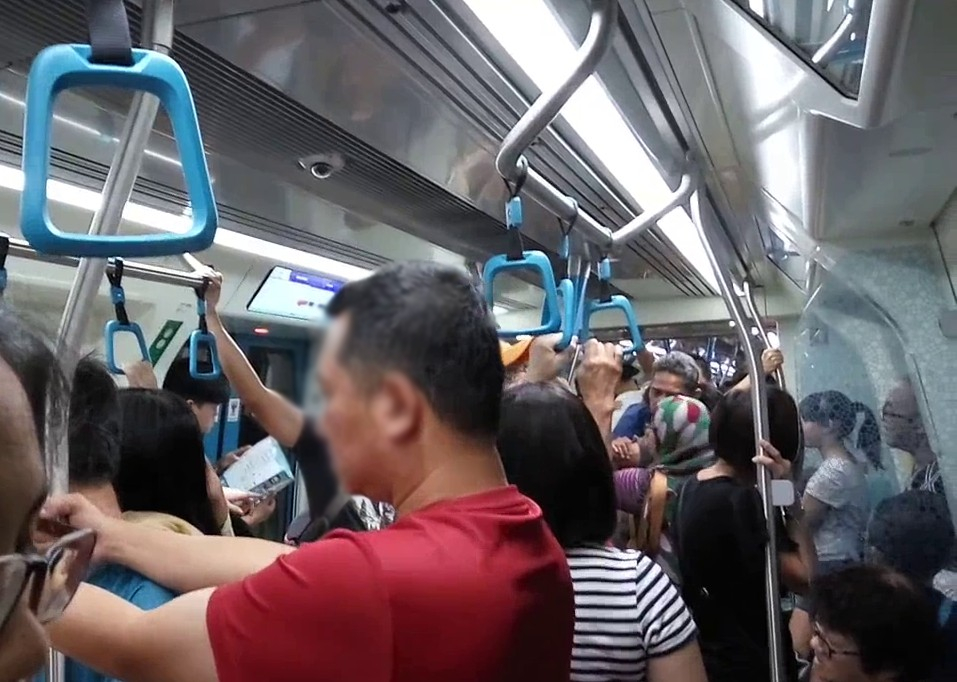


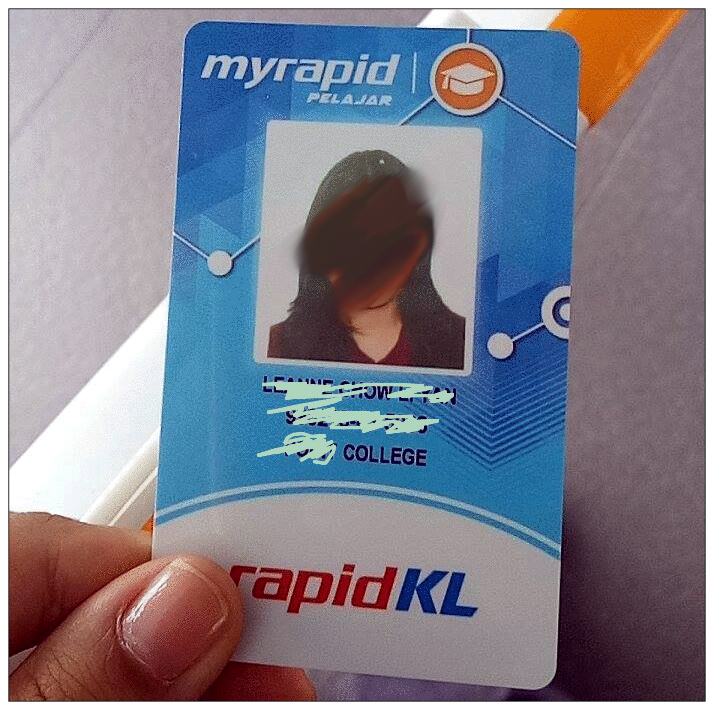







 It is not possible for Coursera or rather its “supplier institutions” to be best in all of the study areas. More important, it is impossible to expect company learning departments to check through all 1,800 MOOCs to identify the ones that they want, which will be different for different industries. Not all 1,800 MOOCs are compatible with corporate learning needs of the prospective clients.