There is no certainty in life, but you can make things more certain!

Urgent things may not be important but must be taken care of “urgently” such as the kettle boiling! But important things, though must be made more certain to be done on time, may not be urgent enough for one to drop everything, especially “urgent things” to do. “By-the-way” things are really not urgent and not important so that you will do this only if you have made certain that the important things and/or urgent things that you are supposed to do are “made more certain” of happening!

[show_post_categories show=”tag” hyperlink=”yes”]

When I was studying for my G.C.E “A” levels in a small English town of South Shields, in the North East of England back in 1981/82 I asked my chemistry lecturer, Dr. Ian Chalmers this question, “Dr. Chalmers, how sure are you that this will not come out in our A levels examination?”

I learned very early on that in national examinations, adherence to the syllabus when setting examination questions was the standard practice and hence I studied only what was in the syllabus! Thus when Dr. Chalmers decided to skip a small part of the Chemistry syllabus, I was naturally anxious.

“Mr. Chow, in life, death and taxes are the only certainties!”, answered Dr. Chalmers smilingly. This was really eyes opening for me, back then as a 19-year-old.

Of course my ole lecturer was right, nothing is certain in life but you can do something to make it more certain! In our case, I guessed correctly that the bits that Chalmers missed would not be asked in the examination for some reasons and the only way I would be more certain to do well was to study harder, which I did and scored a respectable Grade B!

It is important to distinguish something that is urgent,from those that are important and finally those that belong to the “by-the-way” category.

Around 1997, I was serving as a senior staff of a college in Klang. We had a collaboration with an independent Chinese school and were summoned by our director to meet him at his office in the business district of Kuala Lumpur (KL) for a 3 pm meeting on this collaboration. My team member JMJ whom I had instructed to get the college’s vehicle so that we could all carpool to KL was to be the driver. Traffic condition in KL of the late 1990s, due to the construction of the Twin Towers and monorail, was chaotic. I waited over an hour for JMJ to pick me up from my home in USJ en route to KL, a trip that would have taken just 35 minutes during off peak hours. By the time he picked me up and reached our director’s office, we were an hour late. JMJ, upon my questioning told me that he had to wait a long time for one of our colleagues somewhere in Klang who was just hitching a ride to KL with us! In this case JMJ did not think rationally, he did not know that his and my presence on time at a meeting with one of our “boss’s bosses” was both important and urgent and hence to be made “as certain as possible”. Instead, he concentrated on the “by-the-way” hitch hiker resulting in yours truly, as his superior, having to take the brunt of the rage from the director of the college.

So when my wife told me that she would send me to take the LRT to my usual weekly visit to my client at 10 am after her yoga class at around 9 am (or it could be 15 – 20 minutes later, she said) each Thursday, to be more certain of my reaching the client’s place as promised on time, I declined. I rather leave the house much earlier, at 8:15 am, walk 18 minutes to Taipan LRT station so that I would be more certain of reaching Kota Damansara via the Lembah Subang LRT station and feeder bus T807 before my appointment!

Thus, urgent things may not be important but must be taken care of “urgently” such as the kettle boiling! But important things, though must be made more certain to be done on time, may not be urgent enough for one to drop everything, especially “urgent things” to do. “By-the-way” things are really not urgent and not important so that you will only do this (such as giving a lift to a colleague en route to an important meeting) if you have made certain that the important things and/or urgent things that you are supposed to do are “made more certain” of happening. Quite a mouthful, I must admit!

I hope after reading this, my readers are more able to classify tasks / things to do etc. into these three categories and treat them accordingly.

A juggle between studies and on-campus jobs

How does a college student balance studies and part-time work? This is a story of Leland Chow who went to the University of Nebraska-Lincoln on a shoe-string budget and how he managed to get on-campus jobs to save enough fund for him to visit different parts of the USA without bankrupting his parents!

Commentary by Chow Yong Neng, PhD.

My son, Leland Chow wrote this piece for Han Chiang News in October 2015. I am republishing this here as most of my readers would not have had the chance to read this. Although he does not have to suffer the anxiety I had when I was at Queen’s University of Belfast (counting pennies & wondering if I had enough ££ to pay my tuition fees), I always reminded Leland that our budget was limited and he has a younger sister whose higher education cost would be much higher than his (she being 4 years younger). Hence Leland had to budget well & make the best of his time at the University of Nebraska – Lincoln (UNL). If he wanted extra funds for trips or gadgets, he would have to earn it himself. UNL’s Global Laureate Scholarship which covered 60% tuition fees for Leland made possible for our tiny budget (made 40% smaller due to the devaluation of the Malaysian Ringgit since 2014) to stretch just enough to cover over two years of studies for Leland.

Well Leland has completed his studies in December 2016 and he had made several trips to different parts of the USA during his time at UNL, all paid for from funds he made working on campus. His is a classic example of how students pursuing tertiary studies can make the best use of their time and not bankrupting their parents!

Leland returned to Malaysia in late July 2017, after trying for months looking for a job in the USA without success. Currently he is back in the USA for two weeks to attend TwitchCon 2017 at Long Beach, California (a convention for broadcasters on the Twitch platform). This trip was made possible by the funds raised by Leland’s community of Twitch fans and friends who pooled together over US$1,500 for him.

Leland’s first journey to the West was in August 2014, I had written an article about how much work and preparation one has to do if one is planning to go to study in the USA.


By Leland Chow

Malaysian Ringgit has been very volatile for the past few months, causing the currency rate between the Ringgit and the US Dollars to hover around RM4.40 (until recently, where it dropped to around RM4.20). Hence, when it was time for my parents to send the money for my tuition fees, they had to face the burden of the weakening Ringgit and sent less allowance, telling me to be thrifty although most of my money is usually spent on food. Fortunately, I have not faced a huge financial burden in terms of allowance as I do have on-campus jobs here.

I currently work as a tutor and a campus tour guide in the university. As an international student in the US, I can only work up till a maximum of 20 hours per week when classes are in session, and 40 hours per week during holidays, including summer. However, as both of my jobs do not require that many hours to work, I could easily fit the both of them in my schedule without any worries. Therefore, I work as a tour guide during the day and a tutor by night.

As a campus tour guide, I give tours to prospective students and parents around the campus, where I have to walk all around campus, show them important buildings, and the essential purposes and usages of the buildings. I am generally not an active person; hence, the tour guide position suits me best as I get to do some leg exercises early in the morning! Besides, I have to also walk backwards as a campus tour guide, which seems very unusual at first, but can be easily mastered after a few tries.

On the other hand, as a tutor, I give advice and provide help to students in a learning community. My main focus is the lower level Math classes, but I also tutor Finance, Economics, and Communication Studies. In order to tutor a subject, I have to obtain an A in the subject, and also maintain a 3.5 GPA. This is different from other tutoring positions on campus, as the tutors here (at the University of Nebraska – Lincoln, UNL) only tutor students in the William H. Thompson Learning Community, which is a learning community for students in the Susan T. Buffett Scholarship (set up by the wife of the investment guru, Warren Buffett who happens to be an alumnus of UNL).

During the past summer, I worked full-time on campus as a conference assistant for the university. As most residence halls were closed during the summer for students, conferences that take place also required accommodation for its guests. Because of this, the residence halls were converted into conference halls for guests to stay throughout the summer. I worked at the front desk which mainly involved checking guests in and out, answered questions, ensured their safety by conducting rounds around the conference halls, and most importantly, made sure that guests were satisfied with their stay at the university.

All of these positions require me to possess different skills and qualities, and I believe I have learned a lot taking on these various jobs. Some people might wonder if I am able to balance my academics and work at the same time. I can confidently say that I can.

For instance during last summer, I worked a full-time position and took 2 classes at the same time. I managed to obtain As for both subjects. This shows that with good time management skills, we can succeed both in academics and in work. My on-campus jobs also work around my class schedule and club meetings, so it is easy to study, work and play without sacrificing a lot for any of them.

Finding an on-campus job is definitely not difficult. It just requires some effort and time put into the search. I highly suggest talking to friends or professors, or even looking up at the campus career services website. These methods have helped me in finding on-campus positions, and I believe many people, especially my fellow Malaysians here, would agree with me on this.


Cover photo from http://conferenceservices.unl.edu/conference-assistant-staff (the author was situated on the 2nd roll, the 4th person from the right)

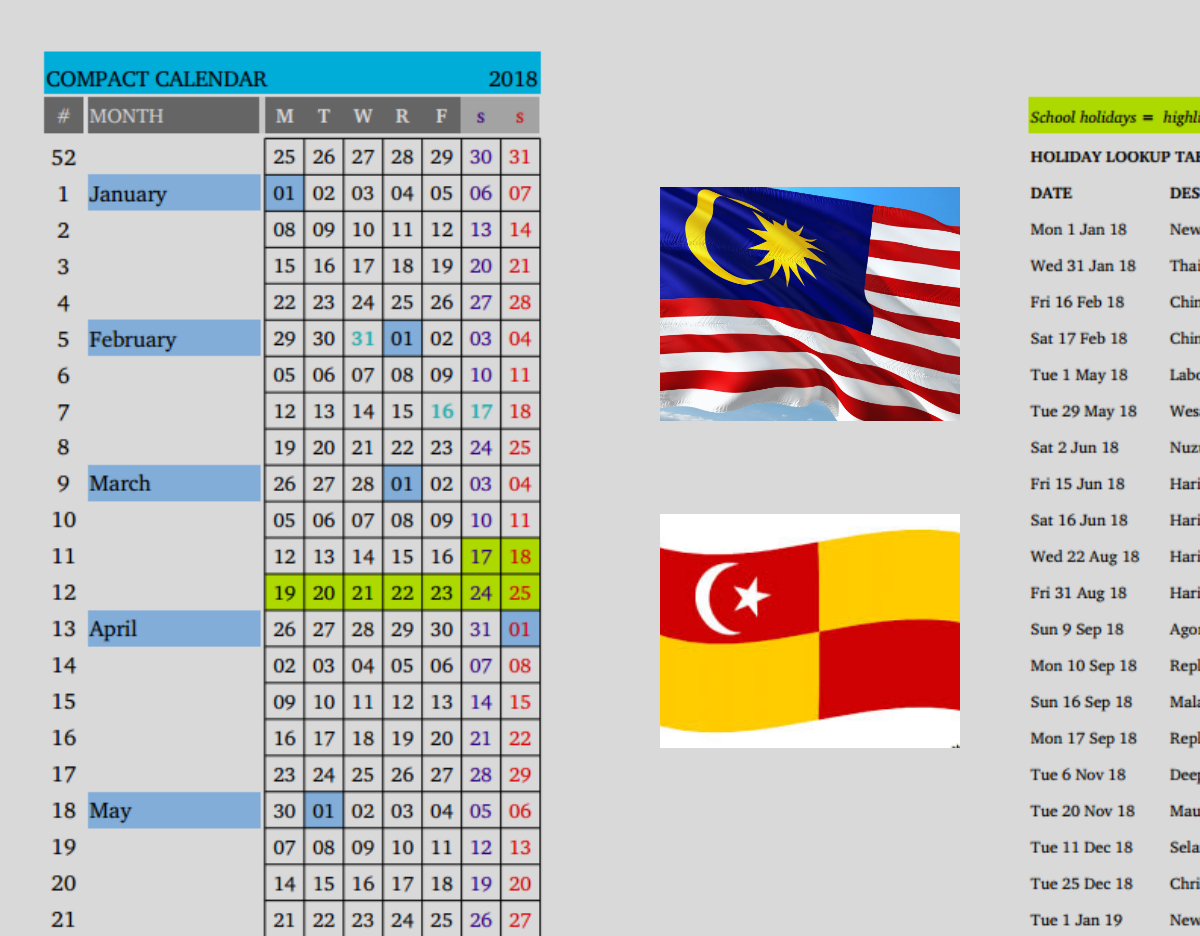
Malaysia’s Compact Calendar 2018 

A compact “one-view-see-all” calendar for 2018 inclusive of Malaysian public holidays and school terms is available for download. This version is optimized for Selangor State but is easily customized (if you download the Excel version) to any state of Malaysia.

I had prepared my Compact Calendar 2018 based on David Seah’s invention for a good few weeks when the official announcement on public holidays for 2018 was made by the power that be. I could not finalize my Malaysian version of Compact Calendar 2018 (optimized for Selangor State) due to be need to wait for the announcement by the Ministry of Education, Malaysia which happened on Oct 05, 2017.

I have given instructions on how my version of Compact Calendar can be optimized if you do not live (work) in Selangor in my 2017 posting on the same topic and will not be repeated here.

To download the editable Excel file, please click this link. For the Compact Calendar 2018 customized for Selangor State in PDF format, please click here.

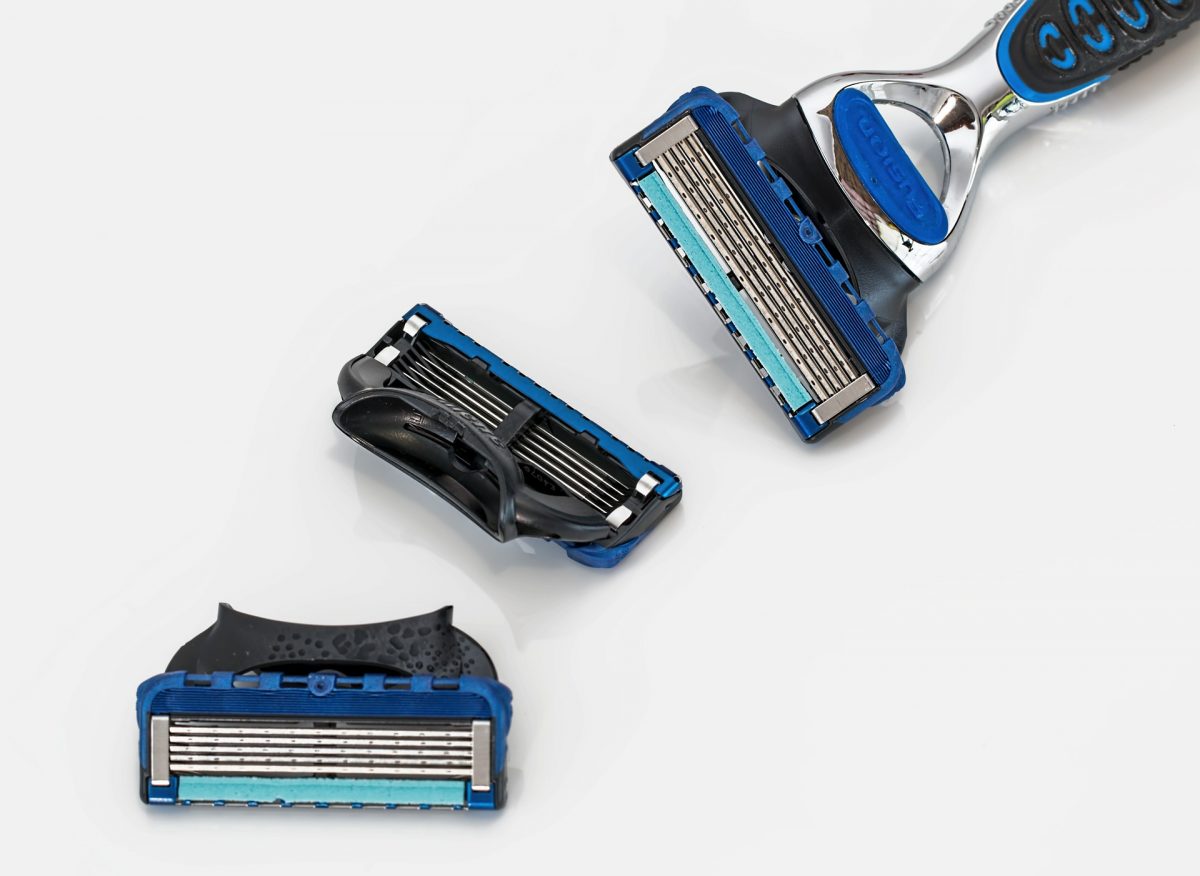
Money Saving Tips: extending the useful life of razors

Disposal razors market is worth at least RM4 – 5 million a year in Malaysia. What if you can extend the useful lifespan of a razor blade by over 700%? Will you want to use this technique to save a few RM & cut down on plastic wastes?

This article was written originally for an environmental portal for which this author was associated briefly. But since it was not utilized (more importantly, since the author was not remunerated for his work) he had decided to publish this in the previous version of his blog instead.
Seven years after this article was published, the author is still using the same technique to extend the lifespan of his razors and in fact most of the twin-blades and triple-blades razors that was mentioned in the 2010 edition of this article are still in “active service” today (Sep 25, 2017) , over 7 years after the experiment started!
Apart from the companies making razors, it can be deduced that most consumers should try out the method described below which not only will save you a few precious Ringgit a few months but will help to reduce plastic waste to the environment.
The author had also taken the opportunity to update his estimation of the size of the razors market and other figures accordingly in view of more “data” and a reflection on his initial estimation.

Money Saving Tips: Extending the useful life of razors
Written by Dr. YN Chow at 2010-08-31 12:08:09

Removing hairs from bodily surfaces for cultural or aesthetic reasons has been a big business. While traditionally this has been viewed as the guys’ issue where shaving has been viewed as a sign of one reaching “manhood”, in reality, the razor blades have more customers than just men.

It is not surprising that a significant amount of advertising and promotion have been levied on selling “new” designed razor blades to the consumers and now they have even segmented this into the “guys” market and the “ladies” market. While the writer has not a single clue about how large this market is, a simple estimation of the market for Malaysia can be “guessimated” as follows:
  • There are 27 32 million people in Malaysia, about 50% are male
  • 60% of the males are late teen or older  =  50% * 32 * 60% = 9.6 million people
  • Assuming 30% of the 9.6 million late teen to older males shave regularly = 2.88 million people
  • Assuming each “shaving customer” uses equivalent of 3 razors per year @RM1.50 – RM2.00 per razor = RM4.32 – 5.76million
  • Every one uses the razor blade directly (self applied) or via your barbers or hairdressers, including ladies some of whom do shave their appendages!

Hence a conservative estimation of the market for razor blade in Malaysia is about RM4.32 to 5.76 million. Of course this figure will go much higher if we take into account of the fact that many of the branded razor blades sold are priced at much higher than RM1.50 a piece.

Even if you are spending RM3 a year on razor blades, and you are “hooked” on the twin blades or higher specs models…..you know that the razor will blunt itself after about 30 to 50 usages (or less, depending on how much shaving your face needs per day). What do you do? Throw away the old one and get a new blade? This article will tell you that is not a good idea as the average branded twin blades razor (or those of higher specs) have at least 80 or more good shaves ahead of it after the initial 30 usages!

A report in the Chicago Tribune in 2007 advocated that you should let the razor blades dry off before using again to extend its life. But there was no concrete proof that this was the case. And the writer has been letting his branded razor blades dried themselves each time after use but that did not seem to extend their lives. That is, until he reads an article about a video on how simple it is to extend the life of your expensive branded razor blades and actually went to view the video concerned, posted by a gentleman with the handle of Terrypun in late March 2010 that he was intrigued enough to want to try this simple experiment.

The Terrypun Technique:
This was taken from a short write up by Ben Popken of the Consumerist:

“When he (Terrypun) notices his blade getting dull, he rubs it on his forearm in the non-cutting direction for about 10 strokes. This is all you need to keep the blade honed and sharp. You can also rub it against the heel of your palm.

Contrary to popular misconception, it’s not water or rust that dulls the blades, which are often stainless steel. It’s just the fine edges getting dulled on your face (or legs, or chest, whatever you would like the shave).”

Traditional single-bladed razor
T-shaped single-blade razor was used as a control with new blade at each use.

This article is being written on 31 Aug 2010, Merdeka Day (and revised just over 7 years later,) and the writer has been experimenting with the technique shown in the embedded video for just about 5 months (over 7 years by Sep 2017!). He has summarised his findings (which, as a trained scientist, he must qualify that this was done without any statistically analysis, replicates, blocks etc. etc. & purely came from his own observations of his face & chin after each shave!).

  1. Resurrecting An Old & No-longer-used Twin-bladed Razor
    He tried to “resurrect” a twin-bladed razor (of a leading brand) which he had “abandoned” in his father-in-law’s house for close to 2 years using the Terrypun technique: He was able to sharpen the blades but no matter how much of the sharpening he has done, the razor still could not be resurrected and there was always remnant of stubbles left on his chin after shaving.Conclusion: You cannot flog a dead horse! The Terrypun technique will not return your very old & long abandoned razor blades to their former glory! Buy new ones!
  2. Resurrecting Two Branded, Recently “Abandoned” Razors (a Twin-bladed & a Triple-bladed)
    He has two branded razors (a twin-bladed & a triple-bladed) which he was going to replace their respective heads with new ones that he had bought (mind you at very high prices!) just as he thought about the Terrypun Technique. He applied the Terrypun Technique each day (by rubbing the razor on his forearm in the non-cutting direction for about 20 -30 strokes). He remembers his scientific training and replaced his T-shaped traditional razor with a fresh single blade and use this as a “control”, where he shaves with this razor once every week and compared the results with the resurrected Twin-bladed and Triple-bladed razors. The Terrypun Technique was able to return both razors to “functioning” level. The effect lasted till recently, about 5 months or 60 shaves for each razor. Over 7 years later, in Sep 2017, his two razors are still functional, each time after the “standard” Terrypun Technique is applied!Conclusion: The Terrypun Technique works for branded twin-bladed or triple-bladed razors, by extending their useful lives by more than 700%, but there is a finite limit to which you can “flog the horse” before it becomes a dead horse! You should, using Terrypun Technique, expect at least 80 – 90 300 – 400 shaves from a brand new branded razor.
  3. Resurrecting Cheap Disposable Razor
    The writer had to travel to China in Sep 2010 for work and was supplied with disposable razors at the hotel that he was staying. When it comes to disposable, supposedly single-use razors, it is quite a shame to have to throw these away after only a couple of shaves. Often you can use it for at least 3 -4 shaves. He therefore decided to apply the Terrypun Technique on one of the single-bladed disposable razors supplied by the hotel. The razor was good as new even after the 10 shaves (which the author “consumed” after his 5-days trip to China when he went on a few short local trips to the hometown).Conclusion: You can apply the Terrypun Technique to extend the lifespan of those disposable razors for as long as the plastic holding the blades are intact. Each of this type of razor can give you, via the Terrypun Technique, at least 10 100 – 200 shaves or more.
The observations given above were done on twin or triple bladed razors and the writer had tried doing the same on an old fashion “T-shaped” razor  which he had used as the “control” in this experiment (the type where you have to pop open the contraption & replace the individual blade, risk cutting yourself in the process)….he lost some hairs from his right forearm. So a word of warning, apply the Terrypun Technique only on the “new safety” razors and leave those T-shaped razor well alone!
 
What has all these got to do with being environmentally aware? You may ask.
First extending the life of your razors by 3 – 4 folds save your some money.
Secondly, and more importantly, as most of the razor’s parts are made of plastic, the less you have to throw away, the less you will contribute to the mountain of waste.

Stop thieves from stealing your Wi-Fi bandwidth

The writer shares his learning experience on tweaking his home’s broadband Wi-Fi routers, after experiencing problems with his home webcam which he traced to a lack of bandwidth. If you do not take steps to safeguard your Wi-Fi network from thieves you will always have bandwidth problems which will affect the internet experiences of legitimate users. That is despite you paying around RM150 – 200 a month for the service!

To safeguard our house, especially when I was living close to 450 km away in Penang (from 2015 – end of 2016), I installed a couple of low cost but very reliable Xiaomi Yi Smart Webcam which worked on our home Wi-Fi network. I could, using my smartphone in Penang, watch over the key areas of my house in USJ! In fact I liked this model so much that I bought over 10 of these to be put around my former college to ensure that key installations and key exits were “guarded”. It put the night security staff on “higher alert” as my team and I would be monitoring these webcams periodically using our smartphones and took necessary actions accordingly.

Difficulties for webcam to access home wi-fi network

Things went well on the homefront in USJ but we did face periodic break in webcams connection to the network. The problem got worse in the last 10 months and at times in the evening till late night, the webcams would be blinking (meaning the gadget was working but could not log onto the home wireless network). We blamed everything from the hardware to Xiaomi’s server (which I think serves as the relay for the access from our mobile phones). It was then that I realized that it could be that thieves (or at least a thief) was/were stealing our bandwidth and this was the cause of the blinking smart webcams. I went on a search to find ways to strengthen the security of my home Wi-Fi network.

I have Telekom Malaysia’s Unifi service since 2012 and thus when I searched for instructions to manage my D-Link DIR-615 router on Google, I got a lot of instructions, but all were for newer versions of routers with the same name. I do not know why D-Link is so lazy as to not name newer versions of the same hardware slightly differently. An addition “C” or “E” or whatever after “615” would have made life easier for users.

So all those instructions and Youtube videos on how to manage D-Link DIR 615 router that I Googled were useless to me. I had to do this by trial and error and I was on my own. So if you own an old orange coloured TM-issued D-Link DIR 615 router modem, this is for you!

IMG_20170913_170532.jpg

If you have a router that is newer, then the information I have may not be fully applicable to you and you may still get instructions by Googling. But the principles are the same.

Gain access to administer the Wi-Fi router

For DIR-615, (and I think for most routers) the default to access the admin functions is just type in 192.168.0.1 as the URL for your browser.

The “underbelly” of routers usually carry information on how to access the admin functions.

Change your Wi-Fi admin password

This should have been done by me in 2012 but I somehow missed this step. So the thieves around my neighbourhood could easily guess the default was “ “ (D-Link says, “leave the field blank”). The standard-issued username was of course “admin”.

While the firmware does not allow one to change the username from “admin”, one should change the admin’s password to something more complicated using combination of “spaces”, capital letters, numbers and special characters like “#” etc.

But if you have not changed the admin’s password on the onset, the thieves would have been able to settle in and still bypass your Wi-Fi password even you have, like I did, changed this to something more complicated. It is like having the front door locked but leaving the backdoor wide open!

This is how you can change the admin’s password on the old D-Link DIR-615 router (2012 vintage):

073f6d97-b7d8-4c8b-9fb6-480d16fcad54.png

After you have logged in using the default admin access credentials….

Go to MAINTENANCE (among the top tabs) and you should be at Device Administration (on the left hand sidebar) by default. Change the admin’s password under “ADMIN PASSWORD” as shown above.

Change the Wi-Fi password

Although you would have put in a password when your Wi-Fi router was installed, like me, this could be a good few years back. It is necessary for this password to be changed! For the TM version of D-Link DIR-615 router, this can be done, relatively easily as follows:

97eafdf4-2fa0-4993-899c-3f64e4b0f4a0.png

From the “home” screen, go to SETUP and choose Wireless Setup on the left sidebar (as shown). You need to scroll down the screen to reach the sections of this screen that you want.

facb5342-c7b0-423d-bb62-fe97f45de62d.png

If you have more than one Wi-Fi router connected (including Wi-Fi extenders), you will need to look for MULTIPLE WIRELESS NETWORK SETTINGS. Under “Wireless Network Name” you should be able to find the names of the routers and you should choose the one that is given to DIR-615.

Next, go down one section to WIRELESS SECURITY MODE and at the drop down list, select “Enable WPA/WPA2 Wireless Security (enhanced)”.

Then move one section down to WPA/WPA2 and under “Network Key”, put in your new Wi-Fi access password. Do choose some phrases or names that are not common. You should also use a combination of UPPER CASE, lower case, special characters (like !@#$%) and numbers. Jot this down somewhere so that you need not remember this. But do remember where you have written down this new password!

Of course, your password is as strong as you are able to keep it a secret. If you or your family members share this password with the neighbourhood, sooner or later thieves will gain access and scrounge on your bandwidth!

So is there a way to NOT rely fully on Wi-Fi password as the gatekeeper? Luckily for us, there is. It is called MAC address.


MAC filtering to the rescue

Every piece of modern electronic equipment that can connect to the internet should come with its own Media Access Control (MAC) address, i.e. a unique set of identification characters that come in 6 “pairs” of characters (e.g FF), numbers (e.g 28) or one of each (e.g. G8). This allows a router to be set on MAC filtering mode which only allows intended devices with MAC addresses registered (manually by the Administrator) access to the Wi-Fi while keeping away thieves on the prowl!

Get the MAC addresses of your devices first

Before you start to activate MAC filtering, you should go and check out the MAC Addresses of all the mobile devices that your household has and jot these down in a physical notebook. Different operating systems will have different places where MAC Address of the device can be found.

For Android phones, this is “buried” under Settings → About phone → Status → WLAN MAC address.

For Kindle, you need to go to Settings → Wireless → Wi-Fi → select the top right “3 bottons” for additional settings → Advance Wi-Fi where MAC address is located.

For iOS devices, this site gives a very simple way to locate your MAC address.

Whichever device that you have, MAC address “comes” in as a “standard issue” for any Wi-Fi capable device and with a bit of probing, you should be able to find it. Once you have all the MAC addresses of your mobile devices which need Wif-Fi access, you can proceed to enable MAC filtering.

Relatively straightforward MAC filtering for TM’s DIR-615

MAC filtering1.png

You should choose ADVANCED → Advanced Wireless (on the left side bar).

MAC-filtering2.png

Next, go to the section named WIRELESS MAC FILTER. Under SSID, you should choose the network that your router is associated, if you have only one network, there would be the only choice.

Then you should configure the wireless MAC filter under “Configure wireless MASS Filter Rules below:” and choose “Turn Wireless MAC Filter ON and ALLOW these computers access wireless”. This option will stop any devices not registered on your MAC filter list from connecting to your router.

The last part is to put in the 6 pairs of 2 characters MAC addresses of your chosen 10 devices in the next line under “MAC Address”. Note that the separator between each pair of characters for DIR-615 is a colon, “:”. Different routers use different separators!

When you have completed your list of 10 devices, you should click “Reboot” on the bottom of the left sidebar, then the router is now on MAC filtering mode.

What if my family has more than 10 mobile devices?

As TM’s DIR-615 restricts the number of MAC addresses that you can put in the list to just 10 which may not be enough for all the mobile devices that a modern family of four will have (4 smartphones, 2 tablets and 4 laptops and you have reached the limit!). If this is the case, like my family, and out of necessity to extend the range of our Wi-Fi coverage, we have another Wi-Fi router / extender which gives us another 14 slots! These extenders are relatively cheap nowadays.

No guarantee!

There is no guarantee that the thief or thieves who has/have been stealing my bandwidth will hack into my Wi-Fi routers again, but by doing the three steps, namely, changing the Admin password, changing the Wi-Fi password and dong MAC filtering to allow only “own” devices access to the Wi-Fi may keep the opportunistic thieves at bay. Of course the bets are off when there are more sophisticated thieves with better hacking software out there. However, if you do nothing, then the leakage of your bandwidth can surely affect the quality of your own broadband access which is not really cheap in Malaysia.
MRT: a good start, more attention to details needed

Sungai Buloh – Kajang MRT line is not perfect but it connects people from far flung areas of the Klang Valley together. Despite the teething problems it provides a great comfortable ride. All it takes to make it more attractive to car drivers is a more comprehensive “last-mile” connections of feeder buses that cover many more areas and run on more frequent scheduled services.

The launch of the MRT first complete line from Sungai Buloh to Kajang was done with much funfair on and prior to D-day of July 17, 2017.

As an avid public transport user and advocate, I too went on to test out the MRT line. My wife, daughter and I fancied having our favourite satay at Restaurant Malaysia, Kajang. So we took the LRT from Taipan station to KL Sentral to change to the MRT at Museum Negara.

Instead of writing a long story, I shall let the pictures speak a thousand words each! [but with my captions!]

Where is the link way?

tiny signage
So which way is Museum Negara MRT station?

Coming from Nu Sentral mall’s direction, the link way to Museum Negara MRT station is just beside McDonald on the right. But you will need to walk right near the entrance to spot the MRT logo.

Spot the MRT logo & you will know where to go!

Once inside, you will need to have very good eyesight to spot the tiny MRT logo on the signage inside the huge hallway (which was partly the waiting area for the ERL previously). Then it is a matter of “follow the crowd”. You will reach the “very deep” underground Museum Negara MRT station.

Where’s the contingency plan when technology fouls up?

Where the heck are we?

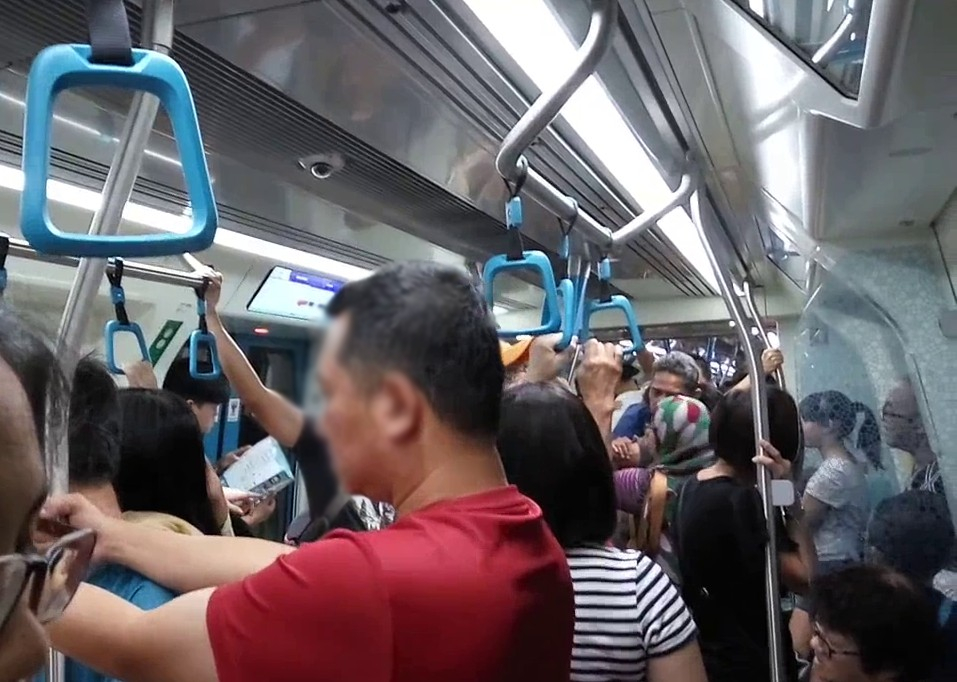
The MRT train that we boarded at Museum Negara had problems with its “station indicator” LED screen. This was made worse by the fact that the audio announcement of impending station was linked fully with this. So if one kaput, all kaput!. The MRT coach was well lit. So when we stopped at an underground station, one would have to literally step out of the coach quickly, and look for the signs that tell us which station we were at. There was also not a single Sungai Buloh – Kajang MRT line map inside the coach (there would be many places to stick this), so we could not even use the age-old system of counting station to know where we were!

When it is working, this thing is great!


A tried and tested, simple map to show the MRT line like this on the old LRT coach will be great!

We should not place so much faith in technology working every time. A simple map of the MRT line like that found in the older LRT coaches would “insure” against the electronic announcement system (both audio and visual) failing.

Plenty of space in MRT coach to stick more useful information like stations along the line!

Instead of these self-congratulatory stick-on posters, why don’t we have useful information like a line map, bigger sized full RapidKL rail system map etc. put up?

One of the side benefits of the MRT line –  Kajang satay vendors could not cope with demand!

Kajang satay, it’s worth the trip!

We reached Kajang and went straight to Restaurant Malaysia for our favourite satay. We were lucky to have arrived 5 minutes earlier than the crowd. Many were eyeing our table! The MRT line really shortens the distances between towns within the Klang Valley and the first economic benefits felt in Kajang is the sale of satay! Many more economic benefits shall follow!

Seamless transfer between MRT and LRT, a great feature

We went home from Kajang Stadium to USJ by changing form the MRT to LRT (Kelana Jaya line) at Pasar Seni. The sight was great but I was more attracted to the seamless transfer between the two lines. This is the most crucial factor to ease the congestion (of people getting out of one line and joining into another). You will also be fully protected from the elements getting from the MRT line to the LRT. I feel that if more seamless transfer can be made available, it will make life a lot easier. One candidate up for seamless transfer will be the Monorail and LRT at KL Sentral.

My take on the MRT

Despite what the critics have said, I think the MRT system is a great addition to the Klang Valley public transport system. It will surely bring up the economic value of properties around the stations. Kajang folks have already seen more visitors than before!

If the teething issues highlighted by yours truly can be looked into, I think the MRT system, which has broader coaches (thus steadier to ride) will help to convince more people to follow yours truly, to take public transport as the first option. The only thing that is stopping this is the last-mile linkages which is still very rudimentary. Feeder bus service (more lines and more frequent services) need to be extended in coverage and hours of operation. It is often the last-mile issue that forces people to have to drive.

RapidKL needs simple lesson in maths!

RapidKL could have avoided this botched up if those in charge have done some simple mathematics like what I had done. It does not need a Ph.D. in Operational Management for one to figure this out and plan accordingly. It is clear from my calculation that RapidKL will not be able to complete the issuance of all 68,000 new MyRapid concessionary cards before the deadline of mid July 2017. I think the sooner that RapidKL owns up to this fact and makes an contingency plan, the better it is to salvage its tarnished reputation.

The much anticipated changing of MyRapid cards to the new version to coincide with the launch of the full first MRT line in the country started in earnest from mid June 2017.

No issue with changing of non-concessionary MyRapid cards

As one of the first holders of the original version of the MyRapid card, I went to USJ 7 LRT station and changed this to the new version on June 16, 2017 without any difficulty. The entire process, inclusive of waiting time (with 2 persons ahead of me) was around eight minutes.

Chaos reign in changing of concessionary MyRapid cards

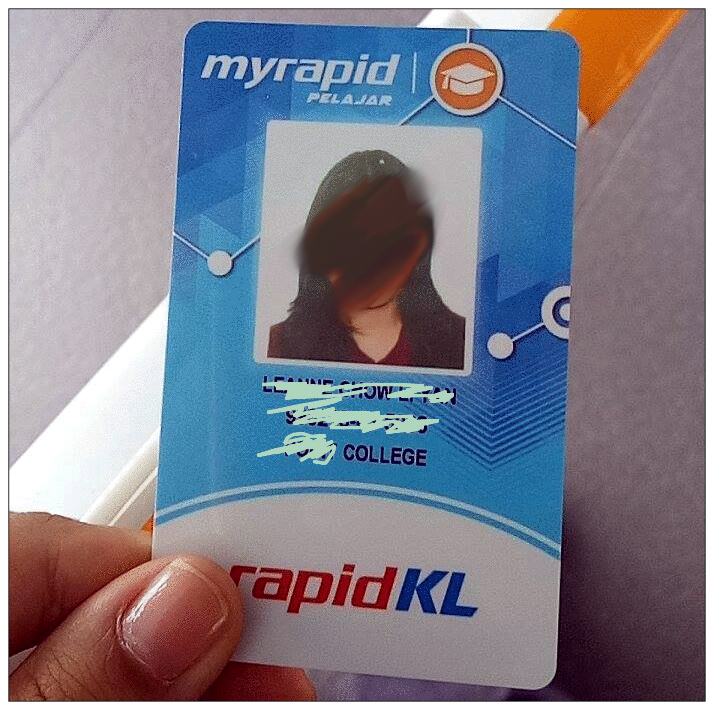
But no sooner that this exercise was announced, the press had been receiving and reporting a severe botch up by RapidKL in the changing of concessionary MyRapid cards. This author’s daughter who holds an original version of the college student’s concessionary MyRapid card, which she just obtained less than two months ago, on hearing the chaos at Pasar Seni LRT station had decided to wait.

The social media was rife with horror stories of people, especially senior citizens having to wait for hours, often without any seats and still could not get their old MyRapid cards replaced. There were also announcements that only 200 concession cards would be issued at Pasar Seni LRT station each day and after the queue numbers are taken up, commuters would have to make another trip and try their luck the next day. Someone announced that there are only three new card processing machines at Pasar Seni. My wife who had been monitoring the social media on this issue also spotted a student whose old MyRapid concessionary card was due to expire soon being told that he must change to the new card, which will carry the same impending expiry date and when this card expires, he will be required to apply for another card.

My wife was fast in spotting the announcement on June 21, 2017 about the setting up of two additional card processing centres, one at Subang Jaya and the other at Awan Besar and alerted my daughter who got her MyRapid student concessionary cards done within 30 minutes. So did a couple of her friends but others were not so fortunate. By then, my daughter spotted chairs being decked out for applicants and RapidKL’s staff even provided free biscuits to her while she was waiting. While these acts of providing convenience to commuters waiting for their new cards to be processed are commendable, they came a little too late, the reputational damage to RapidKL had already been done.

A little maths would have spotted the impending chaos

I wonder if those who are responsible for this entire concessionay cards replacement exercise at RapidKL really employ any simple operation management practices to estimate the size of the job and thus the time needed to complete the exercise.

I had used a simple spreadsheet to estimate the number of days needed to replace all 68,000 concessionary MyRapid cards in Tables 1, 2 and 3 below. It was reported that each MyRapid card processing machine takes around three minutes to process and issue  a new card. However, if we take into account the time needed to key in the command (assuming the data migration from the old to the new card would be seamless) and physically handling of the card during the process, this could easily add two minutes to the process, making it a five minutes job. This does not include the actual time taken for the applicants to present the old card, checking of credentials etc. On social media, a figure of 15 minutes was quoted as the “actual” time for a new card to be produced, from the time the applicant hands in the old card. Given that it takes 3 , 5, or  15 minutes to process a new card, I ask a few simple questions:

  1. How many cards can be issued a day if the machine is made to work 8, 10, 12, 14, 16, 20, 24 hours?
  2. How many cards can be issued if RapidKL has 1, 3, 6, 9 or more machines on seven different total working hours per day?
  3. How many days will it take to issue all 68,000 concessionary MyRapid cards in each of the different scenarios as given in (1) and (2)?

myrapid-table1

myrapid-table2

myrapid-table3

Note: I have published a Google Sheet containing the data for Table 3. Readers can play around with two of the key parameters, no. of cards to process and how long to process each card to see how these affect the outcome.

Why the rush?
It is clear from my calculation that RapidKL will not be able to complete the issuance of all 68,000 new MyRapid concessionary cards before the deadline of mid July 2017. I think the sooner that RapidKL owns up to this fact and makes an contingency plan, the better it is to salvage its tarnished reputation. I wonder why was the rush to complete all concession cards replacement within 30 days from June 16, 2017 given the estimation in the tables above that even if it takes only 3 minutes (which is just how fast the machine works) to complete the processing of one new MyRapid concessionary card, it would take 9 machines working fourteen-hours-day a good 27 days to complete the job. If we put in extra couple of minutes, the 9 machines would have to work 24 hours a day to churn out 68,000 new cards within one month. If it takes 15 minutes of total processing time (including physical handling of the cards, sorting etc.) as has been reported recently, the 9 machines working 24 hours a day would not be able to complete the job in 30 days. In fact, with a 15 minutes turnaround time, it would take 24 card processing machines and the whole replacement card exercise to run 24 hours per day (assuming applicants and staff will be willing to get this done 24 hours a day) to churn out 68,000 new cards within 30 days! And if RapidKL just stick to 9 machines working non-stop with a processing time of 15 minutes, it will take 79 days to process all 68,000 new cards!

What should RapidKL do?

Here are some of the suggestions I can make to tackle this issue:

  1. Own up that someone at RapidKL did not do his/her homework and bungled the whole thing.
  2. Set up an online application system for replacement of MyRapid concessionary cards for students ONLY and drive them to use the online application, thus taking them (I would assume that this group is the largest of all concessionary cards holders) off the queue.
  3. Continue to process MyRapid concessionary card replacement exercise at the three centres for senior citizens and the disabled. Open up the online application system to these two groups of people so that those who are tech-savvy will be removed from the queues.
  4. Let all holders of MyRapid concessionary card use their old cards for another two month and continue the “token” system at the MRT system for these commuters. This will also remove the rush for all other concessionary card users to get their cards replaced by mid July 2017, thus removing the long queues at the three designated card processing centres of Pasar Seni, Subang Jaya and Awan Besar LRT stations.
  5. Let the students nominate the most convenient LRT or MRT station to collect their new cards, thereby further reducing the crowd at the three replacement card processing centres.

With the students all applying online (this group should be the most tech savvy and will not have any issue), the overall processing time of the cards for this group will not be 15 minutes, as there is no need for the applicants to wait and the initial processing/ data crunching and verifications etc. are all done online and upfront. Thus if all the 9 machines (plus staff on shifts) working 24 hours a day, it will take an additional 45 – 60 days (i.e. total of about 75 – 90 days) to complete the exercise.

Why we need to round up the value to multiples of RM5?

In fact one odd thing that I noticed when I changed my old MyRapid card to the new one was the strange request from the nice RapidKL staff at USJ 7 LRT station for me to top up my card to RM45 (from something like RM37). She told me that the system would work better if the migration of data was done with stored value in multiples of RM5! This, I think added to the waiting and processing time, especially if the card holders (of both types of MyRapid cards) are not informed of this. Why we need the tail to wag the dog is one mystery that RapidKL needs to explain.

Have “organizational memory” and not repeat this botch up!

RapidKL could have avoided this botched up if those in charge have done some simple mathematics like what I had done. It does not need a Ph.D. in Operational Management for one to figure this out and plan accordingly.

Having more card processing machines than the 9 at present may help to speed things up, but it may break the budget and may be wasteful when there is another change in the technology that mandated another round of upgrades. Thus planning and using logical thinking is the key!

Why was the MRT ticketing system being allowed to be incompatible with the first version of MyRapid card shall remain a mystery. More intriguing was, why the first version of MyRapid cards were allowed to be issued in the first place since these were clearly not fully compatible with the Touch N Go system which caused the replacement exercise? I think that RapidKL owes the taxpayer an explanation on both counts.

Of course if the intention was to reduce the 68,000 concessionary cards holders substantially, then the chaotic way the whole exercise is carried out and the short processing period are the “right” things to do!

Vivaldi, the “new” Google Chrome alternative – a powerful browser rediscovered

Vivaldi is a fast, features-packed Google Chrome derived browser that is great for power users who opens 10 -15 tabs at once anytime!

[show_post_categories show=”category” hyperlink=”yes”]

[show_post_categories show=”tag” hyperlink=”yes”]

Commentary (Jun 11, 2018): For over 8 months, I have not been able to upgrade Vivaldi on my old Linux (Ubuntu-derived LXLE). There is a file that is needed but not updated in the distribution. So far, I could still use Vivaldi without any issue but am afraid that as more security updates come along, I will have to switch from Vivaldi if I cannot use Gmail etc.

I have been using Firefox as my main browser since Google decided that it would not be supporting Google Chrome for Linux  about a year or so ago. I am a Linux user by choice and am writing this piece using my son’s hand-me-down, a Dell Inspiron 1520 of 2007 vintage. I use LXLE, a lightweight distribution of the famed Ubuntu (which itself has grown very heavy for older personal computers) which is very suited for “ancient” personal computers.

I tried Google’s open source browser, Chromium which is still being maintained for Linux. For some reasons that I could not figure out, it refused to run after installation on my other “younger” laptop, a Toshiba Protege T210 (a couple of years younger than the Dell Inspiron) which is also powered by LXLE.

The reason for me wanting to use the latest Google Chrome is simple, a lot of modern websites just do not load properly or render well in older version of the browser. Although Firefox was good, lately it has become sluggish and often crashed. As I do most of my work, especially writing using Google Docs and data crunching using Google Sheets, Firefox had become very unreliable lately.

I tried using Opera. It somehow does not have full compatibility with Google Chrome and some of the websites and web apps just did not work well and like Firefox, it got to be very sluggish at times. I knew if I wanted to keep up my productivity, I would need to find a solution to my browser problem and do so fast!

Then I found (or rather rediscovered) Vivaldi Browser which I briefly heard of in 2015. Unlike Opera which has some issues with full Google Chrome / Chromium compatibility in terms of rendering some websites with heavy scripts and apps, I found Vivaldi intuitive, fast, and easy to use.

Vivaldi which was launched in March 2015 by Jon von Tetzchner, Opera’s former CEO, has a lot of features for people like me, those who open 10 – 15 tabs at one go and doing lots of research, writing, number crunching etc. fully online, aka the power users!

Although I still experience periodic slow response from my mouse and keyboard while “Vivaldi-ing” when I have more than 10 tabs opened, it is a darn sight better than the fully unresponsiveness I encounter when using Firefox or Opera. The full Chrome pedigree of Vivaldi means that anything that works on Google Chrome Store will be game for Vivaldi. So if you fancy any extension that you had been using on Google Chrome, it should work on Vivaldi.

For the very “tech” focused readers, there is a blow-by-blow “Opera vs Vivaldi” by Slant. I just learned from Slant’s article that Vivaldi allows one to stack up tabs which is handy when doing research by putting related content etc. together for ease of reference and location. Another Vivaldi’s feature that is great for people doing lots of research online is the “Note” function which allows you to take notes about a site you are visiting, copy the link, copy selected area and even take a snapshot of the site.

One feature of Vivaldi that Windows users may not be excited about but Linux users like me will, is the “Screen Capture” function at the bottom right of Vivaldi’s panel. It comes in very handy when you want to capture stuff you see online that you need for your research. The feature picture of this article was captured using this function and I got a choice of doing the entire page or just the selected area. In this case, I had chosen the latter. Now there is no need for me to run an external screen capture software then do an “Alt-Tab” to make sure I get back to my browser to do a F11 (full size) then repeat “Alt-Tab” to set up screen capture software to work. I did install some third party’s extension to do screen capture which worked.  But this extension also added on additional weight to Firefox (and slowed it down). For Vivaldi, I do not think I need to install any extension at this stage!

The ability for me to see how a site I am visiting is loading on the status bar which is no longer present in many other browsers is yet another feature of Vivaldi that I like. It tells you how big a chunk of data you are consuming and how much of it you are loading. Also, when using Vivaldi, you will not be bombarded with advertisements like some other browsers.

You can download Vivaldi at its website. Vivaldi has cross platform compatibility which means that you can run it on Windows, Mac and Linux. It is just too bad for Android users that there is not yet an Android version for Vivaldi! If you signup for an account, you will also be given an email account from Vivaldi that allows you access to many of the community postings etc. that were the “key features” which were taken off from Opera. One article said that Vivaldi’s service which is rolled out of Iceland, a country that has one of the world’s toughest privacy protection law. The@vivaldi.net domain by itself offers a very attractive feature for users who seek to protect their privacy while sending and receiving emails!

Let us hope that I will not need to revise this article often and that Vivaldi as a project will continue to bring work efficiency for users like me.

RapidKL needs more feeder bus services to link up LRT & MRT

Why’s RapidKL, having a great cross link feeder bus route like T807 that links up a LRT station with a closeby MRT station, has chosen to keep so quiet about it? How come RapidKL can design a great linkage route in T807 and not able to do the same for other feeder bus routes to link up more LRT stations with closeby MRT stations? Why RapidKL launched the MRT feeder bus service with a cashless system that does not accept your own Myrapid cards but “traditional” TouchnGo cards only?

Please put up your hands if you have taken any RapidKL feeder buses? What about the spanking new and very comfortable RapidKL MRT feeder buses?

I have not done any survey, but unless one is seriously planning to use the LRT, MRT or buses or a more likely scenario, a combination of two or more of these, you may not have bothered to notice what is available. Here is one little story on how I discovered a gem in RapidKL which I would like to share with my readers.

My daughter has just started her college in early January 2017. As luck will have it, her college is not one of the many located in the “college belt” of Subang Jaya – Bandar Sunway any of which would have been just at most 10 km or one RapidKL bus away. Hers is located in Kota Damansara, which is over 20 km away, near where I used to work! At first, I would drive her to college from USJ every day, then I would drive home, repeating the same in the evening. Thus I would often get caught in the daily peak hours traffic jam which is the fact of life for many Klang Valley residents. On a good day, I would spend around 4 hours doing the two round trips. On a bad day (especially on a rainy day), I could add at least another hour to my commuting hours just to play chauffeur to my offspring (well this is not entirely true as I would make her drive me back in the evening to give this “P” plate, a.k.a probationary driver more practice!).

Our (actually, mainly mine) daily drive would start from USJ in the morning (we had to hit the road by 08:30 to make it on time), then mainly we would use the North Klang Valley Expressway (NKVE) from Subang Jaya exit to Kota Damansara exit and would get stuck in the famous “Surian squeeze” at Persiaran Surian heading towards our destination near Sunway Giza. The journey back for me would take a bit shorter, mostly because I would be using the smaller roads that link Kota Damansara to Ara Damansara passing by Tropicana Golf and Country Resort. This would be the same route I would choose in the evening to and from Kota Damansara.

As my daughter got settled into her college life, she would not be finishing classes “on time” in the evening and would be having the usual college student’s activities outside the lecture rooms. Thus we knew that with the rise in my own business activities (after my stint in Penang which ended in early Dec 2016), it would come a time that she would need to rely on public transport to commute to and from her college. So I went on to discover what were available from RapidKL. Although “USJ-ians” like us are fortunate to have the LRT now practically near our doorsteps, and the MRT phase 1 linking Kota Damansara to Semantan is now operational, it is not easy to find a direct link up between the two systems. If you do a cursory search on the internet, you will know that Klang Valley’s existing LRT, Monorail, the new MRT systems plus most of the RapidKL buses have many direct routes to different parts of KL city centre from the suburb like “the spokes of a bicycle wheel”. But there are precious little linkages at the suburb to connect any two systems. A good public transport system should be like a spider web, with spokes and lots of cross links which sadly the current Klang Valley system just does not have.

We tried  RapidKL’s “traditional” feeder bus service 802 which was supposed to link up Kelana Jaya LRT station with Kota Damansara. On the morning of our “trial”, we started our journey a bit earlier than usual, leaving Taipan LRT station at 07:15 and arriving at Kelana Jaya by 07:40. I was happy to notice that the LED signboard said that there would be a 802 bus arriving in 5 minutes and one more in 18 minutes. But little did I know that those busses were the “planned” services. What actually happened was purely depending on the number of buses (I presume, the drivers turning up for work) available and the prevailing traffic congestion on key roads.

The information on the LED signboard at Kelana Jaya LRT interchange is not an accurate reflection on the buses available on the ground!

When I went to the information counter, where one RapidKL staff was sitting and eating to enquire about the no-show of 802 buses, I was ignored by the man. I then tapped on the counter’s sliding window and the man went berserk and scolded me in Malay (“Are you blind? Can’t you see I am eating”).

The information counter is used as a canteen by RapidKL bus drivers who would not be pleased if you disturb them enjoying their meals while on duty!
This information counter in Kelana Jaya interchange is used as a canteen by RapidKL bus drivers who would not be pleased if you disturb them enjoying their meals while on duty!

To me, he was sitting at the information counter and so he was on duty to serve customers like me. I did not mind that he was eating, so long as I got my answers. There was no reason for him to be so rude. As far as I know, the information counter was not a rest area nor was it a canteen for the staff on duty. When the man saw me taking photographs of his “canteen” and the LED signboard he calmed down a bit and came out to tell me that bus 802 should be starting ‘soon” and pointed to one of the stationary buses to say, “that’s your bus, wait for the driver and let me eat my food.” 45 minutes after the first bus 802 was supposed to arrive, we finally got onto the bus that was pointed to me earlier. It took about 80 minutes for us to get from Kelana Jaya LRT station to Surian MRT station and my daughter arrived just in time for her class. I took the same bus which was on a loop service back to Kelana Jaya LRT station which took about 60 minutes. With so many uncertainties and variables, we needed to find an alternative to this travel route!

Next, we tried out RapidKL Bus 780 which we could only take at Asia Jaya LRT station in Petaling Jaya (three stations further away from Kelana Jaya station). The bus took about 1 hour to get from Asia Jaya LRT station to Surian MRT station and the return journey took about the same time. We had to wait about 20 minutes each way. There was however one major problem. On the return route (from Kota Damansara to Petaling Jaya), bus 780 did not pass by Asia Jaya LRT station. I had to alight at the bus stop next to Sri Petaling school, cross the busy Jalan Semangat and walk about 800 meters to Asia Jaya LRT station. This option was a bit better than the RapidKL Bus 802 route as there were more bus 780 on the road and hence the wait was more manageable. But it was still not ideal as we would be travelling extra distances needlessly and the return trip involved a long walk.

It was then that I remembered on my many car trips to and from Kota Damansara I saw the new RapidKL MRT Feeder Bus, T807 and often wondered what route did this bus serve. After several searches of both RapidKL’s site and many transport related sites, I had the mini-Eureka moment! T807 is one of the very few cross links that RapidKL’s MRT and LRT have. For those who are not familiar, RapidKL, for reasons known only to itself, has two types of feeder buses. The old RapidKL buses with the “T” prefixes and the ultra comfortable RapidKL MRT feeder buses with a different outer paintwork but bearing the same “T” prefixes. One thing is strange. RapidKL MRT feeder buses do not accept RapidKL’s own Myrapid cashless cards!

T807 links up the depot of Kelana Jaya LRT line at Lembah Subang LRT station to Surian MRT station, serving both the Ara Damansara residents as well as those living around the Tropicana Golf and Country Resort. My daughter only needs to wait at most 20 minutes for T807 at both ends of this route (as show below).

mrt_t807-c
Extracted from Myrapid’s website.

The T807 journey takes from 15 minutes off-peak to 25 minutes at the peak hours of the evening. On average, she will now take around 1 hour to travel from Taipan LRT station to Surian MRT station followed by a 15-minutes walk to the college. I am happy. I need not pay too much attention to the traffic news on Melody FM each morning now! And I do not have to clock in 80 plus kilometers on my car each day! My daughter is happy. She does not feel guilty for having me wait in the car for her to finish her day  (sometimes the wait could be up to 40 minutes) at the college and thus giving her more time and flexibility to socialise with her college mates. As T807 takes on mostly “inner” roads, apart from the stretch close to Lembah Subang LRT station where the “tunnels” which allow cars to get across the NKVE are located (which jams up at peak hours), can promise commuters with a pretty accurate timing of its services.

[googlemaps https://www.google.com/maps/d/embed?mid=1MNBN2ftH4x27riHJFzKvPpJyCjM&hl=en_US&w=640&h=480]

One must pose this question to the power that be who runs RapidKL… If you have a great cross link feeder bus route like T807 that links up a LRT station with a closeby MRT station, why keep so quiet about it? I would have expected RapidKL to publicize this route to the maximum! My second grouse with RapidKL… how come you can design a great linkage route in T807 and not able to do the same for other feeder bus routes to link up more LRT stations with closeby MRT stations? T807 serves a great link for people on the Kelana Jaya Line LRT to take the MRT at Surian Station. My third grouse with RapidKL… why launch the MRT feeder bus service with a cashless system that does not accept your own Myrapid cards but “traditional” TouchnGo cards only?

My daughter’s feedback on T807 service, “The bus drivers of T807 are very nice to the riders!” should be something that RapidKL should take pride in and gloat about! I just hope that RapidKL does not take away this gem of a feeder bus service or change its route unnecessarily in the future!

My final grouse (actually 2 grouses) with RapidKL…Do check that you have accurate information posted on your LED signboards and remove non-existing bus services so that your customers are not misled. Please make sure that your staff on duty at the information counter at the Kelana Jaya interchange do provide friendly and accurate information services to bus users and remind them that this location is not their canteen.  They should take a leave from the guys manning the T807 service and learn to be courteous to their customers!

We shall not be Zombies

With our multi-religious, multicultural, multilingual and diverse dietary preferences, it would not take much to start a sectarian firestorm if restrain is no longer applied. I feel that the phrase “tolerant of each other” is wrong. To survive as a nation, Malaysians collectively should be accepting each other as we are and get on with our lives.

[show_post_categories show=”category” hyperlink=”yes”]

[show_post_categories show=”tag” hyperlink=”yes”]

Commentary (Jan 28, 2017):
This article was written by me around August 2015 and published in Han Chiang News in September 2015 just before “Malaysia Day”. I feel that Malaysians who, unlike yours truly (and my contemporaries who studied in Northern Ireland during the period of 70s to 90s) who have seen at first hand how bigotry have brought man-made calamities to a nation, will not be sensitive to the perils of such political tragedy as in the “Troubles” of Northern Ireland. Malaysia of today is a lot more divided than the Malaysia of the 1970s that I had grown up in. Despite the fact that we are more educated, with almost everyone being literate, and better connected & better informed by modern communication tools, today we are more divided as a people of our most endowed homeland as ever. “Are we all going to be Zombies? ” That is a poser for my readers.


During my stint as the Principal / Vice-Chancellor designate of Han Chiang College / University College (2015 -2017) I mooted the idea of giving my students a chance to both organise and experience what I had when I was an undergraduate at Queen’s University of Belfast: a live concert with live bands and real singers. I must admit, I was pleasantly surprised by the kind of talents that we had among our students and even staff. I left the concert shortly after the DJ entered with his gig so that my students (and perhaps some of the staff on chaperon duties) could let their hair down and boogie the night away without the invisible “intimidation” by my presence.

A very meaningful song – Zombies

One song that was played that night really rekindled my memory of my second homeland, Belfast, Northern Ireland where I spent eight and a half years, most of which was during the so called “Troubles”. The Cranberries’  “Zombies” was a protest song about the “Troubles” of Northern Ireland which was released in 1994 but very well received in Malaysia up to early 1996. My then baby son somehow was fond of this song. The saying was, shortly after the release of this song, the Irish Republican Army (IRA) that had waged a war of terror in Northern Ireland to oust the British since 1968 (and then moved their activities “across the water” to England in the mid 1980s) declared that they would abandon their insurgency and would be switching their fight to the ballot box. It was not till 1998 that peace finally was declared in Northern Ireland. I had a chance to visit Belfast in 1999 and was amazed by the change (for the better) that I would not have imagined when I left my second homeland in 1991.

My first encounter of the “Troubles”

I arrived in Belfast in early October 1982, shortly after the end of the republican’s hunger strike crisis where ten convicted and jailed members of the republican movements went on hunger strike resulting in their death. Tension was high. People were suspicious of each other and some (including a good number of my classmates) were not exactly friendly to foreigners like me. Then on the first night that I moved into a shared house with 3 other Malaysian students, I heard something like a motorbike backfired at around 11 pm. It was, we found out the next day in fact a sectarian killing where a young man was shot dead for being from the “wrong” community just a street away from our house. I experienced at first hand the “Troubles”. Unfortunately I was to experience a great many more of these kind of incidences during my stay in Belfast. As a postgraduate student, naturally my peers and Malaysian buddies were mainly medical doctors. Their tales of injuries and bodily harm due to sectarian violence that they had to treat were even more gruesome to depict here.

A Catholic Buddhist or a Protestant Buddhist?

After a few weeks attending classes as a freshie (first year undergraduate), I managed to break the ice with most of my 27 other classmates. One of my classmates (who shall remain “nameless”) then casually asked me, “Chow, wat arre ye?” (Chow, what are you?)

By then I was beginning to understand the many different accents of the people of Northern Ireland and starting to adopt some of their accents and way of pronouncing English words so that I could be understood. My reply was, “Marn (man), what do ye (you) mean?”

My friend then said, “What’s your religion marn?” “I’m a sort of Buddhist,” I answered (I knew it would be pointless to explain that Chinese Malaysians have this other religion called Taoism that is mixed with Buddhism).

The next question from my friend was devastating. “Are ye a Catholic Buddhist or a Protestant Buddhist?

The sectarian divide in Northern Ireland was so intense that even university students would just classify themselves, inclusive the foreign students like me into either a Catholic or a Protestant.

zombies1-770x470
The “Troubles” in Northern Ireland had caused at least 3,600 deaths with 50,000 people maimed. After experiencing what incited hatred could do to communities in Northern Ireland, I cannot bare to imagine what could happen in my homeland if the bigots are allowed to roam freely!

My first taste of a car bomb

Jobs for graduates in Northern Ireland during the period of the “Troubles” were difficult to come by. Unemployment rate for the population was the highest in the UK. All because of the lack of confidence in the political situation there which deterred business investments. During the early eighties, car bombs were regularly planted at strategic commercial areas around Belfast. On the eve of my Master’s degree graduation in December 1987, I encountered my first car bomb: I was in a car with a friend (who was graduating at the same time with his Ph.D) and we were suddenly diverted by the Police to a side road. The bomb went off on the next street as we were turning! Fortunately for us, the great old Morris Minor that my friend, Dr. Sean D’Arcy had was very solid indeed & the bomb was not too near or powerful to cause us any injury.

Police stations and the security personnel were “legitimate” targets. To compound the matters there were the terror groups on the opposite side of the republicans (the so-called loyalists) waging a similar campaign of terror onto the republican communities. The “Troubles” had caused at least 3,600 deaths with 50,000 people maimed. Such was the scale of this political tragedy.

It’s in your head!

Today, 17 years after the ceasefire, the memory of the “Troubles” still haunt many who have lived through the period, including this writer. Perhaps some of the lyrics of “Zombies” sum up the collective feeling of the people of Northern Ireland well:

And the violence caused such silence

Who are we mistaken

But you see it’s not me

It’s not my family

In your head in your head

They are fighting

With their tanks and their bombs

And their bombs and their guns

In your head in your head they are crying

In your head

In your head

Zombie zombie zombie ei ei……………..

We are not zombies, we SHALL NOT be zombies!

One thing that puzzles me even today is, how come two communities in Northern Ireland which had lived for centuries together, speaking the same base language (English) with similar culture and food could be driven to exert such mistrusts that resulted in many horrible acts of violence against each other. But when these two communities could find a common ground, they could bring peace, prosperity to their common homeland in a short span of just a few years.

We shall not be zombies!

Meanwhile 10, 814 kilometers away in Malaysia, we are being manipulated by those who bank on creating the worst sectarian divide among our people with the power that be often sitting on the fence or turning a blind eye to these acts. After experiencing what incited hatred could do to communities in Northern Ireland, I cannot bare to imagine what could happen in my homeland.

With our multi-religious, multicultural, multilingual and diverse dietary preferences, it would not take much to start a sectarian firestorm if restrain is no longer applied. I feel that the often-overused phrase “tolerant of each other” is wrong. To survive as a nation, Malaysians collectively should be accepting each other as we are and get on with our lives.

If we let the minority with ulterior motives to impose bigotry on our society unhindered then we deserve to be heading towards the Malaysian version of the “Troubles”, which I shudder to think could be overcome in 30 years as it did in Northern Ireland!

Perhaps the keyword to deal with this threat is “Restrain”. We should restrain ourselves from being lured by these minority. We are not Zombies and we shall not be Zombies.