13th May 1969 my little story (pre- & post- GE14)

I echo here YB Lim’s advice for all Malaysians, regardless of whichever side of the political divide we stand, to take the opportunity offered to us after the 14th General Election (GE14) to bury the ghost of May 13th forever. But the lessons of May 13th should always be taught to younger generations so that the same will not happen again.

Commentary (May13, 2018):  The inspiration to share my little May 13th story came from a letter by senior politician, Mr. Lim Kit Siang, published in Malaysiakini (the pdf version is available here).

I echo here YB Lim’s advice for all Malaysians, regardless of whichever side of the political divide we stand, to take the opportunity offered to us after the 14th General Election (GE14) to bury the ghost of May 13th forever. But the lessons of May 13th should always be taught to younger generations so that the same will not happen again. We should learn from Northern Ireland (my 2nd homeland!) of what communal distrust and sectarian divide can do to a nation.

We should be proud of ourselves as Malaysians. We have, through the resolution and courage shown the world that ours is a democratic nation. There is something among Malaysians that money simply cannot buy! The message from YB Datuk Seri Shafie Apdal (in one of his videos) perhaps sums up the feeling of many against money politics, “the RM500, RM10,000 or RM1,000 that you’re given will not make you a millionaire….. our dignity is not for sale.”

I think many Malaysians who are in the public service, the police and the military deserve our gratitude for coming out of their comfort zone and voted with their conscience. Without their support, the outcome of GE14 could have been very different.

Together, we have shown the world that Malaysians are no zombies when it comes to expressing our democratic rights!

It is time for reconciliation. A matured democracy shall always accommodate differing political views. Just because someone do not subscribe to your political view does not make her/him less of a Malaysian or a subject of hatred.

The confidence given by Malaysians to the present Pakatan Harapan regime does not mean that we have given the politicians a blank cheque.  This is my response when asked by BFM radio on what I want from the new regime:

(link: https://twitter.com/Everboleh/status/994430242969108482)


First published: May 14th, 2004, edited version published on May 13th, 2018

As a young boy aged 6+ during the May 13th incident in 1969, my memory of this event is still good.

However, a lot of the younger generation today seem to have no memory of this significant turning point of Malaysia’s history. I feel sad about this. (and the local TV, TV3 had an item on this last night).

My little Story about 13th May 1969:

I still remember on this faithful day, everything was ‘normal’, at around 6:45am, my dad cycled to his school to teach (about 4 km away) and I was already up and about (I was attending afternoon session at school) making a nuisance of myself to the adults. Then suddenly, at around 7:00 am, dad cycled back in a hurry and I saw a lot of people rushing back……curfew was imposed.

We were shielded from the bulk of the troubles as Ipoh was relatively unaffected by the events in Kuala Lumpur and Penang. I was too young to comprehend the magnitude and the seriousness of the event. All I remembered of that few days was: the adults were very tensed.

On the first day of curfew, dad and granddad went to the sundry shop (just after dad had cycled back in the morning) and bought a lot of food stuff. I was not allowed out of the house or the garden on the first day. By the second day, things seemed to have calmed down. I was allowed out (I think by then the curfew was lifted for a couple of hours for that day). But I went to the field opposite my house to play. I was warned by dad to get back into the house within the hour but I stayed around the play gound at the field for longer than usual (after all I was caged up for one full day already!)….

Then I saw a couple of police on petrol in the area and off I went jumping into the drain next to the field to hide from them….(I remembered being told that if I were caught after curfew hours outside the house, the police would lock me up).

As I was hiding in the drain, I could hear that the police petrol had passed but I dared not leave the drain for a few more minutes as I was afraid that they might turn back towards me. Then……I felt itchiness and a sharp pain around my groin and then my buttocks. This sensation was occuring at more than one spot!

…..My posterior was very close to the nest of a colony of fire-ants! These little guys then attacked me or more like my sensitive areas to protect their colony. Those days we ddin’t wear brief until you were close to 10 or 11 and of course little boy  all would wear shorts!

I ran from the drain, but dared not cry out loud (for fear of the police) even though the pain was terrible. I screamed when I got home. I only allowed my dad to see the ‘damage’ (mum and the rest of the family were not allowed near me!) My posterior, including my ‘3 pieces of inheritance from my ancestors’ were sore for days…..

I promised myself then that I would never hide in the drain again, even if I was playing with my friends, a promise I kept for the nest 5 days…

That was my personal memory of the whole May 13 incident as a young boy of not-yet 7 in age. But little did I know then, there were many things that happened in that few days that had changed the course of history for my country.

The National Economic Policy and other measures implemented by the government post May 13, 1969, had changed the economic and political landscape for my country forever. This paved the way for Malaysia to withstand the economic challenges of the 1997/98.

For many years this subject (of May 13) has been tabooed for all. But I feel that youngsters should be told what went on and more importantly, what we all have learned from it (or have we?)

In 1979, I was fortunate enough to have parents (who were working as a teacher/a clerk) that sacrificed their pension money to pay for my studies in the UK. There, the first thing I did was to look through the library of my technical college to see if I could find something on this event. After a few months of searching, I located a journal called something like “World Event- day by day” and I had the chance to read up on the foreign reports (foreign perspective) about May 13th, 1969 for the first time and understood some of the causes of this unfortunate episode of our history as a nation.

One thing is sure: we must not allow this to happen again, NEVER! But we must remember and remind our younger generations of this incident to ensure that the lessons learned are not forgotten and more importantly incident like this shall never happen again.

And one small lesson: do not play inside a drain, if you do, watch out for fire ants!

Securing website by installing SSL certificate

SSL certificate is essential for any website. This piece provides an account on how to get a free SSL certificate from either CloudFlare or Let’s Encrypt. Namesilo is great is providing information on free SSL certification. Mochashosting has Let’s Encrypt in its control panel that, with a bit of tweaking can install a free SSL certificate. CloudFlare has great DNS server but its the configuration of its free SSL certification is very challenging.

[show_post_categories show=”tag” hyperlink=”yes”]

A few months back I decided to consolidate the various domain names, web hostings and websites that I have. The key reason for this was economic. I realized that over the last 10 years while learning to “play” with all these web-based “learning toys” of mine I had spent quite a lot.

Consolidation of domains as mini projects

One of the mini projects I had set myself to do was to move my blog (previously on theplantcloner.com which is being hosted till Oct 2018 by WordPress.com) to my web hosting under Mochahosting.  WordPress has a simple “Export” function to generate an XML file to carry almost all of the content of the blog. It has also a very simple “reversal” feature for me to “Import” the content into the blog’s new home, where you are reading this now, https://slc4u.org/learning.

My next mini project was to configure, “beautify” and populate my blog’s new home with features etc. which were denied me while the blog was hosted on my package with WordPress.com Then halfway on I realized that it would also be good to consolidate my key business websites (yup I have more than four websites!) into the same domain of slc4u.org.  This will surely streamline the work and present a more informative, “one-site-find-all” business website and blog. In addition, I could perhaps generate some business for my consultancy from traffic to my blog.

Blog’s traffic slowed to near standstill post migration!

With the new self-hosted WordPress site done up for my blog, the time had come for me to make the final decision to move. Thus around mid March 2018, I started to “wind down” the previous blog hosting, having sorted out the issue of domain name transferring (that’s another story to come!). Gradually, as I gained more confident of working with the  slc4u.org domain and the working of the self-hosted version of WordPress, I started to boost up the traffic to slc4u.org by telling my blog subscribers & visitors of theplantcloner.com and visitors about the new location of my blog.

WordPress.com took away all the pain of self-hosting of your blog using WordPress as the platform but there are two things that bugged me. Firstly, it has very restrictive in the selection of  themes and even less so for plugins. These make the blog was very “vanila” in its look and feel. Secondly, although WordPress.com provides the generic hosting free by treating your blog as a subdomain (i.e. yourblog.wordpress.com), to use a dedicated domain, one needs to register this domain with WordPress.com (the US$18 a year package that I was on is no longer available to new registrants, now it is more like US$48 per year).

While under WordPress.com’s hosting, my blog, due to the tweaking, security and good search engine optimization, have a respectable number  daily visitors. However, once the switch was done, the flow of visitors, even to my most read piece dwindled down to zero!

Being SSL certified is essential!

I tracked down the key reason for the drastic drop post-migrating  to the lack of Secure Socket Layer (SSL) and hence the “https” feature of slc4u.org. I discovered that search engines are not too kind to unsecured sites (i.e, sites without SSL and hence the lack “https” in their URL). People searching for my articles are just not able to find them. So it is a no brainer. I must get a SSL certificate and make sure that my site gets “https” in all the URL.  

According to Digicert, “Secure Sockets Layer (SSL) certificates, are used to establish an encrypted connection between a browser or user’s computer and a server or website. The SSL connection protects sensitive data, such as credit card information, exchanged during each visit, from being intercepted from non-authorized parties.”  

Thus without SSL certification on my site, traffic to it naturally would grind to a halt. I knew then SSL certification is a “must have” for my site. I must learn how to get my site SSL certified!

Trials and errors in getting SSL certification

I began to Google for “SSL certificate” and found out that most sources on the internet tell you that SSL certificates have to be purchased and nearly all point to some sources of SSL certificate vendors, most being domain name registration and web hosting companies . I was fortunate  to find out that Namesilo (where two of my domains were recently transferred and registered) provides information for its customers to obtain free SSL certificates.

While the instructions from Namesilo are very clear: you have two choices, one is Let’s Encrypt (but this must be made available by your web hosting provider, and  it should be easily installed with a few clicks); the other was CloudFlare which offers free SSL certificates (but will require you to configure a rather complicated set of settings).

Let’s Encrypt’s confusing instructions & CloudFlare’s complicated configuration

My first reaction was to go with the first choice of Namesilo. So I visited Let’s Encrypt’s website to see what I had to do to get a free SSL certification for my website. Let’s Encrypt gives a lot of information on how to get started. But there is a distinctive lack of clear and step-by-step instructions. You need to learn quickly (and decide quickly) whether your web hosting company grants you “Shell Access” or not. After reading the entire webpage a few times, I was utterly confused (though by then I learned that I should have “shell access”).

Off I went to explore Option 2, CloudFlare which have a very informative and step-by-step instructions for one to get hold of their free SSL certificate. Signing up was easy, I just have to use my Google login as my credential. Getting an account with CloudFlare and starting the ball rolling was easy too.

You put in your website address, select the free plan and you are in. But tweaking with settings to configure CloudFlare to work with your website does require one to have a lot of knowledge of how domain names and internet traffic works. You need to change your domain name server to that of CloudFlare (which means that you need to have access to your domain name registration manager). Then you need to know how and where to configure other settings. As I am a bit adventurous with this sort of challenges, by trial and errors, eventually I managed to get CloudFlare’s free SSL certification for my site. But when, as advised, I started work on putting the free SSL certificate onto my website’s “home” server, things started to get messy. I ended up, after working on this for over four hours, giving up on this part of my configuration which I had to do on the control panel of Mochahosting (not the most friendly to those who are not expert users). One thing I noticed was, when CloudFlare free SSL certification was working well, because of the superb DNS server of CloudFlare compared to Mochohosting, my website was loading a lot faster, almost below 10 seconds. CloudFlare does have a feature for one to “Pause” the working of all functions but the DNS server which could provide a different solution for those without a good DNS server from the “home” web hosting company.

Spotted the “hidden Mickey”

Just as I was getting frustrated over my not able to fully configure CloudFlare on my website’s server, I decided to take a look at Mochahosting’s control panel again.  Hidden to the extreme right of the halfway down the home page, under the “Security” section was a small logo of Let’s Encrypt. But there was no instruction on how to configure this to work on my website. I clicked the button to install Let’s Encrypt’s free SSL certificate on my site and did not know I should do next to activate the service! I then decided to put CloudFlare’s SSL certification service on “Pause” and see if I could let  Let’s Encrypt provide the much needed “https” feature for my website. While testing “https://slc4u.org/” I faced the problem of  “SSL handshake failed” each time. Going back to the installation page of Let’s Encrypt, I spotted a message to say that my attempt to install a SSL certificate failed but without a clue on what I did wrong with Let’s Encrypt SSL certificate installation.

Start all over again

I realized that there must be a conflict in having two SSL certificates for the same site, one provided via CloudFlare and the other via Let’s Encrypt. It was time for me to start afresh and concentrate on only one SSL certification service at a time. I deleted all the SSL certificates from my site and went back to restart CloudFlare’s SSL “engine”.  The many different configurations that I had tried could not to solve the “SSL handshake failed” problem. I knew then I had to abandon CloudFlare and try my luck again with Let’s Encrypt, starting with a clean slate again.

But before going back to the control panel of Mochahosting, I Googled “SSL certification WordPress” to see if there are any plugins that I can install on WordPress which will do the job of configuring an SSL certificate on my site without my having to worry about what to do with all those settings (as in CloudFlare’s case). I found a few such plugins exist but the one that appealed to me, I think because of its name, was Really Simple SSL I decided that I should try this plugin after I had a working SSL certificate installed successfully on my website.  

Got https://slc4u.org to work, finally!

I went back to Mochahosting’s control panel to re-install Let’s Encrypt’s free SSL certificate, this time only limiting myself to my domain, slc4u.org and ignoring the other variants that popped up (all of which I included in the previous attempt on SSL certification). And viola! At last, I got a working SSL certificate installed on my website.

The next step for me was to install Really Simple SSL on my WordPress installation which runs my website (and this blog). The plugin, true to its name, was very simple to install, activate and configure. After testing with a few different browsers, both on the laptop computer and my Android phone, I was satisfied that I finally had “https” switched on for my website. However, the loading time of my website was over 1 minute long. It must be the DNS server of CloudFlare which I was still using (I only “Paused” its service whereby CloudFlare’s DNS server still worked in directing traffic to my website). A restoration to Mochashost’s DNS settings quickly solved this final problem. I now truly have a functional “https” url for my website!

All I need is to see if there is a resumption of traffic to my website, at least to the average level when my blog was hosted by WordPress.com under the domain name of theplantcloner.com (which is now redirecting all traffic to slc4u.org).

Is there a better way to translate non-Chinese names?

A better way to translate names into Chinese must be implemented. Those translating non-Chinese names into Mandarin Chinese should be familiar with the background, culture and language of the persons or places. The translated name must be phonetically as accurate as possible and at the same time conveying as much of the context or “personality” of the original name as possible.

[show_post_categories show=”tag” hyperlink=”yes”]


When one of the greatest contemporary scientists, Stephen Hawking passed away on Mar 14, 2018, all the press the world over was covering this piece of sad news.

Stephen Hawking
Stephen Hawking, one of the world’s most renown scientist, passed away on Mar 2018) (Image source: http://bit.ly/2FUswBb )

As I was reading this newsflash on one of the Chinese newspaper (e-paper to be exact) which, as newsflash get presented on mobile newspaper app, no images are usually provided. It took me quite a while to figure out that 霍金 (Huòjīn) as the great man was referred to in the newsflash was indeed Stephen Hawking.

Delayed recognition of Hawking’s translated Chinese name

The main reason for my “delayed recognition” was indeed how the phonetics of the word “Hawking” was being represented in the Chinese written text, I guess using hanyu pinyin.   There is no Chinese word, or more accurately, in Mandarin phonetics that can accurately represents or sounds close to “Haw”. And “-king” (the second part of the word “Hawking”) also does not have any equivalent sounding word as pronounced in Mandarin, so 金(jin) or gold would have to do. Interestingly, with nine tones, Cantonese does have two very simple words to represent the great man’s name: 学(Haw)   劲 (Geng). “学” means to learn and “ 劲” means strength. Thus the great man’s name could have the meaning of “strength in learning” which represents Stephen Hawking’s great strength and his ability to learn very accurately.

Could do a better job on Steve Jobs

Another famous person that had left us and whose name was not that well translated into Chinese was the late Steve Jobs. Jobs name was translated into 乔布斯 (Qiáobùsī) in Mandarin Chinese. In fact there are two Chinese words that could have done this “job” better. 作 (zuo) 士(shi). These two words, 作士 together could mean “a creative literati” which the late Steve Jobs was surely one! There was a interesting discussion on this topic in Quora.

How about Warren Buffett’s name in Chinese?

Warren Buffett
Are there better words in Chinese to translate Warren Buffett’s name? (Image source: http://bit.ly/2u9EdhD)

The legendary guru of investments, Warren Buffett was given a Mandarin Chinese name of 沃伦·巴菲特. While  “巴菲特” does give a good phonetic representation of the word Buffett, there are two words that may do a better job.    坝 (ba) which means “dam” or “embankment” – something to stop or slow down the flow of water and 佛 (fó) which means “Buddha” or “a merciful person”. Thus  坝佛 is a much better and meaningful name for Buffett who, has built an embankment to amass his wealth and sharing his wealth as a philanthropist.

[I am extremely proud of the fact that my son got the chance to meet Buffett in Omaha. Buffett happens to be an alumnus of the University of Nebraska-Lincoln too!]

Political leaders & administrators need good sounding Chinese names too

A number of former governors of Hong Kong, especially the more recent ones did take up names that would sound good in Cantonese. But some, like Chris Patten (彭定康 – Péng dìngkāng) took a further step and adopted a Chinese name that did not resemble their Western names fully. However this gave the local Chinese population an easier time in pronouncing their names!  Sir David Wilson (衛奕信 ) is another person who adopted a Chinese name. But in this case Wilson’s name sounds exactly like its English phonetics, provided you read it using Cantonese Chinese!

Kevin Rudd
Kevin Rudd perhaps has the most interesting translation of his name in Chinese (Image source: http://bit.ly/2GQw0l3)


Some prominent Westerners do have translated Chinese names that are both phonetically accurate and more importantly, with great meaning in Chinese. One such person is former Australian Prime Minister, Kevin Rudd who is fluent in Chinese. Rudd created his Mandarin Chinese name by putting his family name, Rudd in front of his given, Kevin (following the Chinese convention) and came up with a good name in Chinese, 陆克文 (Lù Kèwén).  He has chosen 陆 (Lù) to represent his family name, Rudd and 克文(Kèwén) for Kevin. 克 ( Kè) means “having the ability” and 文(Wén ) means “civilization, culture or language”. This Chinese name suits Rudd well, he is not only proficient in the Chinese language, Rudd is very learned in Chinese culture, history and civilization too.

Include the original name as a standard practice

IMHO, the Chinese press in Malaysia should continue to adopt the convention of translating non-Chinese names from China. But as a good and standard practice, the original names of the person mentioned should be given too. This will facilitate not only people like me who may have difficulties recognizing these names in Chinese, but it is doing good service to all the readers to have the chance to learn about the original name of the person mentioned. I must admit that I still struggle with some of the names of places in Malaysia which I know the respective “original names” in Malay or English well but when these are translated into Chinese as they appear in the Chinese press, I would be stumped at times. Often, I had to do further research (if the news article excited me that much!) to discover the original name of the place mentioned.

Translating to Chinese
More thoughts must be given when translating names into Chinese (Image source: http://bit.ly/2uball6)

On a whole, I feel that those translating non-Chinese names into Mandarin Chinese should familiarize themselves with the background, culture and language of the persons or places. The translated name must be phonetically as accurate as possible and at the same time conveying as much of the context or “personality” of the original name as possible.

Revisiting a 2010 story on Malaysians’ Water Usage & Conservation

[show_post_categories show=”tag” hyperlink=”yes”]


Commentary:

This article was first published in March 2010. In view of the current water supply disruption experienced by folks residing in the Klang Valley, I think that a reminder to be mindful of water conservation and careful usage is timely. Commentaries based on more updated findings etc. are inserted in the article below and highlighted accordingly.

As most of the newspaper articles cited in 2010 are no longer easily available online, luckily, I have curated the originals and shared these from my Google Drive.

Interestingly, the National Water Services Commission (Suruhanjaya Perkhidmatan Air Negara – SPAN) has published water consumption data overall for different states in 2015 and 2016. For 2016, the overall domestic consumption was 6,495 million litres per day (MLD), a rise of 217 MLD compared to 2015’s figures. Thus with a population of  31.634 million in 2016, 205.32 litres per capita was consumed per day in Malaysia. 

It seems that we are still way ahead of our neighbours in our excessive consumption of water! It seems we had moved only slightly (less than 20 litres per capita per day) since 2010 when this figure was 225 litres per capita per day!

Water Consumption 2015 – 2016 (source: http://www.span.gov.my/index.php/en/statistic/water-statistic/water-consumption-2017)

Water Usage & Conservation: How do Malaysians fare?

written by Chow Yong Neng at 2010-10-17 12:34:50,  revised at 2011-12-29

On the Sunday’s edition on 3rd Oct 2010, the New Straits Times (NST) published a very interesting headline article on how wasteful Malaysians are in our usage of water. The article drew mostly from “The Domestic Water Consumption Study”, which was a research collaboration between the Federation of Malaysian Consumers Associations (Fomca) and the Energy, Green Technology and Water Ministry.

The most striking fact that came out of this report was that on a daily basis the average Malaysian, despite our lower industrialised status, is using 225 litres of water, which is 71 litres (or 45%) more than our Singaporean cousins (at 156 litres) and a whooping 135 litres (or 135%) more than our Thai neighbour (at 90 litres). [The same message on our excessive usage habit was highlighted again in March 2011 in the Star.]

A look at the water usage data as depicted in the pie chart of the NST article revealed 17% of the usage of water is indeed wasted on leaked pipes. Now what the article did not reveal or it could be that the study did not have sufficient coverage of, is how such leakage have been classified. As without a detailed knowledge of the the types of leakage, it will not be possible to gauge how much of the 17% wastage can be saved by the consumer. This is because the leakage could have occurred in pipes and water conducting system from the source prior to the supply getting through to the households. However, the author thinks that a large proportion of this wastage could have been due to leakage that occurred inside the households. And the bulk of those affected may not have any of such knowledge as the sources of leak may be due to pipes that are buried in the gardens or on pavements leading to the house. Thus to stem this leakage, a lot of focus should be placed on educating the public on how to spot these leakages.  

Malaysia domestic water usage (Image source: http://www.nst.com.my/articles /Wat-erwaste/single)

(Image source: http://www.nst.com.my/articles /Wat-erwaste/single)

The article also quoted Fomca’s President, Datuk N. Marimuthu’s comment that Malaysians waste a lot of treated water to flush toilet and that a dual-flush cistern system can save up to 60 litres of water per day for a household. However, realistically speaking, many people who are living in older houses or apartments will have the single-flush cisterns and the re-fitting of these will only be possible if there is a need to replace the cistern system and dual-flush system can only be attractive if the price of installation is equal or cheaper than the traditional single-flush system. Thus on the “toilet” front, what can we, as consumer who are environmentally conscious can do? For a start, there has been many ideas on saving cisterns water by putting in a small plastic bottle (a used shampoo bottle, preferably 500ml or less) that is filled with water and put inside the cistern. This will mean that the amount of water to fill the cistern is reduced because the volume is now partially occupied by the shampoo bottle. This may not be applicable in some cases where your cistern is not easily accessible….but with the shampoo bottle trick being a sort of “one-off” project, this should not be a deterrent to anyone with the initiative!

The separation of treated water for drinking and untreated for toilet flushing will surely be the way forward but it will require substantial policy change and political clout to compel those in designing and building houses and apartments to install such systems. Of course the authorities controlling supply of water will also have to be in the position to supply both treated and untreated water in their systems. The second factor is more difficult to achieve as it will require substantial reconfiguration of piping of water and installation of new piping systems.

So how do we find a way to save water usage on flushing toilets? Or more specifically, how can we have two supplies of water, one treated and one untreated for flushing toilets? In Malaysia, the only economically viable solution to have treated and non-treated supplies of water is to collect rainwater. Again, this collection of rainwater to be used as untreated water for flushing toilets can only be viably applied to new housing projects and commercial developments as it again involved having the necessary changes to the infrastructure to collect, store and distribute this second source of untreated water. However, having said this, it is still possible for those living in landed houses to do some collecting of rainwater for washing cars and for gardening. In this case, health and safety considerations have to be invoked so that the very act of saving water usage does not result in the spread of mosquitoes that leads to diseases like dengue fevers! There are many examples of innovations using basic tools and materials: a collecting tank (covered), some pipings to convey water from your rain gutters, a crude filter to remove debris (dead leaves and related stuff) and simple fish tank water pump to pump water up to a second tank in the roof or similar high places….then all you need to do is to wait for the rain to come to fill your lower tank.

Malaysians are car lovers, so it will be a great achievement indeed if we can persuade car owners to use recycle or untreated water to wash their cars! This, the author thinks will deserve another study to determine.

A few years ago, it was shown that in Japan wash basins are routinely piped in such a way that they can feed the cisterns of toilet directly with the waste water. This means that the water used with the wash basin (in most cases are for washing of hands) will fill up the connected cistern tank of a toilet thus reuse the water at least once more. Thus if we adopt the same idea in Malaysia, it will definitely contribute towards a substantial reduction in the demand for treated water to flush toilets. With clever re-positioning of the waste water outlets to feed a cistern (which may involve re-positioning of the cistern as well), this idea can be easily implemented.

Japanese water conservation wash-basin-on-cistern (Image’s source: https://www.flickr.com/photos/gjones/4398413098)

The author still remember as a young kid of 7 or 8 years old visiting Singapore for the first time in the 1970s that his aunt was keeping water used for washing clothes and using it to flush the toilet. It was his first experience of water conservation & recycling! But the modern lifestyle in urban Malaysia nowadays with automatic washing machines for clothing which accounts for a massive 22% of water usage in the country being a reality, it will take great innovation and a lot of education and political will for us to change this lifestyle to cut down that 22% usage to something more respectable. Firstly, it will need the policy makers to compel manufacturers of white goods to re-design their washing machines to consume less water and to do some recycling. But this may not be easily implementable or will only make an impact if the current crop of washing machines are replaced, which will take at least 10 years. The current designs of washing machines do not make it easy to harvest the water discharged, especially the those automatic washing machines. This is because all machines demand that the user place the discharge hose flat on the floor or directly into the waste water discharge hole in the sewage system and the collection of this water is very difficult indeed, unless one is placing the machine on a platform a couple of feet higher and let the waste water drain into a water tank or build a waste water tank below floor level. Putting these practical issues aside, it seems that the best potential for Malaysians to reduce the use of water is to recycle the washing machine water for flushing of toilets…..even if we can half the 22% usage to 11%, that is still a great deal of water. Perhaps it may be the most obvious way for the authorities in Malaysia to tackle water wastage issue, but the structural changes to new home designs (which is relatively easy to implement and “green-design” is helping to sell new housing projects) and some clever innovations on how existing landed property owners can easily and economically adopt such changes are badly needed. However, with many households in the country having relatively low water bills, the immediate incentive for any of such measures is difficult to be demonstrated.

One question that lingers in the mind of the author is: why Malaysians are so wasteful when it comes to the usage of water? Is it because of the cost of water supply being so low? Is it due to the fact that we are spoilt by our being fortunate enough to have abundant supply of water and have no notion of conservation of water? Has the experience of water rationing in 1998 lost from our collective memory? All these could be, in singularity or collectively be the reason(s)!

Perhaps we all should look at Malta where there may be an impending water crisis by 2025 to realise that if we do not do something now, eventually we will have to face the same problem. The fact of the matter is that the Maltese currently only uses 76 litres of water per capita [this figure was revised upward to 135 litres per capita per day in 2013]. Even with re-distribution projects being in place to pipe water from Pahang, the Klang Valley (according to the most optimistic statement coming from the current Menteri Besar) will be in water crisis by 2019, 6 years ahead of the Maltese!

How long more are we to be taken for a ride?

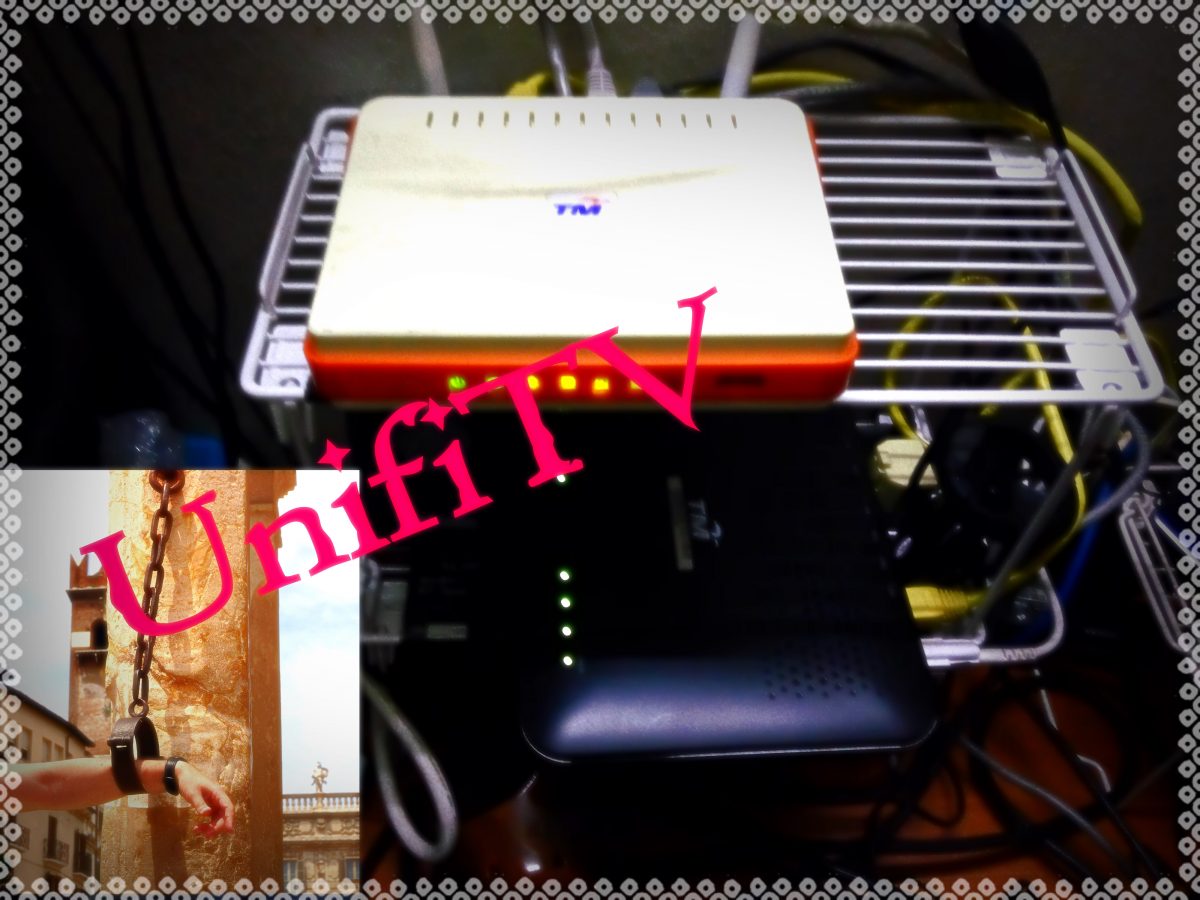
I sympathize with fellow Unifi subscribers who also subscribe to Astro’s satellite TV broadcast and like me, are forced to pay for an IPTV service that they clearly do not need. I think it is about time the Malaysian Communications And Multimedia Commission (MCMC) and Ministry of Domestic Trade, Co-operatives and Consumerism (MDTCC) look into this unfair practice of TM. It is because TM has a sort of “captive” market where it provides the last-mile for most household’s internet service that it can afford to mistreat subscribers like me, forcing us to pay extra for IPTV, that we have no option to terminate,  providing substandard selection of channels and gets away with it.


[show_post_categories show=”tag” hyperlink=”yes”]


I was working on a WordPress project on my computer for a friend-cum-client on a hot afternoon very recently. Suddenly my mobile phone rang.
The caller ID showed that the call was from somewhere in the Klang Valley. I picked up my mobile phone. The conversation, conducted in Bahasa Malaysia went something like this:
“Mr. Chow, you are a current subscriber of Unifi internet service, correct?” asked the lady caller. She went on the identify herself as calling from Telekom Malaysia. I did not catch her name.
“Yup, I’ve been on Unifi since 2012,” I replied.
She then went on to try to sell me an “upgrade” to my current Unifi broadband internet service.
“It costs only RM10 for you to upgrade from your current 30 megabit package to 50 megabit,” the lady said.
“I don’t need an upgrade, I want to stop my subscription to UnifyTV because my contract is long over and I do not need this IPTV service and don’t want to pay for something I don’t use,” I replied firmly.
“Mr. Chow, you can’t. The IPTV subscription comes packaged with your Unifi broadband service, you just can’t detach it” she replied.
Needless to say, I was not too pleased with the information. There was no sale for her!

Can’t detach IPTV subscription from broadband’s

In fact 3 months before this, I did go and downgraded my IPTV subscription from RM50 per month (the “old” Jumbo pack) to the cheapest package of RM30. I wanted to terminate my IPTV service but I was told by the counter staff about the same thing – my broadband subscription is packaged with the IPTV subscription.
Consumers like me are shackled to an IPTV subscription that we do not want. In that occasion, after filing in my complaint of being forced to pay for a subscription where there was a periodic cancelling of channels with no replacement channels for my subscribed package (the latest incident happened in July 2017). I was told that someone “senior” from Unifi will call me to discuss the matter within three days, their “standard operating procedure”, I was told by the young man. Customer service is never TM’s strength. The call from this “senior” person, needless to say never materialized! I was none the wiser on the rationale for being shortchanged (sudden reduction of IPTV channels) and unable to detach the IPTV subscription.

Was told detaching IPTV possible at end of contract

I sympathize with fellow Unifi subscribers who also subscribe to Astro’s satellite TV broadcast and like me, are forced to pay for an IPTV service that they clearly do not need. Worse, there is no explanation from Unifi of why even after the initial contract is over that we still have to pay for something that we do not need? I was given the impression when I subscribed to Unifi in 2012 that upon the cessation of the initial contract, we would have the option to terminate our IPTV subscription. Clearly this has not been the case.
The stability and speed of my so called “broadband” internet can only be described as “patchy”. For a 30 megabit line, one would have expected a relatively stable bandwidth at all times. No such luck. Every evening, one of my security webcams will have its “status light” blinking. This means that it is working but having trouble connecting to the home wifi network. I doubt upgrading to 50 megabit will solve the problem.

No longer “shackled” to home phone number! Now can switch!

If not for the fact that I would have to live with a change in the home telephone number a few years back and the fact that Maxis broadband internet’s performance reputation near my neck of the woods is not stellar (in fact it is not much different from TM’s!), I would have switched already. Time dotCom which has been giving a much bigger bandwidth in Penang (where I lived for 2 years previously), if it eventually decides to make the effort to extend from USJ 6 to my neigbourhood of USJ 9, will surely get me as a subscriber. The house phone is seldom used anyway so it will not have much of a disruption if the telephone number is changed or if we do away with it altogether!

Will the power that be take action?

I think it is about time the Malaysian Communications And Multimedia Commission (MCMC) and Ministry of Domestic Trade, Co-operatives and Consumerism (MDTCC) look into this unfair practice of TM. It is because TM has a sort of “captive” market where it provides the last-mile for most household’s internet service that it can afford to mistreat subscribers like me, forcing us to pay extra for IPTV, that we have no option to terminate, providing substandard selection of channels and gets away with it. None of the other two major competitors, Maxis and Time force their customers to pay for an IPTV package.

Mushrooming of private schooling options in Malaysia, what are the pitfalls?

With the much longer duration of stay compared to college students and that the greater impact of early education on a person’s development, it is vital that children, especially those enrolled in learning centres outside the purview of the Ministry of Education, be given better consumer protection. Hence tighter governance of these learning centres  is badly needed.

[show_post_categories show=”tag” hyperlink=”yes”]

My article on private school education in Malaysia has just been published in Feb 2018 edition of the Selangor Journal. In this article I posed a few considerations that Malaysian parents of school-going kids must think through if they’re contemplating on “going private” and opined that “more choices need not necessarily lead to better options”

cf0d7044-c75c-4f47-b026-315cf495e470

The difference in governance between school and college sectors

I think because historically there have been a multitude of political implications due to policies on higher education, this sector is very tightly controlled by the government where there are six notable Acts of Parliament governing the industry, namely:

  • The Private Higher Educational Institutions Act 1996 (ACT 555 which has been amended a few times with the latest version being published since Dec 01, 2015);
  • The Universities and University Colleges Act 1971 (latest revision: 2012);
  • The Malaysian Qualifications Agency Act 2007 (latest revision: 2017);
  • The National Council For Higher Education Act 1996 (latest revision: 2006);
  • The Educational Institutions (Discipline) Act 1976 (latest revision: 2006); and
  • The Perbadanan Tabung Pendidikan Tinggi Nasional Act 1997 (latest revision: 2006).

In contrast, after an extensive search of the website of the Attorney General’s Chamber of Malaysia, I could really just find the Education Act 1996 (latest revision: 2012) which governs the entire pre-school, primary to secondary school sectors.

Tighter control over private schooling?

The proliferation of private schooling options over the last five years has resulted in Malaysia having 423 such institutions under the purview of the Ministry of Education. I think the governance of these 423 institutions is well set out in the Education Act 1996 and the many guidelines etc. that have been developed over the years. It is the mushrooming of homeschooling centres and tuition centres offering foreign secondary school curriculum that seem to escape the radar of the power that be.

Even for the higher education sector which has six laws governing it, there were many notable instances of the consumers (parents and students) being short changed. Thus for a sector like the homeschooling and iGCSE tuition centres that has been very loosely governed, in my humble opinion, there will be cases of the consumers getting a raw deal soon.

Longer duration of stay of the schooling sector

Higher education players typically have their students studying with them for between 2.5 to 5 years and their students are technically young adults, most of whom are aged 18 and above pursuing diploma (2.5 years in duration), pre-university (1 to 1.5 years in duration) and degree (3 – 4 years in duration). As young adults, college students are much better than their younger counterparts at schools to fend for themselves and to know their rights and obligations of the institutions of higher learning that they are enrolled in.

In contrast children will receive typically two years of preschool education, six years of primary education and at least five years of secondary education, making a typical duration of stay in the private schooling institutions of 13 years, that is 2.5 to over 5 times the duration of stay at the higher education sector.

Hence with the much longer duration of stay and that the greater impact of early education on a person’s development, it is vital that children, especially those enrolled in learning centres outside the purview of the Ministry of Education, be given better consumer protection. Thus higher rigour in governance of such private homeschooling centres should be considered by the power that be. Unlike physical goods, you just cannot undone or “return” inappropriate schooling received!

[You can get a hardcopy at selected Giant Hypermarkets and the town council office (I couldn’t get hold of a copy as yet!). But if you want to read it now, you can download a copy here: http://bit.ly/SelangorJournalFeb2018 ]

Learning to “read” classical Chinese paintings

This piece was extracted from one of the final assignments of a Massive Open Online Course, China Humanities: The Individuals in Chinese Culture from Harvard University that I have just completed successfully. In this essay (which this post is derived from), I tried to interpret the painting named “Fish and Fish Hawk” by Zhu Da (朱耷) (1626-1705). I was elated when my essay was one of the work picked up by Professor Peter Bol, the lead academic for this MOOC for the final discussion of this course!

[show_post_categories show=”tag” hyperlink=”yes”]

Learning Chinese humanities from the best

This piece was extracted from one of the final assignments of a Massive Open Online Course (MOOC), China Humanities: The Individuals in Chinese Culture from Harvard University that I have just completed successfully. I have gained immensely from this MOOCs, learning from top professors from Harvard (and free too!). One of the intriguing new knowledge that I picked up is from Professor Eugene Wang who introduced to us “how to read” classical Chinese paintings.

In this essay (which this post is derived from), I tried to interpret the painting named “Fish and Fish Hawk” by Zhu Da (朱耷) (1626-1705). I was elated when my essay was one of the work picked up by Professor Peter Bol, the lead academic for this MOOC for the final discussion of this course!

Dr. Chow YN's work was picked up by Prof Bol in his final discussion.

The interpretation of Zhu Da’s “Fish and Fish Hawk

I have chosen Zhu Da’s “Fish and Fish Hawk” or more simplicisticaly translated as “Bird and Fish” painting. A image of the painting (shown below) can be found here: http://www.chinaonlinemuseum.com/painting-zhu-da-fish-hawk.php

What’s depicted

At first glance, this painting seems to show a hawk, which is interpreted as fish hawk by some, as a predator eyeing a fish swimming away from it (to the bottom left of the painting). The fish, with its eyes focussing upwards, seems to be aware of the imminent danger but it is pretending not to notice the fish hawk and thus making its escape as unnoticeable as possible but to no avail. The sense of helplessness on the part of the fish is evident. The fish hawk in fact has spotted the fish long ago and could pounce on the fish as and when it wishes! The predatory hawk is perching on a tree devoid of leaves, reminiscent of the “Cold Grove” style which in this case showing that the season could be late autumn or early winter. Thus it seems odd that, firstly a fish would swim to the surface in cold weather and secondly, it is also unusual to see fish hawk seeking prey, not in warmer weather but in the cold, desolate landscape.

How I “read” this painting

I think “Fish and Fish Hawk” is an important Zhu Da’s work as its hidden meaning could depict the life story. Zhu Da, as a direct descendant of the royal family of the former Ming dynasty living under the shadow of the Qing rulers has to tread very carefully in order to survive and not present himself as a threat to the new rulers. In fact, his bouts of seemingly insanity and his seeking of a monastic life for 40 years are his ploys to present himself as a harmless, eccentric or even mad and thus “worthless” descendant of the former royal family and hence he poses no threat to the Qing rulers at all. All along, like the fish in his painting, Zhu Da knows that he will be under the watchful eyes of the officials of the Qing rules as depicted by the fish hawk. After around 40 years of such “play-acting”, and perceiving that the Qing government’s lack of interest in him, Zhu Da only dared to leave the monastery to live a life as an artist. Zhu Da’s use of 八大山人(ba da shan ren) or “mountain man of the eight greats” gives two interpretations, both serve to cement his personality and political predicament. Firstly, as pointed out by some commentators, if one views Zhu Da’s signature of 八大山人 written vertically on his paintings, the words laughter (笑) and cry (哭) can easily be depicted. Secondly, by using the term 山人 (mountain man), he is telling those monitoring his actions that he is resigned to a rustic life, a life in the mountain, literally speaking and thus poses no threat to the Qing government at all!

In this painting, it is obvious that the predator, fish hawk represents the power-that-be or one of its functionaries which is watching over the scene tightly, even during the winter months!. I think Zhu Da depicts himself as the prey, the fish which is trying its best to get away quietly from the predator, but fully aware of the fact that he is not out of danger as yet. The fish hawk could strike at any moment!

As traditionally, fish hawks have been used by fishermen to help them to catch fishes. The presence of the fish hawk could also depict that the predator is under the “employ” of the Qing ruler, it is han jian (汉奸), a traitor among the people!

Relevance to present day

This painting is relevant to life today as many people, inclusive of people living in seemingly democratic nations are feeling just like Zhu Da did… where “big brother” is always watching. In our case, the surveillance for perceived threat to the power that be is extended now to social media realm and virtually all electronic communication too. We also feel like the fish, wanting to escape but not able to do so quick enough, knowing that if we make the wrong move we could be in serious trouble! The desolate scene depicted by Zhu Da also signifies the economic hardship felt by the poor denizen of the world, with a high unemployment or underemployment, income that has not really rise up for ages and real inflation eating daily into the living standard of the people.

Final thoughts

Obviously I am not an expert in classical Chinese painting but merely a very junior learner. I shared my work with these intentions:

  • Promoting lifelong learning via MOOCs.
  • Informing my readers about  this free (well auditing is still free) learning from a top university & top professors.
  • Encourage more people, especially those who are Chinese Malaysians who, like me, do not have a good grasp of the Chinese language, culture or humanities to take up this MOOC in the next offering (in fact this MOOC is open till Mar 2018 and you can still enroll and complete it if you work hard, like me!).

After this MOOC, I will now look at Chinese paintings, or more like “reading” these with a different mindset!

The simplest of solutions may be the best

[show_post_categories show=”tag” hyperlink=”yes”]

I have made it a habit to routinely scan the feed of the business social medium platform, Linkedin for updates, news and sharing of articles etc. from my 500+ contacts. It is amazing what you can learn from your Linkedin contacts these days. One of the many learned friends from Linkedin platform who has consistently sharing great articles is Jason Schrott, CEO of Gateway Education USA. I picked up lots of updates, reviews and news about higher education, especially in relation to higher education sector in Asia by simply reading what Jason has shared! It is therefore not surprising that this article was inspired by Jason’s latest post about Greek universities using blockchain technology (aka the technology that drives the now almost ubiquitous cryptocurrencies such as bitcoin) in order to secure the authenticity of college testamurs.

A novel way to use blockchain technology

The Greek universities, Aristotle University of Thessaloniki, Democritus University of Thrace and Athens University of Economics and Business embark on this open source pilot project using blockchain platform in order to provide a transparent system for their graduates to proof the authenticity of their academic credentials electronically and securely. The article also mentioned that with the use of this technology, not only will the authenticity of the testamurs issued by these three universities be secured, prospective employers and just about anyone wishing to authenticate the academic credential of graduates of these universities can do so electronically and thus will no longer need to contact the respective universities for assistance, saving time and resources.

During my stint helming a university college from 2015 to 2017, I faced precisely the same problem of how to secure the authenticity of the testamurs issued to graduates from fraudulent usage. We received almost two to three enquiries per month from prospective employers and companies doing background verification of candidates for employment. Without a good and foolproof system of systematically checking and verifying academic credentials issued by my institution, the very reputation of not only the institution but that of all the alumni and current students would be in jeopardy.

Microdot printing is great but expensive & not easily available

I remember learning from a former colleague who ran a high-tech printing firm about the magic of microdot printing technology whereby authentication codes etc. can be easily hidden among the letters and symbols etc. that are usually printed on a document. However, after two weeks of relentless, but fruitless search for a vendor with this technology (and I was subsequently advised by the same ex-colleague of the high cost of the security feature), I had decided to abandon this technology all together.

A tried-and-tested “offline” method

It was around January – February, in early 2015 that I suddenly remembered what I had to do in order to officially graduate from my alma mater, Queen’s University of Belfast. I have a better memory of this process than most people as I happened to have to go through the same process three times during my eight and a half years of studies at Queen’s, for my Bachelor, Master’s and PhD degrees! The process was simple, a graduand will only be recognized as a graduate if he/she register his/her academic attainment at the Registry of Queen’s. All graduands are obliged to seek out the services of the Registrar (or his/her authorized deputy) who will verify and authenticate a graduand’s academic records and attainment before allowing this graduand to sign on a big book (two feet by one foot in size) which serves as the roll of graduates. The entry will only be valid if the signing by the graduand is witnessed by the Registrar who will countersign on the relevant space. Thus a graduand will be deemed to have graduated if she/he has completed her/his entry into the roll of graduates successfully. And it is this roll of graduates which is the definitive proof of one’s graduate status. Hence this process is totally “offline” and will not be subjected to “hacking” as the roll of graduates is kept securely by the Registry.

Needless to say, I emulated my alma mater’s process and only spending a few hundred ringgit to “custom-make” a few volumes of the “big book” (my version was a bit more modest in size, about 1.5 feet by about 1 foot). Although this created a tried and tested system of using a physical roll of graduates, it still did not solve the problem of how to ensure the authenticity of our academic testamurs issued to graduates. Without the use of microdot printing technology, fraudsters can still reproduce almost identical testamurs or if blank testamurs fall into the wrong hand, it would be like giving away an “open cheque”! Thus, I had to ponder how I could solve this problem without spending a lot of money which would not endear myself to the Board of Directors!

Finding the “hidden Mickey” – that’s the key!

When my children were growing up, they liked to watch Disney cartoons on TV. I remember one of their favourites was a cartoon that had a very participatory feature called “spot the hidden Mickey” where viewers are given scenes from different cartoons and their job was to spot any sign of the classic Mickey Mouse’s head, symbols etc. “Why don’t I put in a “hidden Mickey” in a different spot for each year’s testamurs?”, I told myself.

Thus I quickly talked this over with the lecturer who produced all the artwork for the institution and we decided to “hide” a hidden message within the watermark of the testamur’s design. We would change the “hidden message” every year and “hide” this in different spot thereby replicating the key security functions of the microdot technology. However, this is still not fully secured as anyone who has stolen a “blank” testamur of the relevant year can still defeat our security feature.

Employing the embossing method with a unique seal

The final security feature was in fact, the simplest. All testamurs have to be embossed by a seal of the institution, that is the ‘standard practice” in all institutions. This embossing is usually done on a big circular shape on the testamur itself. However, anyone with the “right” determination can spend RM200 to “clone” our seal. Thus I needed something more. I went on to seek the help of an expert in Chinese calligraphy, none other than the head of my institution’s School of Chinese Studies, to create a text of the institution’s name in Chinese using a font that is not easily emulated. We then made another smaller seal with this Chinese calligraphy. This second seal would not have a “fixed” spot on the testamur but rather its position will be rotated among a number of “possible” locations, which will be different for each year of issue. To top it all, we would be having the Registrar or authorized Registry staff handwrite the graduate’s student identification number at the back of the testamur.

The system created and employed by my former institution cannot be fully “automated” as in the Greek universities’ using a blockchain platform. But, unlike our Greek counterparts, Malaysian colleges cherish the opportunity to network with prospective employers who need to contact us for verification/authentication of our graduates’ credentials. We also need to get as much information on our graduates employment prospect as possible and the best people to have the answers are these prospective employers!

The simplest solution is the cheapest and most effective!

Thus, by spending just around RM500, I created a simple solution that could defeat most but the very skillful forger. We do not have to rely on high technology solely to provide a solution. To guard against calamities, I had put in a process of taking photographs of the roll of graduates each year and storing these in the cloud, relying on Google Drive with access shared by key staff only. As Google “never forgets”, I think even if our roll of graduates is lost in a fire or a flood, the records are securely kept in the “cloud”. In my case, the simplest of all solutions is the cheapest and may be the most secured too!

Is PTPTN out of the woods yet?

My former senior colleague, Mr. Yeap Boo Yam, formerly the Chief Editor of the online news portal, theantdaily.com had kindly invited me to contribute one article to the relatively new publication, The Selangor Journal recently.

Mainstream press missed the forest for the tree

The topic of my article was a commentary on the performance of the National Higher Education Fund Corporation (PTPTN) where I noted this was glaringly missing from all mainstream reports when figures on PTPTN were released. Everyone seemed to be fixated by the magic 410,500 bad debtors who never repaid a single sen! No one cared to notice the tremendous difference that the stringent (or more like “industry standard practice”) debt recovery efforts coupled with the barring of bad debtors leaving the country had on the debt collection figures.

As a student of higher education management, I started to collect historical data on PTPTN’s performance and was able to pull these out to compare PTPTN’s performance for the last 11 months. The funny thing is, why PTPTN could not publish a report card regularly and why do we have this seemingly odd “11 months” data rather than a yearly figurs to make comparison more valid?

PTPTN’s fund is for local studies only

Lately, there has been some talk of, in view of PTPTN’s greater recovery of debts, to consider giving loans to Malaysians for overseas studies. In my humble opinion, this is beyond the scope and duties assigned to PTPTN. PTPTN’s main role is to make sure that the playing field, as far as access to higher education is concern is made as level as possible for all eligible Malaysians. PTPTN’s main mission is therefore to ensure that qualified student should not be kept out of universities or colleges because he/she comes from an underprivileged background. We have collectively 500 plus colleges and universities (both private and public) providing academic diploma, degree and higher level studies where most, especially those in the private sector are chasing after students.

College “seats” are not being filled up. Partly this is due to a cut back in PTPTN funding in November 2014, especially severe for the private sector. I feel that the priority is to maximize PTPTN’s pool of funds for local tertiary studies where the cost of degree studies is a fraction of what you can buy overseas (principally in the West). Anyone aspiring to study overseas should be free to do so but at  his/her own financing. PTPTN, I feel should be reserved for students who are enrolled in local institutions of higher learning ONLY! One needs not go overseas for a degree if one does not have the financial means to do so since there are plenty of local alternatives, many are just as good academically as their overseas counterparts.

Putting my money where my mouth is

My wife and I practiced what we “preached”, we paid for our son, Leland’s entire 3 years of studies at the University of Nebraska-Lincoln using our own savings.  Leland found work on campus to help pay for some of his expenses to help to lessen our burden. If for whatever reasons that we were not able to fund this, our son could have had the option of remaining at SEGi University to complete his Bachelor degree, after all, our son was awarded a full tuition-fees waiver as a scholar of SEGi University in 2013. The fact that we “broke the bank” in so doing (the US$ went from US$1=RM3.20 to touch US$4.50 at its peak  during our son’s studies, adding 40% to the total cost) was a consequence that we had to accept and had to bear in order for our son to experience living and learning in the USA. We are still “nursing” a “sizable” bank overdraft and we still owe my elder sister for the US$9,000 that she loaned us! That is the price we had chosen to pay (and the kind help we received from our sibling). We would never expect PTPTN to help us in any way at all.

The Selangor Journal  –  a ‘hot’ item!

It seems that The Selangor Journal is an hot item at the various distribution points and I could not get hold of a copy till Mr. Yeap gave me one today! A photograph of my article is provided below.

CYN-SelangorJournal-Dec06-2017-PTPTN

The difference between interruption and interference?

As managers, we should worry more on the outcomes or outputs of a project or a task. We should leave it to the wisdom of our team members to figure out how to accomplish that. We should interrupt to check on progress, to offer guidance or just a give a word of encouragement. We should never interfere in how our team members get the job done or if they are doing it “in our way”.

When I was young, my family sometimes had more than one dogs in the house. I would always be fascinated by the behaviour of our dogs during feeding time. I learned animal behaviour & instinct at first hand: when it comes to food, dogs do not take kindly to interference from any party, me, the young master, was of no exception. I tried experimenting on our dogs feeding sessions by either taking a portion of the food from the feeding bowl of one dog and putting it to that of another dog’s or taking the bowl of one dog away and adding more food. In either cases, the interruption in their feeding frenzy or the interference by redistribution of food portion were rewarded by growling of the affected dogs! I learned the basics of dog’s feeding behaviour: neither interruption or interference were tolerated!

How do human handle interruption and interference in learning?

Personally, especially during the time I was teaching college students, I welcomed interruptions from my students during lectures and especially during laboratory classes. When I was a university student, I would like my doubts on a topic being taught by my lecturer cleared up as soon as possible (preferably during the class but in most cases I had to “ambush” my lecturer after the session had ended). Often the abstract concepts being taught would require a grasp of the key facts before one would be in the position of understanding the entire topic. Thus as a lecturer, later in life, I really did not mind being interrupted during class, especially if the interrupter had questions / doubts related to the subject matter. However, I would not take it too kindly if someone interfered with my teaching such as talking loudly in “competition” with my attempt to have the class’s attention or similar noise pollution from the next door classroom.

Interruption is good, interference is a devil!

When I worked as the assistant to a tycoon, I often received a 3-lines memo from him to put together a business proposal. The deadline usually was two weeks. It would take me a few days of desk research to gather the required information to commence work. I would not write a single word until I had constructed a concept map of the business proposal and find ways to interrupt my boss’s schedule (by stealing a couple of minutes in between his appointments) to get a confirmation on the outline and key expectations of my boss. Next, I would commence working on the financial projections of the proposal and would, if anomaly was found, seek further guidance from my boss. Although I was given two weeks to complete the business proposal, I normally would have on hand up to half a dozen more “cases”. It would be my boss’s habit to check on progress regulary. Usually three to four days after the confirmation of the concept. Again, I welcome the interruption as it gave me a chance to reconfirm the direction of my work and to allow me to suggest modifications / additions if appropriate and most of all to seek help if I could not find sufficient information. Because of this “structured” way that I worked with my boss, who often would tell me that I had not two weeks, but seven days to get the job done (due to external factors), I rarely had to work too late to complete my work and often did so ahead of time.

My boss, being a good manager, had never once in the nine years that I was with him, interfered in my work such as telling me how I should commence my work, how I should write, etc.. Instead, he was only interested in the end result, that is a good business proposal, the “path” that I took to get this done was immaterial to him so long as I produced the “goods” in good time and in the expected quality.

When I became the leader of a university college a few months after my stint with this tycoon, I adopted the same strategy. I would assign projects and tasks to my team but would not interfere in the course of their work. I made good use of my personal assistant to interrupt and check on progress for me. I would roll up my sleeves to help if anyone was stucked. My team soon learned to adapt to my working style and most would volunteer to update me on progress or to seek my guidance if they faced obstacles in their work. What I could not tolerate was someone sitting on an assigned task, making excuses for their incompetence, sheer laziness or their lack of a sense of responsibility. I am glad to recall that, for my two-years stint, I had only really given two individuals a good dressing down on their lack of professionalism.

Black cat or white cat, it makes no difference!

I think all managers should learn to appreciate these wise words of the great Chinese stateman, Deng Xiaoping, “It doesn’t matter whether a cat is white or black, as long as it catches mice.”

As managers, we should worry more on the outcomes or outputs of a project or a task. We should leave it to the wisdom of our team members to figure out how to accomplish that. We could interrupt to check on progress, to offer guidance or just a give a word of encouragement. We should never interfere in how our team members get the job done or if they are doing it “in our way”. We must always remember that there are more than one ways to skin a cat. We should  never “sweat on the small stuff” but always have the big picture, i.e our goal, in mind!