Dave Seah is the inventor of Compact Calendar that I have adopted for many years now.
I first introduced its use in 2008 when I was the Deputy Principal & Academic Director of Technology Park Malaysia College. This practice was extended when I took up the job of CEO & Principal of Han Chiang College in 2015.
Nothing beats the compact calendar when you need to plan events for the year and stay clear of “pit holes” like the eve of public holidays (have your event just before or after a religious event in Malaysia can bring on many complications and unforeseen political baggage!). All Han Chiang College’s academic calendars (for different programmes) are now done using Dave’s compact calendar that I have introduced which are adapted to Peang State (to accommodate the differing state holidays in Malaysia).
I am enclosing links to the compact calendar that I have adapted for Selangor state where I will return to reside upon the completion of my stint in Penang. Two files are available, one is in PDF format and the other an Excel file (customizable by my readers, just change the holiday lookup table to your particular state). I have included the school holidays taking data from a holiday website and confirmed the data with the Ministry of Education Malaysia’s site. Of course, the school holidays are meant for Selangor state (where Perlis, Perak, Penang, Negeri Sembilan, Melaka, Pahang, Sabah, Sarawak and the Federal Territories of Kuala Lumpur, Putrajaya & Labuan are in the same group which observes Sat & Sun as the weekend).
To download the editable Excel file, please click this link. For the Compact Calendar 2017 customized for Selangor State in PDF format, please click here.
A word of caution for those wanting to customize this compact calendar. You will need to use Excel. Open Office / LibreOffice will somehow mess up the formatting a little. Google Sheets is a big “NO NO” as the formulae and formatting both have issues and affect the compact calendar. Please do not forget to read the instructions before you do any customization.
Enjoy your annual planning and say thanks to Dave Seah for his invention.
The achievements of former beauty queen, singer, actress, producer, successful business woman, Soo Wincci have now debunked the negative notion about beautiful women. Dr. Soo is the first Malaysian beauty queen (dare I say, Malaysian actress/singer too!) who has earned her Doctor of Philosophy in business administration from the Open University Malaysia. Even someone as capable as Soo Wincci took 6 years of part-time studies to complete her doctorate studies. “Earn” is the key word here as those of us who have been through the PhD journey will tell you that you have to have what it takes to earn your PhDs!
Dr. Soo Wincci, the first Malaysian beauty queen, singer, actress to earn her PhD (This image was taken from Dr. Soo Wincci’s Facebook page)
December 17 this year marks the 26th year of my being conferred a Doctorate degree by my alma mater, the Queen’s University of Belfast, Northern Ireland. Everyone who has completed his/her PhD journey will have a story to tell. Each and every one of us who, I have often jokingly call ourselves, “the permanently head damaged”, has a unique PhD journey.
My full-time PhD journey took me just about three years during which I worked long hours in the laboratory or in the greenhouse. My PhD journey was shorter than many because my Master’s degree required me to embark on a one year research project where I had horned in many of the basic skills required of a PhD students and my scholarship would only support me for 36 months! My PhD journey is a “typical” of all who are lucky to have secured scholarships / sponsorships to make the journey as full-time researchers. The first six months of my PhD journey was one for soul-searching. I read copiously, made plenty of notes (it was in the late 1980s… we had no internet and the PC was a luxury that all research students and staff had to share) and tried my best to figure out what I should be doing for my PhD. In my case, I was helped greatly by some of my former lecturers and I was lucky to have my main objective very clearly: to find a way to clone Narcissus (daffodils) bulbs using plant tissue culture technology. A travelling scholarship from the British Royal Society which partially financed a one-week study visit allowed me to learn from experts in bulb science in the Netherlands. Dr. Piet van der Linde (of the Flower Bulb Research Institute at Lisse) selflessly taught me the key laboratory technique to obtain healthy and microbial-contaminants-free cultures. I thought then my work could be easily mapped out.
How wrong I was! For over 18 months after the visit (i.e 2 years into my PhD studies), I was not progressing well and I could not make the cloning process produce sufficient number of cultures. Even if I could do the magic in cloning masses of shoots, the end products required were bulbs. I was in great distress to say the least and at times my PhD degree seemed like a pipedream. Then, I happened to “mistreat” some of my cultures on a gloomy wintry Friday night in late 1989 mainly due to frustration. I did not know then that this “mistreatment” (I was brutal in the way I chopped the culture down) was the first turning point of my PhD journey. I had another turning point shortly after which allowed me to “make” bulbs out of shoots. The end of the tunnel was insight by early 1990 and I completed my work (actually was “barred” from the laboratory by my supervisors so that I could concentrate on writing my thesis) within 6 months and was awarded my PhD in December 1990.
The “brand new” Dr. Chow Yong Neng on December 17, 1990 with his late mother, Mdm Wan Sim Then and late father Mr. Chow Kong Yong by his sides, taken on the lawn behind the Lanyon Building, Queen’s University of Belfast.
I happen to belong to a closed Facebook group, “Doctorate Support Group” which I think Dr. Soo is also a member. This is a mutual support group of those pursuing doctoral studies as well as some “oldies” like yours truly whose main aims for being in the Group are to (a) give moral support to fellow PhD aspirants (b) to receive and provide information on research, jobs, learning etc. All those who belong to this Group, especially those who have completed their PhD journeys have at least 3 things in common: (a) being through “hell” is inadequate to describe the kind of hardships that all have been through; (b) everyone has been through a period of soul searching, self-doubt and in severe cases, depression during the course of this PhD journey; and (c) everyone has to sacrifice some sort of family or personal life in order to pursue her/his PhD dream.
Having a PhD does not show that you are smarter than those without these 3 little letters behind your name. Instead it shows that the PhD holder has the kind of tenacity, the ability to apply knowledge and skills to work on a complicated problem, and to communicate her/his new found knowledge in an effective manner. Each and every one of us who has been awarded a PhD has one thing in common regardless of our fields of studies, be it social sciences, engineering, computer science, physical, chemical or biological sciences, we all have created a new piece of knowledge for the betterment of mankind. It is this new piece of knowledge that ultimately earned us our PhDs! By “permanently head damaged” it means that all who been through the tough process of working on their PhDs would have successfully endured the challenges, which at times created great nightmares, anxieties, sense of helplessness, dejection etc. which may affect the PhD students’ psychological well-being to the extent that some “damage” could result. I can assure my readers that (and I hope that other PhDs agree with me) all these “damages” are worth every single effort that we had to put in and all these “damages” are transient in nature!
I have met my fair share of “pretenders” – those who hold dubious or fake PhDs. In most cases, those of us who have actually earned our PhDs like Dr. Soo just did would have little difficulties in figuring out the “dubiousness” of these so-called PhDs by asking 3 – 4 simple questions relating to these people’s PhD journeys. You cannot earn your PhD because of your “life experiences”, this is especially so if one is very young. There is no shortcut.
In 2003, when I first met Professor William Purcell (then of University of Newcastle, Australia and now the Deputy Vice Chancellor of University Technology Sydney) and mentioned to him about an individual who was an active Chinese educationist having laid claim to not one but three doctoral degrees. To this, Professor Bill Purcell’s response was a classic, “What’s wrong with the first one?”
I can understand someone with lots of determination, time and resources, after earning a PhD in one field (say engineering, or biological science) could then went on to study up to doctoral level in another different field such as management. These sort of people are very rare indeed as we can see from Dr. Soo’s example, it would take someone with a job and not working on the doctoral studies full time, around 6 years to complete their doctoral studies. Incidentally there is at the time of writing of this article (Nov 02, 2016) a Hong Kong TVB drama series where a very attractive actress was playing a boffin with not one, two but eight PhDs… we all know that in reality this is not possible!
Honorary doctorate degrees are another kettle of fish. These are awards often given out to people in recognition of their having made great contributions to society, to the community or to the awarding university. People holding honorary doctorates are, by tradition not supposed to call themselves “Doctor” but rather they should put their titles in parenthesis i.e. (Dr). It is very rare for an “average” person to be honoured with even one honorary doctorate as one might imagine the magnitude of contributions to society etc. that this person must have made to warrant the said honorary doctorate. Thus I read with great amusement (the story was picked up by the mainstream and online press) about a sort of “marketing whiz kid” cum motivational speaker who claimed to have not one but three honorary doctorates. These claims were resoundingly refuted by the institutions in which this gentleman claimed to have given him such awards. The tell-tale sign of this person’s dubiousness was the fact that he insisted on addressing himself as “Dr” XXX! No honorary doctorate degree holder worth her/his salt will want to show his/her ignorance by calling himself/herself “Dr So & so”!
To those who are working tirelessly on their PhD studies, do take Dr. Soo as a role model and do get yourselves into the closed “Doctorate Support Group” where people like me (the oldies) and some “youngster” (I dare say Dr. Soo and a whole cohort of recent fellow “permanently head damaged” people ) will be there to cheer you on. To those who aspire to come on board, do not wait. You do not need to be a genius to pursue your PhD studies, but what you do need to have is a strong will to succeed. Pursuing your PhD studies is a tough job but as the saying goes, “when the going gets tough, the tough gets going”!
Dr. Daphne Koller, Founder & CEO of Coursera (photo source: Coursera)
Coursera’s founder and CEO, Dr. Daphne Koller was reported by the BBC to opined that within the next five years complete undergraduate degree programmes will be available from top universities.
The disruptive technology of MOOC (Massive Open Online Course) is really the underlying cause of this development. This was somehow not covered in the BBC’s story. It has instead equated MOOC to “traditional” online learning.
A lot of ivy league universities have been dabbling with MOOCs for at least 3 – 4 years by now and most have had gained great expertise on how to produce good MOOCs. It is a natural progression for these institutions to move from offering short courses to “specializations” (a bundle of courses) and to see some revenue from the verified learning tracks. A few institutions under Coursera have indeed offered credits for MOOCs as evident from the following:
However there are only a few institutions offering full MOOC-driven degrees as shown in the next photograph:
I think even the US universities are having to deal with accreditation issues when putting degree programmes online. Putting MOOC-degrees online thus comes with a few hurdles, especially on the regulatory side. In Malaysia, the soon-to-be finalized MOOCs Guidelines by the Malaysian Qualifications Agency (MQA) (for which this author had the privilege to provide feedback at the drafting stage) will be treating any MOOCs the same as conventional delivered courses when it comes to the recognition of these for academic credits. MQA’s further limit the number of MOOC courses that can be credit transferred to a maximum of 30% of an academic award. Somehow MQA’s guidelines are silent on the accreditation of fully MOOC-delivered academic qualifications. I think it will be necessary for MQA to state its position on this when it has the chance to study the decisions of other accreditation agencies.
But as Koller has said, full online proctoring of examination is not as difficult as people have thought and with MOOC technology, it is much more secured. Firstly MOOC technology now have produced artificial intelligence smart enough to detect a learner’s keyboarding style and even writing style. Online proctoring of examination as I found out in 2013 was no rocket science. My own son, Leland Chow was still in Malaysia preparing for his studies at the University Nebraska-Lincoln and I encouraged him to take Udacity’s “Statistics: The Science of Decisions”. The online proctoring on the day of the final examination was simple. The online invigilator contacted Leland to instruct him how to angle his webcam along with a mirror by his side. That was it. The invigilator supervised the entire duration of the final examination. Because of the online proctoring, UNL gave Leland 3 credits for the MOOC course.
With competition among universities getting more intense for the best students, the more “student-centric” a degree programme is, the chances of attracting better calibre students are better.
However, as a 20-years veteran in the higher education field, I think that for younger learners, a blended approach is still the best. In addition, all 18 year-old students would need to experience on-campus life to forge life-long networking opportunities with their peers. This is something MOOCs cannot provide effectively. Human-to-human direct interaction after all is still the best way to provide a holistic learning package for young adults.
Having said this, I think MOOC-degrees will be the thing to come. But it may still be targeted at adult learners rather than school leavers.
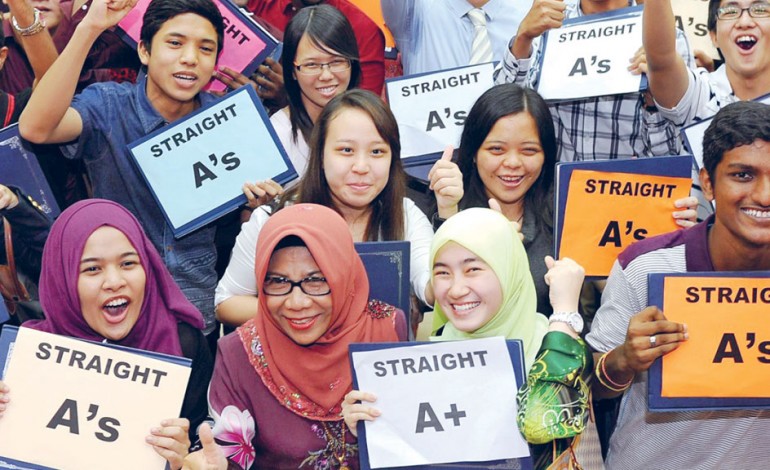
A student from a remote village in Sabah who did not have the means to attend private tuition classes for key subjects may scores “only” 5 “A+”s compared to a student from Subang Jaya who attended private tuition classes for these subjects who scored 8 “A+”s. As an educationist, I will put my money on the Sabahan student being academically a better student compared to the student from Subang Jaya. Further, because the Sabahan student could thrive without the benefits of tuition classes, I will opine that the chances of this student faltering at university-level studies will be much lower than his/her Subang Jaya counterpart. However by evaluating students based initially on just the number of “A”s scored the odd is stacked heavily against the Sabahan student.
This article is rather long and in its original form was published in two parts in Han Chiang News. It was written in response to the recent news in Malaysia of government bursaries/scholarships students who were promised full funding for overseas universities being told that the coffer does not have enough money and so the power that be had to renege on its promise. I have decided to republish the unedited version here in its entirety.
In recent weeks the press has highlighted the case of many public service department (JPA) scholars having their collective dreams of a fully paid for undergraduate studies overseas being dashed. The lack of fund was the main cause of the drastic decision by the JPA to reverse course for these students who did spectacularly well in their Sijil Pelajaran Malaysia (SPM – Malaysian Certificate of Education) in recent years. However all were given full financial support for pursuing their studies in local public and private universities.
This case begs the question, “Does society owe a student who has scored straight “A”s in SPM an oversea scholarship?”
While it is disappointing to see talented students who obtain top scores fail to continue their tertiary studies overseas, one must view this situation in a holistic manner. SPM is not an easy public examination for one to score straight “A”s. However those who scored straight “A”s in SPM are not necessary the same people who eventually shine well at university studies. There are many cases of SPM holders with more than 10”A”s who struggled and even tumbled at their undergraduate years.
All of us who have been to college know that there is a big gap between SPM and STPM/”A” levels or equivalent pre-university qualifications. The gap from pre-university to tertiary level is even bigger. Although in general those who did well at SPM would be able to cope with pre-university studies, there are many examples of students with very good SPM and pre-university results faltering at university studies. Thus for a country to commit so much resources to send its citizen to study overseas at this early stage is somewhat of a gamble. The safer bet is in fact what the JPA has done: let these students with great SPM results and pre-university qualifications study for their undergraduate degrees in local public or private universities. If these students turn out not to be what the Chinese described as “Xiao Shi Liao Liao, Da Wei Bi Jia ” (小时了了, ,大未必佳 - being bright at an early age does not necessarily bring success upon growing up), the country can then commit great resouces to send them overseas perhaps on a 2 + 2 model, saving great resources at the same time allowing the selectors to fine tune their selection. Many established private institutions of higher learning have attained great expertise, reputation and network of good overseas institutions to take on this responsibility. For those students who have proven “track records” the country can then commit greater resources to send them for their Master’s or even PhD studies overseas.
Judging someone’s ability to learn well and flourish at university based solely on his/her SPM results is not a very fair method. A student from a remote village in Sabah who did not have the means to attend private tuition classes for key subjects (like Malay, English, Mathematics, Physics, Accounts or Additional Mathematics) may scores “only” 5 “A+”s compared to a student from Subang Jaya who attended private tuition classes for these subjects who scored 8 “A+”s. As an educationist, I will put my money on the Sabahan student being academically a better student compared to the student from Subang Jaya. Further, because the Sabahan student could thrive without the benefits of tuition classes, I will opine that the chances of this student faltering at university-level studies will be much lower than his/her Subang Jaya counterpart. However by evaluating students based initially on just the number of “A”s scored the odd is stacked heavily against the Sabahan student.
I studied for my G.C.E “A” levels at a state-run technical college in England in early 1980s. The college’s “A” level students were mainly those who had taken the examination before but were repeating for one reason or another. Nearly all of them wanted just to pass. Because of clashing of timetable, in the first year of my “A” level studies I could only take the Applied Mathematics half of the “Pure and Applied Mathematics” as a part-time-revision-class which had 50% of the hours of the full-time class, covering only 60% of the syllabus. Yet, I was able to score a Grade A for this subject after studying only for 1 academic year. In my case, my “struggle” was recognized by the university selectors and I received two offers to read dentistry in 1982. The lower offer was just any two subjects at grade E or better! Unfortunately, due to my family’s lack of fund, I had to decline both offers despite meeting the minimal requirement easily with one further Grade “A” and two Grad “B”s. Compared to a boarding school student with dedicated school masters and a greater teaching system who scored 4 Grade “A”s at A Levels, I think my achievement under a much less favourable condition would be more reflective of my ability to learn and survive at university level and beyond. Who should you think is deserving of a scholarship to study at university?
To those students who are expecting (or have scored) straight “A”s at SPM and are now at a crossroad as far as tertiary studies is concern, I urge you to take note of the following points:
No one owes you a scholarship just because you scored well. There are a lot of other influencing factors that the selectors of scholarship fund need to consider. You have no right to demand for a scholarship no matter how well you think you have done in your SPM. As a holder of 2 postgraduate scholarships, I can tell you that getting a scholarship is a privilege indeed and not a right!
Because of (1), you must show courtesy under all circumstances. The matured response reported of the recent JPA “Bursary” students’ case in appealing for help rather than “exerting their rights” is the correct approach. You will not get far if you adopt a confrontational approach and project the image of the world owing you something just because you have the talent to score “A+”s!
Have a Plan B, C or even D.
Local private colleges provide lots of scholarship opportunities. Most will regularly contribute to the Nanyang Siang Pau’s and Sin Chew Daily’s respective scholarship scheme. However based on this author’s observation, in many years, most of these scholarship awards were not able to find rightful recipients due mainly to the lack of qualified applicants. This shows that there are lots and lots of scholarships out there! Go and grab these!
Be flexible in your aspiration. Have an open mind in choosing for at least one other alternative field of studies. Remember Sun Tze’s “Art of War”, “Zhi Ji Zhi Bi, Bai Zhan Bu Dai” (知己知彼,百战不殆: know yourself and know your enemy, and you will never be defeated in a 100 battles). Often you are your worst enemy in this context! Be realistic. Know your own strengths, weaknesses and interests, match these as far as possible with the different tertiary fields of studies. This will help you to formulate your Plan B, C and even D. Make use of the knowledge of your school counsellors, talk to your seniors who are already at universities/colleges, attend as many education fairs as possible. Whatever you do, be honest with yourself.
Do your research on what scholarships are available early, preferable BEFORE taking your SPM. This will allow you to evaluate which fields of studies or which institutions are your top choices. You can also test out your own ability, aptitude and interest in each of the shortlisted fields. Do not wait till after your SPM results are announced to do this “homework”.
Have an open mind. Not getting a scholarship for overseas studies is not the “be all and end all” episode of your life journey. Remember the saying, “When a door shuts in your face, one will open up somewhere else for you.” In my case, not getting to study dentistry was a blessing in disguise. I found out why I did badly on 3 dimensional vector in Additional Mathematics and why I could not for the life of me figure out the technical drawing of my roommate only when I was already at university reading general agriculture. I have a form of learning disability in spatial recognition. I would have made a very lousy dentist, assuming I could pass in the first place! The “door” which opened for me was indeed my undergraduate studies in general agriculture, through it, I managed to secure two different scholarships for my Master’s and PhD studies! See a counsellor if you are really depressed but get this bout over as soon as possible. Remember the Chinese saying, “Everybody has something that they were born to be good at (天生我才必有用 ). Your job is to find that “thing” that you are good at and pursue your tertiary studies in that “thing”. Having good SPM grades definitely will put you head and shoulder above most candidates.
The most memorable line from the highly successful local movie, “Olabola” was uttered by an actress in Cantonese: “Even though I scored As in every subject in Form 5, I am still stuck here as a rubber tapper…..” That was in the 1970s. In today’s environment with close to 500 private institutions of higher learning chasing after students, the protagonist would have secured a scholarship somewhere and PTPTN loan would have covered most of her tuition fees. However, if you are one of those SPM holders with less than 9As and wonder if there is any chance of getting some financial assistance, you will be glad to know that there are still opportunities available to you. Editor’s Note: Most private colleges have many academic-merits-based and need-based scholarships and bursaries specially designed to help students contemplating tertiary studies due to financial constraints. You don’t need to scored As in every subject in Form 5 to receive a bursary!
[show_post_categories show=”tag” hyperlink=”yes”]
Chinese New Year is a time for reunion, not only for family members but old pals and schoolmates as well. This year’s reunion dinner for my school mates (especially for those who are based in the Klang Valley) happened on Friday, Feb 12, 2016. As I knew my guys would be consuming lots of alcoholic beverages for this function, and traffic in Bukit Bintang area (where our dinner would be held) would be a nightmare, I took the RapidKL 770 bus instead and planned to change at KL Sentral for the monorail.
Then the first “lightning” struck: one of the members of my Queen’s University Alumni Association Malaysia buddies, Andy Gan posted this on our Whatsapp group – “Our dear friend Michael Leong Hong Kah passed away this morning.” I spent the rest of the bus journey checking the various social media and chatting with Andy to verify this shocking news. Not wanting to accept this as Michael Leong just exchanged email with me in late November 2015 and he told me he was recovering well, I contacted our mutual friends, Dr. KK Wong and Seetho Tan who are based in Singapore (where Michael had been living since the early 1990s). I first heard of Michael’s fight with colon cancer when I read his blog in April 2015. In late November 2015, through an exchange of emails Michael told me, “I am still recovering from colon cancer. “ My worst fear was confirmed later that night when Dr. KK Wong called to confirm that Michael had left us. I have lost my best buddy of over 30 years. The second “lightning” struck!
Michael and I were real buddies. We helped each other with our respective weddings. I gave the “best man” speech in his wedding dinner and he was taking lots of photographs for mine…etc. and the list goes on.
Michael (front row, second from the right) was one of my photographers during my wedding dinner in 1991.
Michael and I came from the same hometown, Ipoh, but despite our being of similar age, our path never crossed until we both were in the UK. Our first meeting was around Christmas 1979 in London. But we were just acquaintances back then. Michael’s elder brother, Dr. Tony Leong was studying medicine at Newcastle University, England and I along with my three other friends (all former SMJK Sam Tet Ipoh boys) were students at South Shields Marine and Technical College, 10 miles away. Tony was asked by one of our seniors at school who knows Tony well to keep an eye on us as we were just 17 years old and living on our own for the first time in our lives.
In 1982, armed with my GCE “A” levels result slips I went to Belfast after meeting a fellow Malaysian, Clarence Ko in Dublin where I was accepted to read agriculture at University College Dublin (UCD). Clarence persuaded me to give the Queen’s University of Belfast (QUB) a try as it would mean saving of one year compared to UCD. Apart from Clarence, I only had two acquaintances in Belfast, Michael Leong and Khoo Thiam Chye. October 1982 was the start of my 30 odd years friendship with Michael Leong.
Michael took me to QUB’s admission office and then to different faculties to help me finally get a seat to read general agriculture. As I had to “waste” one year studying in Remove Class on account of my having studied in a Chinese primary school, Michael who was 1 year older than me was in fact 2 years my senior at QUB. As both of us were busy with our studies I only bumped into Michael once or twice during 1982/83 academic year. In 1983 I defeated Michael when both of us stood for the presidency of the Malaysian Students’ Society of Northern Ireland (MSSNI). I think it was not that I was a stronger candidate, but the fact that the “medic gang” (the medical students formed the largest contingent of Malaysians at QUB in the 1980s) was competing with the non-medic gang (mainly engineering students) and I being the “neutral” person somehow was the compromised candidate. Michael did get himself elected as the Vice President of MSSNI. I appreciated the great contributions from Michael especially when our Treasurer, Cheong Kok Wai had to relinquish the position suddenly. We had lots of fun together including successfully smuggling a fellow Malaysian (a young lady) back to Stranmillis College late one night after curfew! As we both embarked on our respective final year of degree studies (Michael’s medical degree took 5 years and mine took 3 years), we seldom get together in 1984/85 academic year. However I recall helping Michael take out the engine of his old Peugeot 305, sent it for repair and put it back together and did the test run. We also helped a fellow student, Mr. Lai to change his car’s clutch. All was done in the garage pit of Belfast’s Malaysian Centre.
Michael Leong & I shared the joy of graduating on the same day with our respective bachelor degrees in 1985.
We also shared the joy of graduating with our bachelor degrees on the same day and at the same venue, the Whitla Hall of QUB in July 1985.
During my Master’s and PhD studies from 1985 to 1990, most of my peers had already graduated and left for home, save for the medical doctors working in Northern Ireland. Michael was always game to host a dinner once a month for our group of “oldies” and I was the only “non-medics” among them. In late 1988 Michael bought a house in Belfast and persuaded me to move from my digs (home for me for three years) to keep him company. Seeing that I was working well with my first “personal computer” , a now vintage Sinclair
Sinclair’s Z88 was a revolutionary computer at its time but still lacked the power of the IBM PC.
Z88, to write my PhD thesis, Michael went on to buy a second hand Z88 and proceeded to play with it. After 2 weeks, ever the entrepreneur, Michael learned that the Z88 was too limited in its functions, he promptly sold off his Z88 and bought a second hand IBM clone PC. He knew that I was already very familiar with the PCs having used these in my research work and naturally asked me to train him on how to use his new toy. It did not take Michael long to learn enough to do work on his PC. Soon Michael got a job working in a dermatologist’s practice in London and he relocated there. By late 1990s Michael got a job with a US multinational hardware company and relocated again, this time to Singapore as its medical systems specialist.
When I received the offer of a postdoctoral research position at the National University of Singapore in January 1991, I contacted Michael to seek his advice on accommodation etc. Michael found me a room and went on lending me two thousands Singapore dollars for me to get settled in. It took me more than six months to repay Michael.
After my stint in Singapore in 1996, my wife and I moved back to Malaysia. We kept in good contact with Michael and Irene by phone. For a couple of years, my wife, May also served as
Dr. Micheal Leong and Dr. Chow YN meeting in Kuala Lumpur in 2012.
a director of Michael’s Malaysian company. The Leong and Chow families had our meetings occasionally when Michael brought his family to Kuala Lumpur for holidays. The last time our families met was in 2012. The social media era of the past 10 to 12 years meant that I got to chat with Michael occasionally, usually via Facebook and sometimes via Gmail. The last time I met Michael and family was on June 02, 2014. May and I needed to be in Singapore to sort out some financial matters. Michael drove his family all the way to Changi Airport just
Dr. Michael Leong insisted on driving his family to Changi Airport to have dinner with the author and his wife in June 2014.
to have dinner with us. It could be that Michael remembered me as the guy who was a student surviving on subsistence level stipend, he would always buy the meal. I now regret never to have the chance to repay the compliment.
Michael was a quiet person despite the infectious laughs and that gentle smile of his. Perhaps only Irene knows his inner self best. In April 2015, not knowing the full extent of Michael illness I tried to help QUB’s Head of Alumni Relations, Ian Moore to seek a short meeting with him but Michael politely declined, “My life is for my family and for close friends only. Thanks.” That was his answer. By retiring at the age of 48 as a financially independent person Michael put his family first spending the last 8 years fully and filled with quality time with his wife, daughter Annabelle and son Aaron. I think not many of us could have had this joy of Michael’s.
On the morning of Feb 12, 2016 I lost a great buddy. The readers of pertama.com lost the “oldman”, Michael’s moniker. The community of investors in Singapore have lost a great role model. Most of all, his family lost a caring father and a very devoted husband.
Michael, may you rest in peace.
Author’s note: I feel that telling the story of Michael and his interaction with me is the best way I can preserve the memory of my late buddy. Michael Leong was a serial entrepreneur who was trained as a medical doctor. He had not practiced medicine since living in Singapore in 1990. My life has been made much fuller by having been Michael’s buddy.
Compact Calendar for 2016 incorporating public holidays and school holidays for Malaysia is now available.
I have prepared a compact calendar based on David Seah’s creation for 2016. This calendar is optimised for Malaysia, especially so for the state of Penang (where I work).
The recently announced school sessions means that I was able to incorporate Malaysian school holidays into this calendar.
I now have the planning of the academic calendar of Han Chiang College (where I work) done on compact calendar.
As before, you will need to use Microsoft Excel to fully use this calendar. The 2016 Compact Calendar for Malaysia is available here.
I hope this compact calendar will help you in planning work / play for 2016 effectively and efficiently.
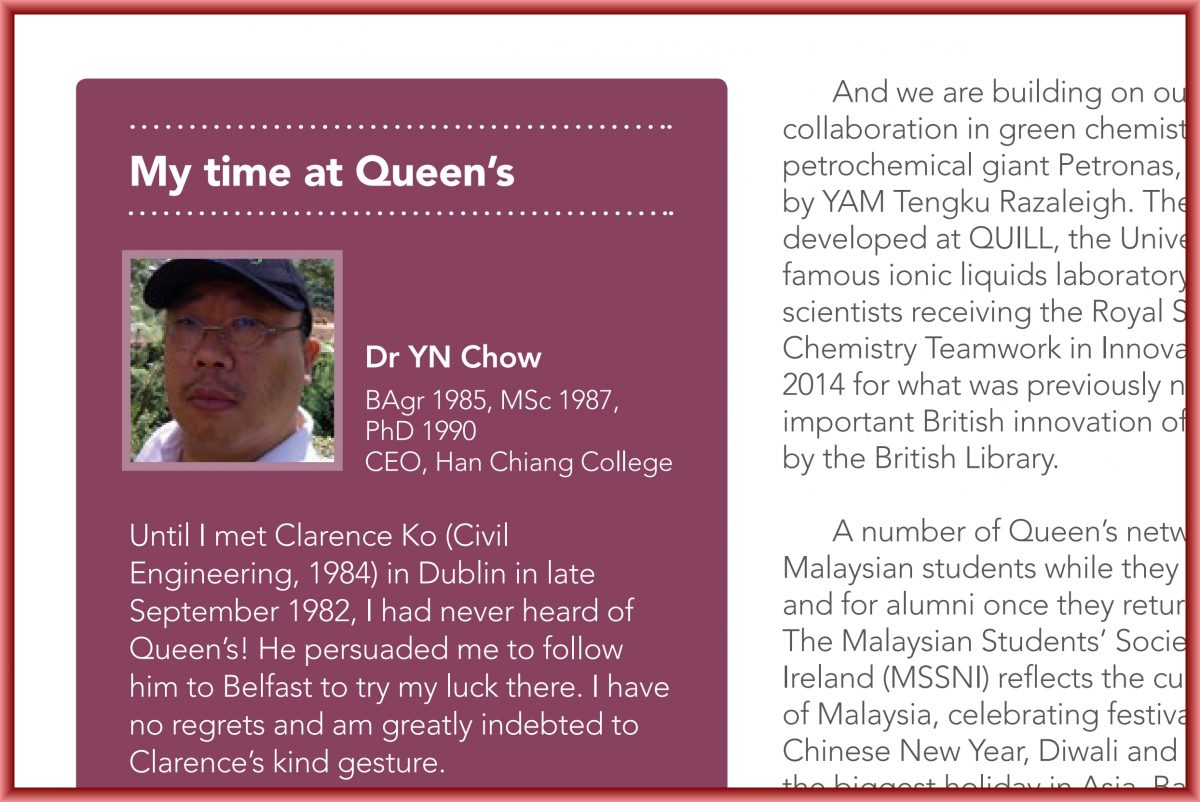
I was contacted by Dr. Gerry Power, an old friend and the man responsible for keeping tab on alumni relations at Queen’s University, my alma mater to contribute to “My Time at Queen’s” in 2015. MT@Qub is in fact a series of visits down memory lane by former students, ‘old and young’. Here I detailed a new chapter of my life’s journey as a university student, one which took me close to 9 years to complete! I am one of the few living individuals who have earned not one but three degrees from Queen’s and this is my story.
I was contacted by Dr. Gerry Power, an old friend and the man responsible for keeping tab on alumni relations at Queen’s University, my alma mater to contribute to “My Time at Queen’s” a few months back. MT@Qub is in fact a series of visits down memory lane by former students, ‘old and young’.
It took me a few hours to write and edit the original version which is quite long and detailed. An abridged version was published in The Graduate (page 37) in Oct 2015.
Here is the original contribution.
Until I met Clarence Ko (Civil Engineering, Class of 1984) in that fateful day in Dublin around late September 1982, I had not heard of Queen’s University of Belfast (QUB). In fact it was a coincidence that I ended up at Queen’s as I could not afford the high tuition fees of the universities in England and resorted to Plan B: study in University College Dublin. Clarence persuaded me to follow him on a visit to Belfast to try my luck at QUB. I have no regrets and am greatly indebted to Clarence’s kind gesture. As an “Accidental Queen’s Man”, I often wonder why I stayed as a student of QUB for almost 3 times longer than most people and perhaps ending up being one of the few living individuals who have earned three degrees from Queen’s. I graduated with a Bachelor of Agriculture degree from Queen’s in 1985, followed by a M.Sc in Biotechnology in 1987 and finally a PhD in plant tissue culture in 1990.
Life as an undergraduate in agriculture was tough for me as I had never been near a cow or a sheep until I read agriculture at QUB. My classmates were mainly from farming background and they had an upper hand when it came to understanding what our lecturers were teaching us. I had to content with the many different accents of my classmates but the generosity of some of them helped me cope and I blended in. There were only 3 foreign students (all were Malaysians) in the Faculty of Agriculture and Food Science during my time. Lim Wui Phen (B. Agr, Class of 1984) was my senior and free tutor. I also inherited a lot of books and notes from Lim. Having to be on field trips almost every week visiting different farms gave me a better insight to life in rural Northern Ireland than most Malaysian students would have and these were the occasions that I got to learn at first hand what was covered in class.
In 1983 I was elected as the President of Malaysian Students’ Society of Northern Ireland (MSSNI) more as a compromise candidate (there were two groups of Malaysians which could not agree on most things and as the ‘outsider’ not allied to either, I won!). I learned about the meaning of democracy truly when we were courted by candidates vying our votes for the post of QUB Student Union President. The low turnout at the Student Union AGM meant that Malaysian students, even if we had only 10 persons attending would be the kingmakers!
As a student who did not come from a farm, I needed to gain some farming experience in order to graduate. I spent the summer of 1984 working at the experimental farm of Agriculture Research Institute of Northern Ireland, Hillsborough. I was the general farm hand and it was the first time I played the role of a sheep dog! Marshalling sheep, as I found out was a very skillful and physically demanding activity, especially for the “sheep dog”. It was during this time that I took the first driving lesson: on a farm tractor!
Organising the annual Merdeka Ball for MSSNI in 1984 took a toll on my studies. I received a sharp warning from my director of studies that if I did not work hard for the final year, I would have problems graduating. That made me worked on a tight regime of studies during my final year. But despite this, all of us living in the self-catered house (I forgot the name, it was the biggest house with the rugby team captain as the sub-warden) took time off studying for our final examinations in late April to watch Dennis Taylor defeat Steve Davis at World Snooker championship in 1985.
My postgraduate years at Queen’s were very “quiet” as the laboratory work was a lot more taxing than the undergraduate years. Yet I still found time to attend most of the MSSNI’s functions and as one of the “oldest” Malaysians, I was appointed the Chairman for MSSNI’s AGM twice. I came closest to the “troubles” on the eve of my Master’s graduation. After collecting my graduation gown, I took a lift back to the laboratory at Newforge Lane from Sean D’Arcy (PhD, 1987). We were on Sean’s Morris Minor driving on Malone Road when we were diverted by the police. As we were turning onto a side road, a car bomb went off in the next street. Neither Sean and I nor his beloved Morris Minor suffered any damages, but it was shocking nevertheless to be so close to a car bomb!
I think because of my years being a student at Queen’s (and my faculty), the selection committee awarded me the McGeough Bond Studentship / Harold Barbour Scholarship in 1987 for my doctoral studies thinking that I was a “local” student. In the end, my overseas student tuition fees almost bankrupted the trust funds! I had a “guardian angel”, Ms Audrey Griffiths who was the Faculty’s Secretary coming to my rescue when the Dean had an idea of cutting my stipend to pay for the additional tuition fees!
I found a great casual job during the final part of my doctoral studies: I was manning the security desk of one of Queen’s examination halls and earned a good sum during the 1990 May – June examination session. On top of that, I wrote about 70% of the first draft of my PhD thesis while sitting at the security desk helping to invigilate examinations! I could not afford a laptop computer then but bought a Sinclair Z88 computer instead. The now spoilt Z88 is still lying somewhere in my house.
Z88 – an idea of PDA/tablet computer that was 25 years ahead of its time!
This piece was inspired when I read about some graduating students at local universities pulling “selfie” stunt on stage during their respective graduation ceremonies. This article was first published in Han Chiang News on June 02, 2015.
I read with much anguish and amusement recently about graduands of local public universities doing some antics such as taking a selfie while they were getting their testamurs on stage during their respective graduation ceremonies. A lot of debates have been generated in the press and in cyberspace over the “rights” of these students versus the “prerogative” of their university to take disciplinary actions on these “rogue” graduands. However, I think all these debate and discussions have missed a crucial point: that the “rogue” students have disrupted the proceeding of one of the most important academic rites of passage called the graduation ceremony. Their university owes it to the rest of the graduands (and more importantly, their families and sponsors) to ensure that this rite of passage, the most solemn of all academic ceremonies is carried out in accordance to the tradition, custom and ritual befitting their alma mater.
My first experience with a university graduation ceremony was in the late summer of 1983 when my elder sister graduated with a degree of Bachelor Pharmacy (Hons) from the University of Wales Institute of Science and Technology (which has since merged with University College Cardiff in 1988 and known as Cardiff University today). There we were, my late parents and I sitting in a great hall in Cardiff, Wales, as guests of my sister. The entire proceeding was conducted in Welsh, and rightly so as it was a Welsh university that my sister had attended. But, we had the entire proceeding translated in English for us in the graduation booklet so that we could be a part of this important rite of passage for my sister.
We could follow everything that went on during this graduation ceremony, even though not a single English word was uttered. The graduation ceremony was steeped in tradition and I remember watching my sister went up the stage, bowed to the Vice-Chancellor and then bowed to the President of the Guild of Graduates, who in turn took off his mortar board and formally welcomed her to the Guild. The English text in the graduation booklet stated that this would be the crucial step in the ceremony as a graduand can only be considered as a “graduate” after receiving the blessing and acceptance into the Guild by the President. Now, fast forward to 2015 and faced with these “rogue” graduands who disrupted the sanctity of a graduation ceremony. Do you not think that the rest of the graduands should have the right to have their rites of passage protected? Would it not be a waste of time if every graduand spends an extra 10 seconds to pose for a selfie / wefie?
No one with the right mind in Malaysia will think of taking a selfie if he/she is getting a prestigious award such as a “datukship” from HRH The Yang Dipertuan Agong. This is because we know that it is a great honour to be bestowed such an award and we need to show the greatest of respect to HRH during the ceremony. Yet many in the raging discussions advocated the freedom of expression to justify the actions of these “rogue” graduands.
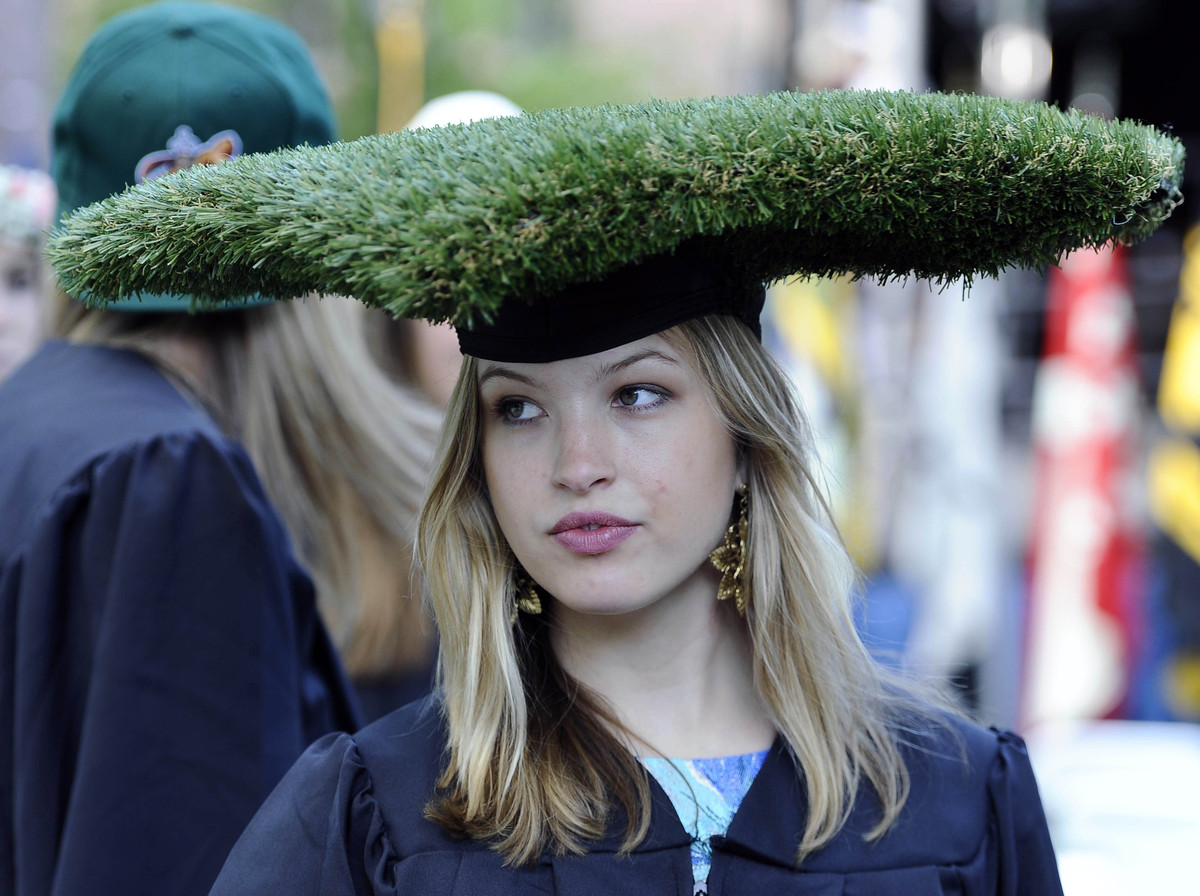
What about a simple word, RESPECT for the institution and the leadership of these institutions for awarding an academic credential to a graduand? If a graduand cannot show the simplest form of respect for his own institution and the highest officials representing his institution, then IMHO, the said institution has every right to revoke the graduand’s academic credential or take other severe disciplinary action against him/her. When I saw photographs of some graduands of US universities wearing self-designed mortar boards with all sorts of ugly displays, it dawned on me that the founding Vice-Chancellor and the officials of my alma mater, The Queen’s University of Belfast must have had great collective foresights to do away with mortar boards altogether in our graduation ceremony!
This is the unedited edition of my article first published in Han Chiang News yesterday (May 20, 2015).
After “migrating” back from Singapore in the late 1990s, my family and I have been living in the Klang Valley. In early January 2015, I came to Penang with my wife to hunt for a suitable accommodation when I decided to take my present appointment. As both of us are not familiar with the local housing scene and more importantly, the most suitable location to take up residence, I had an idea of temporarily living in a budget hotel close enough to my workplace while I have a chance to get familiarize with the various options available. We quickly abandoned this idea after driving around Penang with the aid of Google Maps. Parking would be the most important feature lacking in most of these establishments and the surrounding would be the next.
After almost 5 hours of driving around looking for a suitable place for me to stay, we finally narrowed down our choices (via an online portal, ibilik.com) to a condominium (TSP) close to the “emerging hot” area of Persiaran Karpal Singh which looked very presentable online as well as in real life. As I was not sure of my preferences, having only stayed in the hotels along the tourist-belt of Penang from Gurney Drive to Batu Ferringhi, it would have been risky to commit to a yearly rental contract. Thus we decided that I should take up a room in this “up-market-ish” condominium with a flexible rental contract instead. Suffice to say, the rental was not cheap, but it did come with a covered car park space.
Housemates from Hell
After staying in TSP for just one week, I realized that my housemates, a couple, occupying a small room (which was carved out of the living room by the landlord) treated the entire condo unit as theirs. The refrigerator, the hall, the front landing, the kitchen, the bathroom and even the balcony were conquered as their “own domains”. Newbies like me had to make do with whatever space that I could “muscle” in. No one bothereds to lock the front grill gate, we were protected from thieves just by a simple padlock. Cleanliness was never in the vocabulary of this couple and the kitchen sink was used often as the basin for brushing teeth and clearing of one’s throat. The common areas were never cleaned. Needless to say the common bathroom/toilet was a mess at any day which I had to clean regularly as I could not stand the grime and other bodily waste scattered all over the surfaces. After 2 months, when I got to know the local geography especially in relation to my work place better, I had had enough and decided that I should “upgrade” to my own condominium. I also consulted with my Penangite colleagues to hone in on the best available options for me.
Misleading to cheat
Having lived in the Klang Valley since the late 1990’s and having let out our own apartment, I was taken aback when I found out that in Penang both the landlord and the tenant are expected to pay the estate agent or agents (as sometimes one would be representing the landlord while the other brings in the tenant). In the Klang Valley, only the landlord are supposed to foot this bill.
I was looking for a unit that was unfurnished which would have allowed me to (1) pay a lower rental, and (2) to acquire furniture and electrical goods to my liking. I thought I had a unit when the estate agents brought me to an empty-unfurnished unit. I asked several times for confirmation about the rental and more importantly the car park space that would come with the unit. The agents confirmed all these each time. Off I went to pay one month’s deposit to secure the unit as unfurnished units in this particular location were hard to come by. While I waited for the landlord to get the rental agreement prepared, I went on to buy a refrigerator, a washing machine, an air conditioner and even a firm mattress. Then came the fateful day agreed by both parties to sign the rental agreement and to hand over the relevant keys. After both the landlord (a landlady in this case) and I had signed the rental agreement I asked to be shown the location of my car park space, I was given the first rude shock. The landlady insisted that the unit did not include a carpark space (even though it is a well known fact that each condo unit in this estate would come with one) and my agents disputed this. However the landlady stood firm and after half an hour of negotiation, I sensed from the eyes of the landlady that there was something that she wanted to attain other than renting out this unit. My suspicion and second shock came when she refused to return my one month’s rental deposit. This lady was out to cheat unsuspecting people of their rental deposit by reneging on there being a car park space (which she misrepresented to the estate agents as being a part of the “deal”). She knew that her victim, a.k.a. yours truly would not have taken the condo unit if the car park space was excluded. She would then be able to pocket the one month’s rental deposit as technically I would forfeit the said rental deposit for not going through with the deal!
I have lost not only the RM850 as deposit due to this scam, I had to deal with the fact that I had electrical goods and furniture already bought and paid for. “Luckily” for me, one of my colleagues has just taken possession of a new condo unit and he would “take over” all my electrical goods, but I had to give him a discount of 15%, losing about another RM400 in the process!
Off I continued with my condo hunt and nursing a RM1,250 financial wound. Luckily for me, the estate agent acting for the landlady, Ms DT was very ethical. DT took responsibility for both of us falling for the trap of this landlady (apparently it is not a standard practice to have the landlord signed on a piece of paper to confirm what are the features and facilities he/she is offering in the property for rent). She waived her fees in searching for a new condo unit for me. Thus this helped to cut my losses significantly but I am still RM400 down for having to dispose of my electrical goods at a steep discount, goods that I had never taken delivery of, I must add!
My advice to all who wants to hunt for a condo, especially in Penang: get to see everything that the landlord or agent claim the property has and make sure this tally with the list of facilities and furniture etc. in the rental deposit form before you hand over your money, or else you may, like me stand to be cheated!
One should try to get an estate agent whom someone who lives locally can recommend. I will surely recommend DT to you!
Incidentally, just 3 days after being scammed, I received a call from another estate agent whom I had contacted earlier. This lady informed me that an unfurnished condo unit at the location I wanted was available. The description of this particular unit (the block and floor it was located) matched the one I was scammed! Thus condo unit hunters in Penang beware, the predator is now searching for the next victim (or has she been successful in securing more victims after me?)!
I think the authorities in Penang as well as the Penang property agent industry should come out with a clear guideline and best practices to protect innocent tenants like me from be scammed. Having a “standard” declaration of facilities, furnishing and features in the rental booking form would be a good starter.