
Insight into Hong Kong’s tertiary education

The Hong Kong Government and the HK Jockey Club provide substantial financial support to self-financing colleges.

Mr. Lim Soon Tiong (林顺忠先生), a graduate of the original Nanyang University of early Singapore (fondly known in Malaysia and Singapore as “Nanda”- 南洋大学) is a Malaysian who has made his many pots of gold in Hong Kong. He has been generously donating and funding educational initiatives to benefit young people in Hong Kong and Malaysia. One of his

limsoontiong
Ms. Lim Soon Tiong, a graduate of the original “Nanda” (南大) is a Malaysian who has made his mark in the business world of Hong Kong. Our delegation’s visit was his brainchild and was generously sponsored by him.

latest kind deeds was his organizing and funding of a five-days-four-nights study-visit by a group of seven college/university leaders to learn more about the tertiary education scene in Hong Kong. Fortunately for me, Mr. Lim had invited me to be a member of this group which we called ourselves in Chinese “大马民办高校香港高等教育考察团” (Delegation of Malaysian Community-supported Institutions of Higher Learning to Hong Kong).

Our group, led by Dr. Lim Chong Keang (New Era University College’s Chairman of the Board of Governors) was comprised of leaders of Malaysia’s three tertiary institutions which are fully funded and supported by the Chinese Malaysian community, namely New Era University College, Southern University College and Han Chiang College (in which I was associated and was in the process of being registered as a university college). Our benefactor, Mr. Lim Soon Tiong had managed to rope in Professor Nyaw MK  (饒美蛟教授), who is a very respected and accomplished educationist in Hong Kong to be the leader, chief planner and organizer to maximize the impact of our trip.

prof-nyaw-dr-limcq-cropped
Professor Nyaw MK (left) is a former Vice-President of Lingnan University here with Dr. Lim Chong Keang (Leader of the Delegation & Chairman of the Board of Governors, New Era University College).

The three institutions are considered by many Chinese educationists in Malaysia and Singapore as the successors of the original Nanyang University and hence many initiatives have been carried out by graduates of “Nanda” for the benefits of these three institutions.

Within a short time span of three full days, we visited six universities and colleges, all with its uniqueness that would give our group a deep, 360 degrees insight of the higher education scene in Hong Kong.

Day 1: The Chinese University of Hong Kong & Hang Seng Management College

We started off our hectic three days with one of Asia’s highest ranked universities, The Chinese University of Hong Kong. As I have had the opportunity to work as a postdoctoral researcher at the National University of Singapore (NUS), which is of the same “league” as CUHK, I could see many of the key characteristics of such high ranking institutions in CUHK. Starting from the greatly effective and efficient way that the international office planned out our visit to the arrangement for the meeting with the Vice-Chancellor that was done with military precision! The OxBridge-styled collegial system which was started from the inception of CUHK by the coming together of three independent colleges in 1963 has been proven to be highly effective in providing a sense of belonging for all students. It was a privilege and honour for me to have met Vice-Chancellor, Professor Joseph J.Y. Sung who is one of the “Asian Hero”, having led the team that contributed selflessly to the fighting of SARS epidemic in Hong Kong in 2003.

CUHK’s Vice-Chancellor Professor Joseph Sung (2nd from the right) is a prominent medical scientist and doctor who is one of the “Asian Hero” that fought the SARS epidemic in 2003.

As all three Malaysian institutions had had a successful students exchange with CUHK this year (also sponsored kindly by Mr. Lim Soon Tiong) we felt very much “at home” at CUHK with several familiar faces such as Ms. Wendy Lou and Mr. Raymond Leung (who must have put in a lot of extra effort to make sure that we could maximize the impact of our visit). We were treated by Mr. Lim ST to a great lunch at the Hong Kong Jockey Club at Sha Tin. The Club has been the biggest benefactor of higher education institutions in Hong Kong for years.

Hong Kong Jockey Club is one of the biggest donors to higher education institutions in Hong Kong.

The second institution we visited on Day 1 was Hang Seng Management College (HSMC) which was founded as the Hang Seng School of Commerce by several directors of the famed Hang Seng Bank (and the Hong Kong Hang Seng Index for stock market). Unlike CUHK, Han Seng Management College is a fully private and not-for-profit institution. Despite this big funding difference, HSMC is a very well equipped and well staffed institution of higher learning where many retired professors from the public institutions, notably CUHK have taken up appointments at HSMC thus conferring upon it a strong academic team under the leadership of President, Professor Simon S.M. Ho. Those of us who have visited or even worked for top ranked private universities and colleges in Malaysia would easily find HSMC as being better equipped (and better staffed) than their Malaysian equivalent. The hostels of HSMC was practical and yet reasonably priced for students. The campus, though not huge but is very well facilitated and well designed and built. Again the financial support of Hong Kong Jockey Club as well as that of the families of directors / founders of the Hang Seng Bank is very evident. Unlike CUHK, HSMC is very focused on niche areas of business and finance, mass communication, supply chain management, and interpretation & translation. HSMC also provides a niche area in humanities as well.

The training theatre for students reading interpretation and translation at Hang Seng Management College is one of most modern state-of-the art facility in Hong Kong.
The training theatre for students reading interpretation and translation at Hang Seng Management College is one of most modern state-of-the art facilities in Hong Kong.

We were introduced to the office bearers of the Chinese Executive Club (an association under the auspices of The Hong Kong Management Association) who treated us to a great dinner. Our benefactor, Mr. Lim ST is a former chairman of this Club which was founded to help business leaders who find it more comfortable to socialize and exchange ideas in their native tongue, Cantonese.

Day 2: Lingnan University & Chu Hai College of Higher Education

Lingnan University being known as “The Liberal Arts University of Hong Kong” has lived up to its mantra as it was named as one of the top ten liberal arts colleges in Asia by Forbes in 2015. Lignan, one of the eight public universities in Hong Kong, is the only institution of higher learning that practices a full four years residential system for all its undergraduate students. Thus being fully residential has conferred Lingnan with a unique way of enriching the on-campus lives for the students. It has a very innovative way of being “liberal arts centric” for its curriculum which stands its degree programmes apart from other institutions’ equivalent degree programmes. The teaching and learning at Lingnan which follow a very broad, almost North American curriculum styled, is a mix of liberal arts, humanities and general knowledge which gives its undergraduate students a more holistic education compared to the other Hong Kong colleges and universities which tend to favour and mirror the British system. I think because of this, Lingnan provides Malaysian diploma graduates with a more seamless transfer than other institutions in Hong Kong. Professor Leonard K. Cheng, President of Lingnan University hosted a working lunch for our delegation where he provided our group with a great insight to the higher education scene in Hong Kong. I was very intrigued by his account of his personal experiences of rising from a “semi legal” migrant from China to be an accomplished academician of today.

Professor Leonard Cheng (4th from the right) receiving a souvenir from our group leader, Dr. Lim CQ.
Professor Leonard Cheng (4th from the right) receiving a souvenir from our group leader, Dr. Lim CK.

Chu Hai College of Higher Education (CHC) is an independent, self-finance and privately operated institution. It traces its origin back to 1947 when the institution was founded in Guangzhou, China. Today it occupies a campus overlooking the mouth of the Pearl River which in the opinion of many, gives it one of the best scenery of Hong Kong. It gives significance to many Chinese Malaysians as it would have been the view that our ancestors were looking at when they left their homeland a century or more ago to come to “nanyang”, South East Asia. In contrast to Hang Seng Management College, CHC academic programmes cover four broad areas of Arts & Social Sciences; Science & Engineering; and Business. The academic programmes offered by CHC range from Communication, Journalism; Computer Science, Civil Engineering & Architecture; to Business Administration, Banking & Finance. It has a very state-of-the-art broadcasting studio for its journalism and communication students.

This view taken from Chu Hai College President Chang Ching Nan's office, offered the best view of the Pearl River mouth.
This view taken from Chu Hai College President Chang Ching Nan’s office, offered the best view of the Pearl River mouth.

Day 2 concluded with with a dinner at a posh restaurant specializing in cuisines from northern China at Tsim Sha Tsui area overlooking Hong Kong island which was a special treat by Professor Nyaw. We were also rewarded with the best night scenery of Hong Kong.

Day 3: The Open University of Hong Kong and The Institute of Vocational Education @ Chai Wan

I had the privilege of visiting The Open University of Hong Kong (OUHK) in 2000 when I worked for Pearson plc where I was fully impressed with the then 3-years-old university. Sixteen years later, OUHK, which modeled after the Open University of the United Kingdom (OUUK) has progressed by leaps and bounds from offering just the “traditional” distance and open learning university programmes to offering full-time studies for high school graduates along the same model as the eight Hong Kong public universities. Although OUHK was established by the Hong Kong Government, it is operating as a self-financing institution. Along with undergraduate, postgraduate and research academic programmes, OUHK is well known for its strengths in the continuing education and professional training sectors. OUHK’s motto in Chinese is (a) 有教无类 (learning opportunity regardless of race, prior qualifications and gender); (b) 宽进严出 (ease on entry but strict on graduation); (c) 终身学习 (lifelong learning) which it has, over the years been servicing the needs of working adults (and now young people) successfully. Perhaps due to its OUUK influence, OUHK is more advanced in its collaboration in terms of delivery of its programmes with foreign institutions. We were enlightened by Associate Vice President, Professor Y.K. Ip of OUHK’s successes and milestones. Professor Ip also gave us many ideas where potential collaborations between OUHK and our three institutions could be forged. We learned that OUHK’s thriving nursing programme was one of the most sought after by students as the profession provides one of the highest salary in Hong Kong.

One of the most popular degree programmes of OUHK is the nursing programme.

I had the opportunity to visit the Vocational Training Council (VTC) of Hong Kong during my stint at Pearson plc. in early 2000 to learn about the effort by the Hong Kong Government to bridge the gap between academic and vocation education to serve the craving of Hong Kong’s economy for technical and vocational professionals. I had suggested to Mr. Lim ST and Professor Nyaw that our delegation’s visit would not be complete unless we look at Hong Kong’s tertiary education sector in totality by visiting one of VTC’s vocational training institutions. Our last stop for this visit was therefore to Hong Kong Institute of Vocational Education, Chai Wan (IVE-CW), hosted by Professor Sampson Poon, Principal of IVE-CW. The VTC is a government department which operates nine IVEs in Hong Kong which are fully funded by the Hong Kong Government. Hong Kong’s IVE perhaps have a lot of similarity with private colleges in Malaysia but with three notable exceptions. (1) Their facilities, especially the IT/computer science, culinary arts, videography, finance & investment, engineering and dispensary science (as evident in IVE-CW) are state-of-the-art, reflecting the vast investment by the VTC from the Hong Kong Government’s funding; (2) Their campuses aside from being better equipped than most Malaysian colleges, are very large, with great industrial linkages that ensure a career for every graduate; (3) The School of Higher and Professional Education (SHAPE) under VTC has been collaborating with foreign universities to offer top-up degree programmes for IVE’s higher diploma graduates for many years which is similar to top-up degree programmes that Malaysian private colleges were offering before the era of tight regulatory control of the Malaysian Qualifications Agency.  Another VTC’s institutions which is located at IVE-CW, Technological and Higher Education Institute of Hong Kong (THEi) offers its homegrown degree programmes under three faculties, namely, Design & Environment; Management & Hospitality; and Science & Technology. All together, twenty two homegrown bachelor degree programmes are offered by THEi. Thus together with SHAPE, THEi offer both homegrown as well as top-up degree programmes from external universities to IVE students.

The IVE in Hong Kong are better equipped than most private colleges in Malaysia. This is a shot on the Virtual Reality studio of IVE-CW.
The IVE in Hong Kong are better equipped than most private colleges in Malaysia. This is a shot of the Virtual Reality studio of IVE-CW.

The IVE system not only cater to the vocation education needs of Hong Kong people but also provides a “second chance” for high school graduates who are academically inclined but for whatever reason, have missed the boat of public/private universities to use the IVE’s diploma-higher diploma route towards an academic degree. The seamless continuation pathway for students in vocational training of the IVE system is one that Malaysia will do well to emulate. I was also intrigued by Professor Poon’s philosophy of teaching practical English usage to his diploma students rather than the “standard” academic English that some would find daunting.

From the left: Prof Nyaw MK, Prof Simpson Poon (of Institute of Vocational Education, Chai Wan), Mr. Lim Soon Tiong, and Mr. Mok Chek Hou (Deputy Chairman, Board of Governors of Southern University College) during a dinner hosted by Mr. Lim ST where the famous “大闸蟹” (lake large crab) was served.
Take Home Insights

Despite its economic strength and having a population of over seven millions, Hong Kong has only 20 degree-awarding higher education institutions compared to around 500 plus public and private tertiary institutions in Malaysia, about half of which offer degree programmes (either homegrown or in collaboration with local / foreign universities). This goes perhaps to show that quality and quantity as far as higher education is concern must be well balanced!

  1. The eight public universities are very well funded by the Hong Kong Government and overall their collective reputation worldwide is very high.
  2. The Hong Kong Government invests heavily in the remaining 18 degree-awarding institutions which are self-financing by generously providing them with land for their campuses, thus removing one of the highest investments in any such institutions.
  3. The self-financing institutions have access to interest-free loan for the development of their institutions from the Hong Kong Government.
    Thus via (2) and (3) above, the Hong Kong Government exerts indirect control over the development of the higher education sector and ensures its sustainability.
  4. Although the Hong Kong Council for Accreditation of Academic and Vocational Qualifications (HKCAAVQ) which is the equivalent body to the Malaysian Qualifications Agency (MQA), exert control over the standard of higher education in Hong Kong, all non-public institutions are allowed to award homegrown degrees without having Malaysia’s equivalent of “university college” status so long as all requirements of HKCAAVQ are fulfilled. This provides Hong Kong colleges with a competitive advantage over their Malaysian counterparts.
  5. The Hong Kong Jockey Club (HKJC) annually provides a huge amount of funding to higher education in Hong Kong. All the six institutions we visited have received substantial funding from HKJC which allowed buildings to be erected in the respective campuses, thus defraying another substantial cost element, especially for the self-financing institutions.
  6. The technical, vocational education and training sector of Hong Kong is very well run by the VTC and well funded by the Hong Kong Government. The seamless progression pathways to academic degrees for IVE higher diploma holders and the fact that the VTC has gained HKCAAVQ’s approval to offer twenty two homegrown degree programmes are testament to this observation.

There is just one big issue for any Malaysians who aspire to study in Hong Kong for a degree… that is, cost. Non-local students have to pay 30% more at both public and self-financing institutions, with the former’s tuition fees at HK$70,000 per year and latter’s being at around HK$130,000. The good news is, most Hong Kong institutions of higher learning do offer some form of financial aids to Malaysian students with the required academic credentials. Thus students in diploma programmes in Malaysian colleges with good tie-up with Hong Kong institutions (for example the three institutions represented in our delegation) will stand a better chance of getting some financial aids with collaborating institutions.

The IVEs which charge around HK$70,000 per year may be a bit more attractive to Malaysian students as their diploma and higher diploma can be completed by student with SPM (GCE ‘O’ level equivalent) qualifications only in two years. This allows such students to take another year to earn a top-up degree. The total time spent to earn a degree via the IVE-system will be about three years.

Since 2012 Hong Kong had changed from a 3-years degree to a 4-years degree system, Malaysian students will need to budget for four years of tuition fees if they want to study in Hong Kong. In addition, unlike the IVE system, SPM holders will need to complete STPM / GCE ‘A’ levels or foundation programme to be eligible for entry into Hong Kong institutions offering undergraduate degree programmes. Hence the IVE system or the Malaysian private colleges’ diploma provide better (shorter and perhaps cheaper) routes to a degree in Hong Kong.

Registry of Ph.Ds – how it could be best administered

The establishment of the Registry of Ph.D Holders will have one very clear “side-effect”. It will go a long way in separating the wheat from the chaff but since not all accredited overseas institutions award Ph.Ds, the list of institutions in the Registry may not fully represent all accredited overseas institutions but it does provide at least the first list of institutions where their Ph.D awards are recognised in Malaysia.

Commentary: (April 11, 2017):
On Apirl 03, 2017,  Deputy Minister of Higher Education, Datuk Dr. Mary Yap Kain Ching reported that her ministry will roll out a registry of Ph.Ds soon. But this will be confined to Ph.D holders from local institutions. This is a step in the right direction indeed. However one major problem area, those using fake Ph.Ds from foreign institutions or from degree mills are not covered. Based on my own gut feeling, the bulk of the pretenders are in the latter crowd. So this Ph.D registry may only catch the tip of the ice-berg.

I would like, if one of my readers forward my suggestions below to the power that be to tackle the issue still hiding below the ice-berg!

One comment in the above news report that caught my eyes was what Datuk Dr. Mary Yap said, “We all know those who said they finished their PhD within 10 months are fake PhD holders,”

In fact, the good Datuk took 5 years to complete her Ph.D and my learned beautiful and multi-talented friend (from our Doctorate Support Group in Facebook), Dr. Soo Wincci (#drsoowincci) took 6 years to complete hers proved that there is no short cut!


There has been a lot of news for the past few weeks on the need to set up a registry of Ph.D holders in Malaysia. These calls have been brought about by the increasingly serious issue of bogus Ph.Ds and people claiming to have honorary doctorates etc. which was proven to be bogus. I have also made references to this matter in an earlier post and there is a commentary on this issue recently.

In October 2016, the National Council of Professors (NCP) in Malaysia called for the setting up of this registry and hinted that they be given this task by the power that be. However, since not all Ph.D holders are members of this council, and by that, not many Ph.D holders actually are professors (and not all professors in Malaysian universities hold Ph.D or professional doctorates), this body may not be the best representation of the nation’s academic-intellectual power. The NCP further suggested that some charges be levied for the administration of this registry which implies that there may be some monetary gain by the said organisation should they be granted this task.

It was reported that the Ministry of Higher Education (MoHE) would be working on setting up a Registry of Ph.Ds for Malaysia where all Ph.D holders from local universities (both public and private) would automatically be added to this Registry. It was mentioned that Malaysian Ph. D holders with their doctoral degrees awarded overseas will have to seek verification of their doctorate degrees. So far I have not been able to find the mechanism for such a verification process. Needless to say, this verification process will have to be effective, efficient, fair and transparent. There is also (as mentioned earlier) the need to sort out a cost effective way of administering this Registry.

I think perhaps the following suggestions might be considered by the power that be before deciding on how this Registry is to be administered.

  1. Ownership:
    The MoHE should be the custodian of this Registry which should be “owned” by the Malaysian Government. This will ensure that no parties can gain any financial advantage for owning the data the Registry so contained or make monetary gains for the administration of the Registry. The MoHE’s Registrar General and his/her staff is the right team to handle this since they have ample experience handling the registration of around 500 active private colleges and universities where many of the Ph.D holders are already in the MoHE’s databases. This will make cross checking of data and verifications work more effectively accomplished.
  2. Criteria of admission:
    There must be a clear, but simple to use set of criteria for admission to the Registry. The admission of a Ph. D holder should be done once all the criteria have been met. There should not be any hint of any “approval” step or steps in the process. Anyone with a bone fide Ph.D (that is verifiable) shall be admitted to the Registry. No one should be denied a place in the Registry because of his/her colour, creed, ethnicity, religion or political affiliation. Getting on the Registry should be considered the same as getting on to the electoral roll –  it is a right and not a privilege. Thus the cost of registration should be made as low as possible where I would suggest that the MoHE be granted a yearly budget by the Treasury for the administration of the Registry. We need to stress the fact that not all Ph.Ds are earning big bucks. There are the freshly minted ones who may not have a job or the senior ones who have already retired. Thus the cost to register in this Registry shall not be made a deterrent to those who may not be so financially endowed. RM10 – RM50 should be the the range for the registration fees for  the administration of this Registry.
  3. Transparency & Peers Review:
    The entire process of registration should be fully transparent to give the Ph.D holders and the other stakeholders confidence in the entire system. Perhaps the transparency can be extended to the data held such that each registrant will be having a “page” where her/his expertise, papers published etc. (but not personal details) will be listed. This will serve one further purpose: anyone who have slipped through the filtering process may be “caught” at this stage as the page will be open to anyone on the internet. Peers review is a very powerful tool for the Registry administrator to use. The power that be should take a leave from the career/job/hiring social medium platform, Linkedin where few of the members have (or dared) to put in false credentials as these could be easily “discovered”. Perhaps for more senior Ph.D holders, the need to verify their credentials may not be that stringent as many would have Linkedin profiles where their respective “contacts” would have studied and scrutinized their credentials before accepting them as “contacts”.My Linkedin profile is more credible not because of my own data but the “contacts” that I have who are more established scientists, entrepreneurs etc. than yours truly had verified my credentials and are willing “to be seen” as a part of my network. This philosophy is actually the key success factor of Linkedin. “I am credible because my many contacts have verified my credentials directly by linking with me”. It is not the same as Facebook! Thus the Registry may have features that mirror that of Linkedin to allow senior, established Ph.D holders to help in the verification process in the “Linkedin” way. In fact, I would risk saying that the MoHE should discuss with Linkedin to find a way to maximize the “social verification” features of this platform and the MoHE may be well advised to considering “putting” the Registry on this platform.
  4. Leverage on Foreign Universities:
    All bone fide institutions of higher learning worldwide will want their academic awards be recognized. This should therefore be the key to getting foreign institutions to contribute to the work needed to administer the Registry. However there are key questions that the power that be needs to have answer to, namely:
  • Is there a way to make sure that overseas universities submit themselves to be included in the Registry?
  • Can we make it simple and accept all universities that are accredited in their home countries?
  • Can we make use of the diplomatic missions in Malaysia to be responsible for keeping this list updated for their respective countries?
  • What about those countries without representation in Malaysia? Can we use some international association like The Association of Commonwealth Universities … even the listing for Malaysia is not complete with only 21 institutions (with many Malaysian public universities not listed the organization)…

MoHE can also leverage on the foreign universities to shoulder a big part of the burden in verifying their own graduates’ credentials. It is after all, to the very institution’s advantage to make sure that their graduates are fully recognized. Thus the MoHE could in fact make a “standard” arrangement with the education authorities of each of these nations so that the list of new Ph.D holders (with verifiable details provided) each year (and that of previous years) could be supplied to the MoHE by each interested institution. My son’s alma mater, the University of Nebraska-Lincoln, USA even has a website that provides verified details of its graduates principally for the benefits of prospective employers. Thus giving them confidence of the data held at the website and a way to cross check the resume of UNL’s graduates readily. Perhaps MoHE can tap into this sort of databases to make the verification process a lot faster and effective.

The establishment of the Registry of Ph.D Holders will have one very clear “side-effect”. It will go a long way in separating the wheat from the chaff but since not all accredited overseas institutions award Ph.Ds, the list of institutions in the Registry may not fully represent all accredited overseas institutions but it does provide at least the first list of institutions where their Ph.D awards are recognized in Malaysia. What the Registry also need is a “compliant” segment where if anyone’s credential is challenged, there is a fast-track way for the complaint to be studied and verified. There must also be a heavy penalty for the supply of false information by the registrants. Thus I suggested that the Registrar General’s office shall be the best authority to deal with this as there are already some provisions in ACT 555 and related acts of parliament that have penalty clauses which can be used.

When the Registry is ready, I shall be one of the first to want my name to be on it!

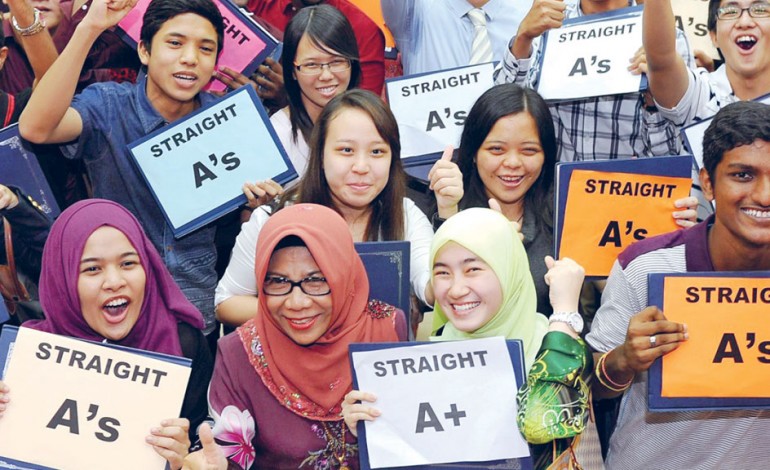
If I score 10 ‘A’s does any one owe me a scholarship?

A student from a remote village in Sabah who did not have the means to attend private tuition classes for key subjects may scores “only” 5 “A+”s compared to a student from Subang Jaya who attended private tuition classes for these subjects who scored 8 “A+”s. As an educationist, I will put my money on the Sabahan student being academically a better student compared to the student from Subang Jaya. Further, because the Sabahan student could thrive without the benefits of tuition classes, I will opine that the chances of this student faltering at university-level studies will be much lower than his/her Subang Jaya counterpart. However by evaluating students based initially on just the number of “A”s scored the odd is stacked heavily against the Sabahan student.

This article is rather long and in its original form was published in two parts in Han Chiang News. It was written in response to the recent news in Malaysia of government bursaries/scholarships students who were promised full funding for overseas universities being told that the coffer does not have enough money and so the power that be had to renege on its promise. I have decided to republish the unedited version here in its entirety. 

In recent weeks the press has highlighted the case of many public service department (JPA) scholars having their collective dreams of a fully paid for undergraduate studies overseas being dashed. The lack of fund was the main cause of the drastic decision by the JPA to reverse course for these students who did spectacularly well in their Sijil Pelajaran Malaysia (SPM – Malaysian Certificate of Education) in recent years. However all were given full financial support for pursuing their studies in local public and private universities.

This case begs the question, “Does society owe a student who has scored straight “A”s in SPM an oversea scholarship?”

While it is disappointing to see talented students who obtain top scores fail to continue their tertiary studies overseas, one must view this situation in a holistic manner. SPM is not an easy public examination for one to score straight “A”s. However those who scored straight “A”s in SPM are not necessary the same people who eventually shine well at university studies. There are many cases of SPM holders with more than 10”A”s who struggled and even tumbled at their undergraduate years.

All of us who have been to college know that there is a big gap between SPM and STPM/”A” levels or equivalent pre-university qualifications. The gap from pre-university to tertiary level is even bigger. Although in general those who did well at SPM would be able to cope with pre-university studies, there are many examples of students with very good SPM and pre-university results faltering at university studies. Thus for a country to commit so much resources to send its citizen to study overseas at this early stage is somewhat of a gamble. The safer bet is in fact what the JPA has done: let these students with great SPM results and pre-university qualifications study for their undergraduate degrees in local public or private universities. If these students turn out not to be what the Chinese described as “Xiao Shi Liao Liao, Da Wei Bi Jia ” (小时了了, ,大未必佳 - being bright at an early age does not necessarily bring success upon growing up), the country can then commit great resouces to send them overseas perhaps on a 2 + 2 model, saving great resources at the same time allowing the selectors to fine tune their selection. Many established private institutions of higher learning have attained great expertise, reputation and network of good overseas institutions to take on this responsibility. For those students who have proven “track records” the country can then commit greater resources to send them for their Master’s or even PhD studies overseas.

Judging someone’s ability to learn well and flourish at university based solely on his/her SPM results is not a very fair method. A student from a remote village in Sabah who did not have the means to attend private tuition classes for key subjects (like Malay, English, Mathematics, Physics, Accounts or Additional Mathematics)  may scores “only” 5 “A+”s compared to a student from Subang Jaya who attended private tuition classes for these subjects who scored 8 “A+”s. As an educationist, I will put my money on the Sabahan student being academically a better student compared to the student from Subang Jaya. Further, because the Sabahan student could thrive without the benefits of tuition classes, I will opine that the chances of this student faltering at university-level studies will be much lower than his/her Subang Jaya counterpart. However by evaluating students based initially on just the number of “A”s scored the odd is stacked heavily against the Sabahan student.

I studied for my G.C.E “A” levels at a state-run technical college in England in early 1980s. The college’s “A” level students were mainly those who had taken the examination before but were repeating for one reason or another. Nearly all of them wanted just to pass. Because of clashing of timetable, in the first year of my “A” level studies I could only take the Applied Mathematics half of the “Pure and Applied  Mathematics” as a part-time-revision-class which had 50% of the hours of the full-time class, covering only 60% of the syllabus. Yet, I was able to score a Grade A for this subject after studying only for 1 academic year. In my case, my “struggle” was recognized by the university selectors and I received two offers to read dentistry in 1982. The lower offer was just any two subjects at grade E or better! Unfortunately, due to my family’s lack of fund, I had to decline both offers despite meeting the minimal requirement easily with one further Grade “A” and two Grad “B”s. Compared to a boarding school student with dedicated school masters and a greater teaching system who scored 4 Grade “A”s at A Levels, I think my achievement under a much less favourable condition would be more reflective of my ability to learn and survive at university level and beyond. Who should you think is deserving of a scholarship to study at university?

To those students who are expecting (or have scored) straight “A”s at SPM and are now at a crossroad as far as tertiary studies is concern, I urge you to take note of the following points:

  1. No one owes you a scholarship just because you scored well. There are a lot of other influencing factors that the selectors of scholarship fund need to consider. You have no right to demand for a scholarship no matter how well you think you have done in your SPM. As a holder of 2 postgraduate scholarships, I can tell you that getting a scholarship is a privilege indeed and not a right!
  2. Because of (1), you must show courtesy under all circumstances. The matured response reported of the recent JPA “Bursary” students’ case in appealing for help rather than “exerting their rights” is the correct approach. You will not get far if you adopt a confrontational approach and project the image of the world owing you something just because you have the talent to score “A+”s!
  3. Have a Plan B, C or even D.
    • Local private colleges provide lots of scholarship opportunities. Most will regularly contribute to the Nanyang Siang Pau’s and Sin Chew Daily’s respective scholarship scheme. However based on this author’s observation, in many years, most of these scholarship awards were not able to find rightful recipients due mainly to the lack of qualified applicants. This shows that there are lots and lots of scholarships out there! Go and grab these!
    • Be flexible in your aspiration. Have an open mind in choosing for at least one other alternative field of studies. Remember Sun Tze’s “Art of War”,  “Zhi Ji Zhi Bi, Bai Zhan Bu Dai” (知己知彼,百战不殆: know yourself and know your enemy, and you will never be defeated in a 100 battles). Often you are your worst enemy in this context! Be realistic. Know your own strengths, weaknesses and interests, match these as far as possible with the different tertiary fields of studies. This will help you to formulate your Plan B, C and even D.  Make use of the knowledge of your school counsellors, talk to your seniors who are already at universities/colleges, attend as many education fairs as possible. Whatever you do, be honest with yourself.
    • Do your research on what scholarships are available early, preferable BEFORE taking your SPM. This will allow you to evaluate which fields of studies or which institutions are your top choices. You can also test out your own ability, aptitude and interest in each of the shortlisted fields. Do not wait till after your SPM results are announced to do this “homework”.
  4. Have an open mind. Not getting a scholarship for overseas studies is not the “be all and end all” episode of your life journey. Remember the saying, “When a door shuts in your face, one will open up somewhere else for you.” In my case, not getting to study dentistry was a blessing in disguise. I found out why I did badly on 3 dimensional vector in Additional Mathematics and why I could not for the life of me figure out the technical drawing of my roommate only when I was already at university reading general agriculture. I have a form of learning disability in spatial recognition. I would have made a very lousy dentist, assuming I could pass in the first place! The “door” which opened for me was indeed my undergraduate studies in general agriculture, through it, I managed to secure two different scholarships for my Master’s and PhD studies! See a counsellor if you are really depressed but get this bout over as soon as possible. Remember the Chinese saying, “ Everybody has something that they were born to be good at (天生我才必有用 ).  Your job is to find that “thing” that you are good at and pursue your tertiary studies in that “thing”. Having good SPM grades definitely will put you head and shoulder above most candidates.

The most memorable line from the highly successful local movie, “Olabola” was uttered by an actress in Cantonese: “Even though I scored As in every subject in Form 5, I am still stuck here as a rubber tapper…..” That was in the 1970s. In today’s environment with close to 500 private institutions of higher learning chasing after students, the protagonist would have secured a scholarship somewhere and PTPTN loan would have covered most of her tuition fees. However, if you are one of those SPM holders with less than 9As and wonder if there is any chance of getting some financial assistance, you will be glad to know that there are still opportunities available to you.

Editor’s Note: Most private colleges have many academic-merits-based and need-based scholarships and bursaries specially designed to help students contemplating tertiary studies due to financial constraints. You don’t need to scored As in every subject in Form 5 to receive a bursary!

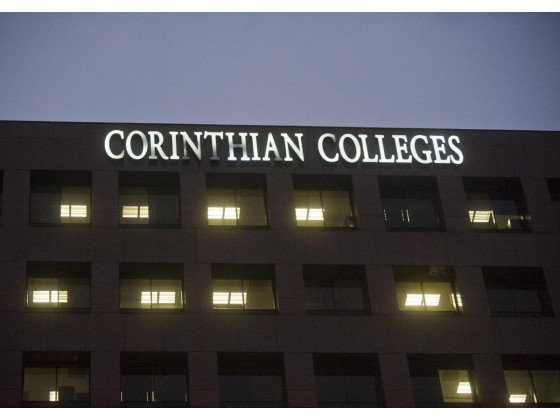
Will Corinthian Colleges’s kind of education meltdown happen in Malaysia?

nnu2yb-corinthian
Photograph source: http://images.onset.freedom.com/ocregister/nnu2yb-corinthian.jpg

The final nails are being hammered into the coffin of Corinthian Colleges, once one of the largest for-profit education groups in the USA. The impact of this private higher education meltdown is far and wide. Many of its remaining 16,000 students are left out in the cold, most are shouldering huge personal / education debts with bleak future. Many of Corinthian’s problems that led to its downfall are related to inappropriate management of state-funded education loans to students and over promise of job prospects and pay levels. Can we find similarities in cases of education institutions’ collapse in Malaysia?

If PTPTN can finally get it’s act together (it looks as if it has began the clean-up which it should have been doing in terms of defaulting borrowers management long time ago), will we witness similar higher education meltdowns in Malaysia too?

There are just too many colleges (private, community, public etc.) chasing a Malaysian youth population that is not growing in tandem with their collective capacities. The growth in international students population can help to redress this only a little. Not all the smaller players have what it takes to attract foreign students!

Should PTPTN now also start honing on errand colleges and universities which have been over promising its students with job prospects? Let’s be fair on this, PTPTN should include every institution, both private and public where the most loan defaulters have come from. It also owes the citizens of Malaysia an explanation on why it had decided in November 2014 to whack 15% from the private college students’ PTPTN loan amount while taking only 5% from those in the public institutions of higher learning. This reduction has already showing its impact on the enrollment figures of many private institutions relying heavily on PTPTN loan to fund their students (does this ring a bell?….think Corinthian!).

Consolidation of the higher education industry of Malaysia was called for by some politicians recently. But these people may not have a full understanding on how the higher education industry works and they have no idea of the complexities that the act of consolidation (along the idea of banks mergers) would entail. Colleges and universities are not like banks, the “products” are all very different, the pricing systems and delivery schedules are all unique to individual institutions. It would be easier to let “sick” colleges die than to “cross infect” the healthier ones! No sane edupreneur will be willing to buy into someone else’s huge debt!

With more stringent entry requirements for private colleges and universities set to come into effect in 2016, and the possibilities of PTPTN getting tougher on institutions which produced the largest number of bad debtors, there is a huge storm that the higher education industry as a whole and the private sector in particular are riding into. The “Corinthian Meltdown” may yet to be witnessed in Malaysia!

I for one will not be buying any education stocks for now!

(Declaration: I do not hold any direct shares in any of the 4 public listed education groups in Bursa Malaysia!)

Difficult to score on moving goalposts

The education concept behind the new lower secondary national assessment system, PT3 in Malaysia is a great idea that was horribly implemented. What can students and parents do? Read more to pick up some advice from a parent & educationist.

I had to be on a day-trip to Penang on December 22, 2014 which was the same day that candidates who have sat for the lower secondary school’s Pentasiran Tingkatan 3 (PT3) (which has replaced the traditional Penilaian Menengah Rendah (PMR) examination by the power that be) would get their results. My daughter was one of the 453,413 candidates. When I reached Penang at around 10:30 am I gave my wife a quick call to check on my daughter’s performance. I wanted to speak to my wife first just in case we have some “unforeseen” results. But my daughter answered the call instead, because her mother was driving.

“How many “B”s did you get?”, that was my opening line. “I am surprised you ask this funny question!”, my daughter answered indignantly.

She did her best and scored 5 “A”s, 3 “B”s and 2 “C”s. Naturally, she along with a few hundred thousands “PT3ers” were disappointed and rightly so. Both my wife (a former teacher) and I feel that our daughter has done her very best and we are proud of her achievements despite being one of the “guinea pigs” for Ministry of Education.

Anyone who plays football can tell you that it is very, very difficult to score a goal if the goalposts keep moving. Those charged with implementing PT3 must be either fickle-minded, lack planning skills or both. Parents, students and even teachers have been left guessing what to expect of PT3 candidates and how assessments were to be taken. This was not helped by the constant adjustments to the entire PT3 system. At one point, we did not even know whether there would be a “final” examination, or if there was one, in what format it was going to be. One thing good about this is that the “advantage” held by those who are “customers” of tuition centres have been mainly nullified. No one, even the teachers had any idea what to expect in the entire PT3 examination system. To me, those deciding on the PT3 were actually making up the “rules’ as they went along. This is grossly unfair to all stakeholders. If the system is not yet fully tested and the plan not fully thought out, it would have been better to have retained the PMR for this cohort and implement PT3 for those who have started Form 1 in 2014. The RM100 million questions include, why was the haste in implementing PT3? What was the rationale? Who stood to benefit from this premature implementation of PT3? (the PT3 candidates, their parents and teachers surely were not the beneficiaries)

As an educationist, I have nothing but praise for the concept of PT3. It has many positive features such as giving greater emphasis on continuous learning and assessment. This makes life a lot more difficult for those lazy students and reward those who put in consistent hard work. However PT3 is a great idea that has been very, very poorly executed. As the saying goes, “the devil is in the details”. The constant yo-yoing of policies and instructions given by those handling the PT3 system had caused the poor candidates (their teachers and parents) to second guessing what would the system churn out next.

You cannot sail a ship that is half built and hope that it will withstand the waves in the high seas. It was just plain luck that this half built “ship” called PT3 was only “partially submerged” in its maiden voyage! One thing great about the PT3 system is that “leaking” of examination question papers so endemic in our examination system seems to be “eliminated”.  Schools have the option to choose which version of the examination paper to use.  I am sure the PT3 system has a built-in mechanism to ensure that questions chosen and compiled for different versions of the same subject would assess the students in the similar manner and there is a moderation process to ensure equality. There should not be any “harder” or “easier” papers. I think the power that be should make sure that this process is transparent and communicated well to all stakeholders.

Because of these moving goalposts (I heard that even the scoring system for grades was changed unannounced), many elite schools that were accustomed to producing 70 – 80 or more students with straight “A”s are seeing this elite lot in single digits in 2014. But as a parent, I would strongly advise that we treat our children’s PT3 results as a form of attainment and a rite of passage.  The schools, teachers and candidates are all victims of a badly executed but highly progressive examination system. Console your children if they did not do as well as expected. Tell them that PT3 is only the second public examination in their learning journey, and it is not the “be all and end all” of their tenure as a student. There are bigger challenges ahead. They must enjoy learning and carrying on learning all their lives.

I do advise students who are unhappy with their PT3 results to file in their appeals (there is still about 1 week left to file an appeal by Jan 21, 2015). They owe it to themselves and their younger colleagues at schools to voice up their discontent. Perhaps the power that be may take notice if there are 100,000 appeals. It should take those charged with implementing the PT3 to task for messing up a great opportunity in making progress in our education system due to their inaptness and some might say, incompetence.

*********************************************************

This article was initially written to be published as the penultimate piece on my column in Focusweek / Focus Malaysia last week (Jan 10, 2015). But as there was a change in arrangements which resulted in an earlier termination of my association with the publication, I am publishing this article on my own blog instead. I hope my readers in Focus Malaysia can find this and like this!

……………………….Chow YN, PhD.

Why measuring only academic inputs causes academic decline in Malaysia

Dr. Chow provides a commentary on this article he wrote about the obsession with inputs that is one of the culprits for academic decline in Malaysia.

With the discontinuation of The Heat as a print version and a more reduced Focusweek taking its place in October 2014, I was given about 10 days of “breathing” space. At that time (around late September / early October 2014), some officials in the Ministry of Education threw a “bomb” into the higher education industry: the use of forecast results from the national high school graduation examination, Sijil Pelajaran Malaysia (SPM) for the purpose of granting conditional acceptance for high school graduates to enter private colleges was disallowed. This practice which can be traced back for over 20 years allows students to commence their college studies without having to wait for months for the SPM results to be announced.

The reason cited in the press was IMHO not really credible, some students whose actual SPM results were not up to par were accepted into college studies based on a more favourable forecast result and hence this 20-year-old practice had to stop. It is like saying that because of some cases of accidental injuries due to the kitchen knives, we now make it illegal to have it in the home! The person making the recommendation to the power that be to ban the use of forecast results perhaps was not familiar with the dire consequences to private colleges for any failure to “weed” out students without the correct SPM credentials. This gave me an idea about this article. 

Is the obsession with inputs one of the key contributor to the lackluster academic performance of Malaysian students? That was the question I asked in the following article.

Our system also has very little flexibility when it comes to tapping into the expertise of renown sons and daughters of Malaysia to impart their wisdom to the new generation of learners. By disregarding the professional and industrial attainment of a person when it comes to measuring the academic credential of a person to teach at college level makes it very restrictive when we want to tap on many very established and renown professionals, designers, creative talents to impart their wisdom to our students.

In early 1980s I was taught mathematics at GCE “A” levels by Mr. Gowland who did not go to university. He was better in teaching us and guiding us to score grade A’s than many of his colleagues with Masters and PhDs. A person with a string of degrees does not necessary make a good lecturer. In the same technical college, tucked in the small town of South Shields, Tyne and Wear, England, our head of department, a nuclear physicist with a PhD was having great difficulties in making us understand topics in nuclear physics at GCE “A” level! I remember this lesson well and when I was hired as a  lecturer in 1996 (without any formal training in teaching) by the now defunct Sepang Institute of Technology. I quickly learned the rope by sitting in on classes delivered by senior colleagues especially those from the collaborating university, University of Adelaide. I also was not shy in asking for pointers from senior colleagues and did a “learn as you go” for the first few months.

It is about time we move to an “outcome-centric” education system. Why should we care how and what kind of inputs a student’s learning journey involved? We should only use SPM grades as an “indicative” measure to accept students into higher education. We should provide a “challenge route” for those whose grades may not be sufficient to follow a course of study of their choice so long as they can take the challenge and prove that they can do just as well as others by passing the relevant subjects (in which they did not attain the necessary grade as SPM). We should worry a lot more about what the student can do after taking a subject (the output or learning outcome) and not about the amount of work he put into studying it. We should care less about the different “learning journey” of individual students and more about their reaching their “learning destination”. Each student’s ‘learning journey” is different from the other but it is their ability to demonstrate the attained skills and knowledge, that is the “learning destination” that counts.

I am glad the re-published article in theantdaily.com (in English, Chinese and Malay), at the time of writing this article  has generated 5 comments (all, I am glad to say being favourable to the author!), 170 Facebook “likes” and 6 tweets on the news portal.

The great 20th century statesman who transformed China from an economic basket case to soon-to-be the World’s largest economy, Deng Xiaoping said in 1961, “it doesn’t matter whether a cat is black or white, if it catches mice it is a good cat”. Perhaps educationists in Malaysia, especially those advising the power that be should ruminate on the wisdom of Deng.

Last updated on 11 Jan 08:29 AM

by Dr Chow Yong Neng

OPINION: Parents, students and owners of private colleges and universities are relieved now that the powers that be have concluded that it serves no purpose to prevent the use of forecast Sijil Pelajaran Malaysia (SPM) re­sults for conditional admission into private institutions of higher learning.

Students admitted using forecast re­sults, whose actual SPM results fell short of the required minimal grades, have always been prevented from enrolling into their desired course of study. Private colleges know too well that if they allow them to remain, sooner or later, approving authorities like the Malaysian Qualifica­tions Agency (MQA) will catch up with them. So long as parents and students are well informed of this fact, there should not be any issue of anyone “slipping” through the net.

But what if a student’s actual result does not “qualify” him for enrolment into his desired course of studies but he did well in the first semester of the foundation programme? For instance, student Tan used his SPM forecast result of five credits to enter a foundation programme. But he only scored four credits in his SPM and failed to get a credit in mathematics.

However, since being admitted to his foundation programme, Tan had worked hard and scored grade A for mathematics in his first semester examination. Under the Ministry of Education (MoE) policy, Tan will be denied his quest to be formally enrolled in his foundation studies prog­amme.

However, a true educationist will be persuaded by the fact that Tan’s SPM grade for Mathematics is immaterial as he has proven himself by scoring in Math­ematics in his foundation studies, which is at a higher academic level than SPM. Tan has “made up” for his lack of credit in SPM mathematics and should be allowed to continue his foundation studies.

But Malaysia over-emphasises inputs. We are obsessed with measuring inputs in academia, from the admission of students to institutions of higher learning, to quality assurance of delivery and learning of aca­demic programmes – the key emphasis is just on inputs and more inputs.

We do not have a concept of learners’ ability to “catch up” as we do not have much faith in evaluating our learners’ outputs. So scoring a credit grade in SPM mathematics in Tan’s case is considered more important than his scoring a grade A in an academically higher level math­ematics. Thus Tan’s desirable foundation studies output for mathematics is ignored.

Tan’s case is a classic example of, “the proof of the pudding is in the eating” but Malaysian education policies are more into “what was done to make the pudding”. It is this kind of input-centric mentality in our education system that has held Malaysians back from excelling academically for decades.

Even on the input-side, Malaysian educational policies are overly input-cen­tric as well. Someone once had an idea that to teach at diploma level, the lecturer must have a minimum of a Bachelor degree. This idea eventually made it to be the “standing policy” to evaluate the suitability of a person to teach. Thus for Bachelor level studies, the teaching staff must have a Master’s level qualification and for Master’s subjects the lecturer must hold a PhD in the same field. Our educa­tion system seems not to have the ability to recognise the importance of experience, exposure and achievements over paper qualifications.

If there is a Master’s level class on modern shoe design, Datuk Jimmy Choo would not be allowed to deliver it. This is because Choo, even though he is the world’s most renown shoe designer, does not hold an earned doctorate in this field. Yet a freshly-minted PhD holder in the same field who has never worked beyond academia would be found suitable to teach the same class. Such is the idiosyncrasy of Malaysia’s higher education system.

This obsession with input is the major cause of the lack of transmission of wisdom, insights and experience by successful professionals, industrialists and master craftsmen to the new generations of learners at Malaysian institutions of higher learning.

If our young learners are denied the opportunities to learn from great masters in their respective fields and are instead constantly fed an academic diet of book-knowledge, it will not take a genius to figure out why our universities have been lacking yearly in the various universi­ty ranking systems compared to our peers.

Unless Malaysians collectively get out of the shackles of our input-centric mental­ity, we will always be chasing the tail wind of our competitors

Dr Chow Yong Neng once argued successfully for MQA to allow a few of his students with inadequate SPM grades to continue with their studies by emphasising the satisfactory output of their diploma studies.

This article was first published in the Oct 18, 2014 issue of Focusweek

How do you debunk myths about Chinese primary schools in Malaysia?

It is not easy to fight lies told about the vernacular schools of Malaysia. A recent availability of a string of revealing facts help to debunk these myths. Read more & comment!

I have always wanted to write something to debunk the myths propagated by people with ulterior motives about Malaysia’s Chinese primary schools (to a lesser extent, Malaysia’s Tamil primary schools as well). I have tried without success in getting data from the Ministry of  Education’s website. Without these data, we cannot do much to nullify these myths.

It took the availability of key statistics by the Chinese press in Malaysia to give me the facts and figures I needed in early November 2014 to write this article.

It is extremely difficult to demystify the lies and untruths told over and over again by successive has-been and dead-wood politicians, but I try my best and hopefully provide at least some good points for supporters of the vernacular school system to keep the struggle going and gain the upper hand. A lie told many times unchallenged will eventually be misconstrued as the truth. There are many, many lies told about Malaysia’s vernacular schools and a great deal more will be concocted by politicians with limited mental capability. It is the duty of all who are concern with the rights of Chinese and Indian Malaysians to learn their mother tongues to fight these lies and liars.

Subsequent to the publication of this article on November 14, 2014 in Focusweek, there have been some startling facts further revealed by a Sabahan UMNO (United Malay National Organisation) member, the dominant partner of the coalition that rules Malaysia since independence in 1957 (from the British). Datuk Taufiq Abu Bakar Titingan revealed on November 29, 2014 that, out of 35,162 students studying in Chinese vernacular schools in Sabah last year (2013), 15,120 were bumiputra (and hence not Chinese Malaysians).  In fact in his constituency, 85% of the bumiputra students study in Chinese primary schools! Datuk Taufiq told the annual assembly of UMNO that, “….so there is no need to close down these schools“.  I would have liked very much to see the political rotten eggs on the faces of those who have been calling for the closure of vernacular schools in that grand meeting in the end of November 2014.

Despite the reiteration of the position of the Malaysian government that the vernacular schools are part and parcel of the national education system and their existence guaranteed under the Federal Constitution of Malaysia by the Prime Minister, the vernacular schools, especially Chinese primary schools are still the favourite punching bags of those with ulterior motives. The Mahathir administration was brilliant in coming out with the Wawasan School concept to provide a solution to tackle this problem. I personally was involved in helping to ensure that the first Chinese primary school established by the Malaysian government (in 2002) in 45 years of administration, SJK(C) Tun Tan Cheng Lock was nothing but a true Chinese vernacular school, except it is housed with and shares​ facilities with one Tamil vernacular school and one national primary school in the same school complex. Although there were many detractors (especially the “right-wingers” of the Chinese school movements) to the Wawasan School Concept, SJK(C) TTCL is today one of the most difficult to get your children registered!

Perhaps the Najib administration should relook at the Wawasan School Concept and relaunch it whenever there is an opportunity to do so?

DEBUNKING MYTHS ABOUT CHINESE SCHOOLS

By Dr Chow Yong Neng

1/1/2015 9:00:00 AM

SJKCs and SJKTs are no different from Sekolah Kebangsaan (SK), the national schools, because all these schools follow the same administrative systems as prescribed by the Ministry of Education


For many has-been politicians and those who are vying for attention, attacking the existence of Chinese primary schools, the Sekolah Jenis Kebangsaan (Cina) (SJKC), seems to be a sure way to get attention.

And why not? Those who run Chinese primary schools are government servants; they are not likely to fight back. Their ultra-rightism may bring these mediocre politicians some press attention and hence signify their political relevance to their target audience. Thus, whenever there is a need to divert the people’s attention, the SJKCs have been the politicians’ bogeyman.

Let us get some facts straight. SJKCs and SJKTs (Tamil primary schools) are, for all intents and purposes, no different from Sekolah Kebangsaan (SK), the national schools, because all these schools follow the same administrative systems as prescribed by the Ministry of Education (MoE).

The schools follow the same curriculum with the exception that the vernacular schools have greater emphasis on the use of the respective mother tongues in the delivery of the lessons and have an additional subject, that is Chinese or Tamil language.

There are 1,294 SJKCs, 523 SJKTs and 5,863 SKs, with student enrolments of 560,788, 89,007 and 2,029,658 respectively. SJKCs and SJKTs account for 20.78% and 3.30% of the entire primary school student population respectively. Collectively, they are educating close to a quarter of Malaysian primary students.

Outside of Greater China (China, Hong Kong, Taiwan and Macau), Malaysia is the only country where the government funds and operates Chinese primary schools

Successive prime ministers have made it clear that vernacular schools are part and parcel of our education system and the Federal Constitution guarantees their continued existence.

There are over 60,000 pupils in Chinese primary schools who are not Chinese Malaysians. This group of mainly bumiputera pupils constitutes about 10.7% of SJKCs’ student population. Has it occurred to these opportunistic politicians to wonder why the parents of these 60,000-plus students send their children to SJKCs rather than SKs?

Some politicians say that SJKCs only have Chinese Malaysians as teachers but they do not back this claim with facts. While I do not have access to proper data, my observation of my children’s school reveals that during my daughter’s time (she completed Year Six in 2011) there were two Malay teachers, one of whom I have known personally since she started in the early days of the school’s establishment. When I was a pupil of a SJKC, I was taught Bahasa Malaysia mainly by Malay teachers. So the statement that SJKCs have only Chinese Malaysians as teachers is untrue, concocted by politicians without substance to gain political advantage.

The recent leak of Ujian Pencapaian Sekolah Rendah (UPSR) examination papers supports my point. All UPSR classes of 2014 had to resit the Science, English and Mathematics papers. The only reason why candidates from SKs, SJKCs and SJKTs have to resit these same papers was because they studied the same curriculum in the same medium of instruction.

This pokes a big hole in the credibility of those who charge that vernacular schools are not part of the Malaysian education system. The philosophy of teaching at SJKCs that dates back over 80 years is the only difference. This philosophy is passed on by senior teachers and headmasters to younger teachers. I believe this philosophy alone accounts for the higher scholastic achievements of SJKC students, something which ill-informed politicians have chosen to dispute.

Outside of Greater China (China, Hong Kong, Taiwan and Macau), Malaysia is the only country where the government funds and operates Chinese primary schools. Malaysians are reputed to have the best command of Mandarin outside Greater China. The standard of Chinese at SJKCs easily outclasses that of our southern neighbour, Singapore.

But with the incessant attacks on Chinese schools and deliberate hurdles placed by some officials at the MoE (the case of not sending Chinese language teachers trained for secondary schools is one example), this advantage is eroding. Already many secondary schools pupils have been either actively discouraged or coerced into dropping Chinese at the Sijil Pelajaran Malaysia (SPM) level. This comes at a time when other countries are encouraging the learning of Chinese.

Incidentally, my friend’s son who is studying at a high school in Australia is required to take Chinese as a subject due to his ethnicity. With so many China nationals having settled in Australia, there is no shortage of good Chinese teachers to guide students in Australia. Perhaps Australians outclassing Malaysian in their command of Chinese within the next 20 years may be a reality that we will face.

 [the feature picture for this post was source from The Heat Online]

Punishing new student loan borrowers for the sins of their predecessors

Punishing new borrowers for the “sins” committed by their predecessors is akin to punishing a child for the crime committed by his father….unfortunately that’s what PTPTN is doing to new student loan borrowers.

On November 6, 2014, I received a phone call from David Lee, Editor-in-Chief of Focusweek, the sister publication of Focus Malaysia around noon. David was keen to have a full article written on the announcement made by the National Higher Education Fund Corporation (PTPTN) a day earlier where it had reduced the amount of loan that new borrowers would be getting from November 1st, 2014. Students from private institutions of higher learning will be hardest hit with a massive reduction of 15% in the maximum loan quantum, their public institutions of higher learning counterparts got a 5% corresponding reduction. The mean-testing criteria were further tightened so that only borrowers from low income families would stand to get the full loan.

I was very honoured by this request, but there was one caveat: I needed to get the story written and submitted by lunchtime the next Monday, November 11,2014. This gave me about 5 days to do the job. Luckily for me, being a avid follower of the PTPTN saga, I had in my “collections” a great deal of press articles and other data that would allow me to start the job. But I still had to do a lot of desk research and getting the relevant data was the most time-consuming.

Working frantically for the next few days and with the editorial inputs from David and his team, we managed to get this front cover story on the November 15, 2014 edition of Focusweek completed. The followings is an excerpt of the full article that was carried in Theantdaily.com on December 8, 2014.

The full article also covered the unfairness of reducing 3 times higher the reduction in maximum loan (at 15%) for borrowers in private institutions of higher learning compared to their counterparts in public institutions. Since the private and public institutions cater for just about equal number of students, why the heavier “punishment” on the private sector. What I could not find was the data from PTPTN which show who are the main loan defaulters. If the majority are from the private institutions then PTPTN might have justifications for the more severe treatment, but personally, I doubt this is the reason. I also covered the implications on the 15% maximum loan reduction on the private college and universities enrollments where I think those institutions struggling financially will see these austerity measures hitting them hardest. I think a further round of consolidation of the private higher education industry is going to take place in the next few months when the impact of this loan reduction is felt on the new students.

My key quotable quote: Punishing new borrowers for the “sins” committed by their predecessors is akin to punishing a child for the crime committed by his father.

********************************************************************************************************

PTPTN punishing the wrong people

PETALING JAYA: The dire predictions have come to pass. Less than three months ago, The Heat newsweekly wrote of a looming student loan crisis at the National Higher Education Fund Corporation, marked by an almost RM50 billion outstanding student loan account and an alarmingly high level of graduate joblessness or underemployment.

The report referred to the situation as a “ticking financial time bomb” and ques­tioned whether the PTPTN (the Bahasa ac­ronym for the corporation) could continue to use kid gloves on the defaulters.

The warnings seem to have been heeded, although it’s far too late. On Nov 5, PTPTN chairman Datuk Shamsul Anuar Nasarah announced a measure that was once rejected by the Cabinet – listing loan defaulters in the Central Credit Reference Information System (CCRIS).

The first stage would involve 173,985 borrowers who had not started financing their loans totalling RM1.23 billion, three years after graduating. Other defaulters will follow in succeeding stages. Being listed under CCRIS would affect the borrowers’ credit worthiness and make it difficult for them to get bank loans.

While this falls within the ambit of nat­ural justice, another announcement by the PTPTN has fast turned into an unpopular decision that invites controversy.

This has to do with the decision to tighten the eligibility criteria for borrowers and to reduce the loan percentage by 5% and 15% for borrowers from the public institutions of higher learning (IPTA in Bahasa) and private institutions of higher learning (IPTS) respectively.

Only borrowers whose families are receiving government handout in the form of 1Malaysia People’s Aid or BR1M would be eligible for 95% PTPTN loan. Borrowers coming from families which do not qualify for BR1M and with household income of below RM8,000 would be eligible for 75% PTPTN loan while those whose families earn more than RM8,000 will only be eligible for 50% PTPTN loan.

It was reported that 558,475 PTPTN borrowers did not make a single instalment payment, causing their collective debt to balloon to RM4.3 billion. Although the PTPTN is putting 173,985 of them into CCRIS, one wonders why the rest can’t be made to face the same fate as well. It is crucial to cast the net far and wide, to generate a payment schedule that would keep the fund afloat.

Other decisions taken beg some thought. The government has decided to convert the PTPTN loans of high achievers who scored first class honour degrees to scholarships and this would benefit 22,150 borrowers as at end September at a cost of RM603.1 million.

This is an excerpt of an article first published in the Nov 15, 2014 issue of FocusweekThe cover picture was an image taken from the front cover of Nov 12, 2014 edition of Focusweek.

[polldaddy poll=8530190]

Comparing Malaysia’s student loan crisis with that of the USA

Malaysia has its own version of student loan crisis. This article gives an in-depth analysis of the crisis, identifies great gaps in data & compares Malaysia’s case with that of the USA.

My article entitled “Looming student loan crisis” was published on August 23, 2014 in the now defunct print weekly, The Heat. An edited version of the same article also appeared recently in Theantdaily which was also syndicated by Malaysia Today.

The idea for this article came to me in late June 2014 when I read about the news related to the National Higher Education Fund Corporation (PTPTN), especially related to defaulters and the fact that 50,000 new applicants to PTPTN loans may be turned down due to the lack of fund because of the high rate of defaults.

The first version of my article was deemed to be too “academic” with too many facts and figures and hence I went back to the drawing board to work on the second version which was accepted for publication. I have reviewed and edited the first version which is published here. I shall leave it to the wisdom of my readers to judge if this version (which differs substantially from the one published in The Heat) provides a deeper analysis of the issue of student loan crisis in Malaysia and its analogy with the same issue in the USA. 

In November 2014, PTPTN announced a drastic reduction of loan amount to new applicants which trimmed 5% off the maximum loan quantum for borrowers from public institutions of higher learning but levied a massive 15% reduction in the maximum amount of loan for those studying in private institutions. The mean-testing criteria have also been tightened up further. These proved that my prediction in August 2014 was right on the bull’s eye!

***********************************

Malaysia’s looming student loan crisis

In 2012, USA’s outstanding student loan shot over the psychologically important US$1.0 trillion mark. In March 2014, US News reported that this figure has breached US$1.1 trillion. This is significant because by 2012, the total amount owed by United States’s student loan borrowers had exceeded the country’s citizens total credit card debt. Many financial experts are now saying that the US student loan crisis is getting to the dimension of the sub-prime mortgage crisis of 2008. With a total of over 37 million borrowers holding outstanding student loans, 6.8 million (or 18.4%) of whom being defaulters who collectively account for US$95.9 billion it is no wonder that alarm bells are ringing in the USA.

Table 1: Comparison of student loan data between Malaysia and the USA
Malaysia USA
1 Total amount of student loan disbursed (1997 to 2014) RM54,510,000,000 N/A
2 Total amount of outstanding student loan (2014) RM49,390,000,000 $1,100,000,000,000
3 Amount of student loan in default RM1,300,000,000 $95,900,000,000
4 % of total loan in default [(No. 5 / No. 4)*100%] 2.63% 8.72%
5 Total number of borrowers (1997/2013) 2,390,000 N/A
6 Total number of borrowers still with outstanding loan (2013) 1,240,000 37,000,000
7 No. of defaulters (2014) 183,000 6,800,000
8 % of borrowers who defaulted (2014) [(No. 7/ No. 6)*100%] 14.8% 18.4%
9 Underemployment rate of graduates 40% 44%
10 Repayment rate (2012) (RM7.83 billion due, RM3.48 collected) 49.07% N/A
11 Amount of total loan recovered (Mar 2014) RM5,120,000,000 N/A
12 Repayment collected (2011) RM737,000,000 N/A
13 Repayment collected (2012) RM800,470,000 N/A
14 Repayment collected (2013) RM1,200,000,000 N/A
15 Average debt owed per defaulter (No. 3 / No. 7) RM7,104 $14,103
16 Average amount of loan taken by each borrower (No. 1 / No. 5) for Malaysia; (No. 2 / No. 6) for USA RM22,808 $29,730
17 Total National Debt (July 2014) RM543,236,000,000 $17,806,000,000,000
18 % of PTPTN outstanding loan as national debt [(No. 2 / No. 17)*100%] 9.09% 6.18%

If we take a look at the statistics for Malaysia’s National Higher Education Fund Corporation (PTPTN) loans and compared these with the equivalents in the USA (Table 1), there are worrying indications that Malaysia is heading the same path as the USA towards student loan crisis. Between 1997 and 2013, PTPTN had provided RM54.51 billion loan to 2.39 million borrowers. To put things into perspective, the total amount of outstanding PTPTN loan currently is around RM49.39 billion and every year PTPTN disburses around RM5.0 billion to over 200,000 borrowers. The best year of loan repayment that PTPTN has recorded was 2013 at RM1.2 billion. In simple arithmetic, discounting defaulting loans, the total outstanding PTPTN loan will grow at least RM3.8 billion each year. In comparison, the dividend paid by Petronas to the Malaysian Government has been around RM30.0 billion each year (for 2013 it paid RM27.0 billion). Thus what is owed to PTPTN is about RM20.0 billion more than what the Government of Malaysia receives each year from Petronas.

The average amount owed by undergraduate borrowers in Malaysia, at RM22,808 is comparable to the USA’s figure of US$29,400 if one takes into consideration of the much lower cost of higher education in Malaysia.

Table 2: Statistics of PTPTN Borrowers: the unexplained reduction in numbers
Item Number
1 Total number of borrowers (between 1997/2013) 2,390,000
2 Total number of borrowers still with outstanding loan in 2014 1,240,000
3 Number of borrowers who have settled their loans (based on calculation: No. 1 minus No. 2) 1,150,000
4 No. of defaulters (2013) 412,245
5 No. of defaulters (2014) 183,000
6 Reduction of defaulters between 2013 & 2014 (No. 4 minus No. 5) 229,245
7 Number of borrowers actively servicing their loans (2014) 956,018
8 Number of borrowers unaccounted for in 2014 (after deducting no. of known defaulters, active borrowers from total no. of borrowers with outstanding loans) (No. 2 minus No. 5 minus No.7) 100,982
9 Amount of loan repaid by borrowers in 2013 RM1,200,000,000
10 Total amount of loan recovered (up to 2014) RM5,120,000,000
11 Amount of loan attributed to the reduction in number of defaulter between 2013 & 2014, assuming the average owed is the same for the 2014 defaulters, RM7,104. (No. 6 * RM7,104) RM1,628,516,393
12 Estimated amount owed by the unaccounted borrowers, assuming the average owed is the same for the 2014 defaulters, RM7,104 (No. 8 * RM7,104) RM717,358,470
13 Total amount of loan from unaccounted borrowers (based on average default amount per defaulter in 2014) (No. 11 + No. 12) RM2,345,874,863
14 Amount of loan attributed to the reduction in number of defaulter between 2013 & 2014, assuming the average owed iby individual borrowers in 2014, RM22,808. (No. 6 * RM22,808) RM5,228,512,531
15 Estimated amount owed by the unaccounted borrowers, assuming the average owed by individual borrowers in 2014, RM22,808. (No. 8 * RM22,808) RM2,303,150,134
16 Total amount of loan from unaccounted borrowers (based on average owed per borrower in 2014) (No. 14 + No. 15) RM7,531,662,665

With 14.8% (or 183,000) of the 1.24 PTPTN borrowers holding outstanding loan being defaulters (a higher figure of 19% was reported recently), the default rate is fast approaching the US level. Although only 2.63% of PTPTN’s outstanding loans (or RM1.3 billion) are in default, which is about three times less than that of the USA (at 8.72%) the confusing data provided by the relevant authorities in Malaysia at different times points to a possibility of a much higher default figure (as shown in Table 2). Based on data released to the press in April 2014, there was a dramatic reduction in the number of defaulters from 412,245 in 2013 to 183,000 in 2014, a staggering fall of 229,245 borrowers. No explanation has been given to this fall in defaulters. Basing on the average amount owed by defaulters in 2014 of RM7,104, these 229,245 “rehabilitated” borrowers should account for around RM1.63 billion of outstanding loan and the collected amount (assuming that each borrower opted for the 10 years tenure, excluding interest) should be at least RM163 million. If we base our calculation on the average amount owed by a borrower in 2014 of RM22,808, these figures shall change to RM5.23 billion and RM523 million respectively.

Accordingly, there is also another discrepancy in the figures given relating to the number of borrowers actively servicing their loans. In April 2014, it was revealed that there were 956,018 borrowers active in repaying their PTPTN loans and the total number of borrowers with outstanding loans was given as 1.24 million. If we take away from this 1.24 million people the number of defaulters and the recorded number of borrowers actively repaying, there are strikingly 100,982 borrowers unaccounted for. Granted some of these people could have been the top students with first class honours degrees whose loan have been converted to scholarships, in reality producing over 100,000 first class honours graduates who are also borrowers in one year is stretching one’s imagination a bit too far. These 100,982 unaccounted borrowers could be responsible for between RM717 million to RM2.30 billion of loan, if we assume they owe an average of between RM7,104 to RM22,808 (based on the borrowers data for 2014 in Table 1).

Hence the total unaccounted borrowers collectively could owe PTPTN between RM2.35 billion to RM7.53 billion, either of which is a very huge number that dwarf the loan repayment collected in 2013 of RM1.2 billion. Somehow this fact has escaped the attention of the Auditor General office which has uncovered system problems in PTPTN but this alone could not explain the huge number of borrowers unaccounted for.

The amount of student loan owed and the default rate are tied fully to the employment status of the borrowers. In the USA, it was estimated that around 44% of graduates are underemployed which means that they are not in jobs that are relevant to their training and thus not earning sufficiently. In Malaysia, the figure of 40% underemployment has been given for fresh graduates. Hence being underemployed and therefore not earning one’s full potential is the most crucial factor leading to student loan default. Will this lower pay affect the repayment of PTPTN loans? Will this be the trigger to higher level of PTPTN loan default?

PTPTN will need at least RM5.0 billion per year to cover the loan demand of Malaysian students. Assuming that the collection of repayment stays at least RM1.2 billion as per 2013 data, and the default amount stays at 2014 level of RM1.3 billion, the RM5.0 billion will not be enough to cover the needs of new students. Will we see a cap to the amount of PTPTN loans?*  Will the private higher education sector bear the brunt of the cut in PTPTN loan funding? How will the private institutions, especially those with high reliance on PTPTN funding for their students fare?

The percentage of national debt accounted for by student loan debt is about 6.18% for the USA. For Malaysia, the figure is about 9.09% of total national debt. Thus if the USA, at 6.18% of national debt is close to having a financial crisis, how will Malaysia fare with closer to 10% of national debt accounted for by outstanding PTPTN loan?

With all these indicators, one cannot help but surmise that there is indeed a looming PTPTN loan crisis in the same dimension as that of the USA. The sooner that every stakeholder recognizes this as a pressing issue, the faster can a plethora of solutions be implemented.

*This article was written in mid July 2014. In fact in early November 2014, PTPTN has announced a 5% reduction in loan amount for borrowers from public institutions of higher learning while their private institutions counterparts have to endure a massive 15% reduction in loan amount. More stringent mean-testing measure was also announced.

The profile of student loan borrowers

US News reported in March 2014 that although the bulk of the loan in the US (60%) are for borrowers taking undergraduate courses, a worrying trend is that the remaining 40% is owed by graduate students who account for only 16% of the number of borrowers. The average owed by 70% of those graduating with an undergraduate degree in 2012 was US$29,400, in contrast the amount owed by the average graduate student was US$57,600 with many facing debts of US$100,000 or above.

In contrast, most Malaysian graduate students are only eligible to apply for PTPTN loans if they enroll in public universities and a handful of private universities.  In addition, different levels of financial support ranging from full scholarships at public and private universities, various government scholarship schemes and jobs as research assistants have diminished the reliance of graduate students on PTPTN. It can be assumed that the bulk of the borrowers of PTPTN loans are for undergraduate studies. An attempt to obtain the percentage and amount owed by borrowers pursuing graduate studies has not been successful. The financing of graduate studies by working adults in Malaysia also traditionally rely on EPF withdrawal, commercial bank loans or own savings. Only those enrolled for part-time studies at public universities and a limited number of for-profit institutions are eligible for PTPTN loans.


What the US experts have predicted regarding student loan crisis

  • There might be a cap to student loan guarantee by the US government. This would spark off a crisis mirroring the sub-prime mortgage financial crisis of 2008. With difficult availability of student loans, colleges, especially the for-profit institutions will find it hard to fill up seats, collapse of the higher education industry could occur.
  • There will be diminished economic productivity from young graduates in the long run as they are spending higher percentage of their income to service student loan debt. This coupled with the 44% US graduate underemployment rate means that the income level of a significant number of borrowers may not be sufficient to cover their student loan repayment fully.
  • The spiraling US college tuition fees over the period between 2001/2 to 2011/12 have seen public universities tuition and other fees rose by 40% and that of private institutions rose by 28%. This coupled with the ready availability of student loan have increased the amount of debt held by each US borrower.
  • For-profit US institutions have only 13% of the total population of students but account collectively for 31% of student loan. Their students also have higher default rate of 22% compared to those studied public institutions. 72% of for-profit institutions produced graduates who earn less than the average high school dropouts. This is a reflection on the market perception of the quality of some of these US for-profit colleges. Many have significant reliance on government-backed student loans to sustain their operation. Corinthian Colleges which has 72,000 students received US$1.4 billion of its US$1.6 billion revenue in 2013 from government funded student loans. It has to sell off all its 85 of its campuses and closing down 12 because of the trouble with government funded student loan issues.

The majority of the predictions above regarding US higher education institutions, especially for-profit colleges may have similar reflections in Malaysia. A PTPTN loan crisis will definitely result in the tightening of the rules regarding the eligibility criteria of borrowers. A squeeze of funding source of PTPTN (coupled with high default rate and relatively low repayment collection) may also curtail the number of for-profit institutions and the type of study programmes that qualify for PTPTN loan. This will lead to a second wave of consolidation of not only the number of for-profit institutions but the types of programmes (as did the tightening of the funding rules regarding nursing programmes a few years ago which resulted in the collapse of a number of smaller private nursing colleges). There is no indication that graduate from for-profit institutions in Malaysia are more prone to defaulting their PTPTN loan. This could be due to the cap in the amount that PTPTN imposes on each type of study programme. There is also no indication that graduates of for-profit institutions earning less than their public university counterparts as shown in the US.

One aspect of the US higher education scene that may not play out in Malaysia is the spiralling of tuition fees. This is a combination of market condition and the way the regulatory authorities and funding bodies exerting tight control over the tuition fees that for-profit institutions are allowed to charge in Malaysia. Additionally, public institutions’ tuition fees level is determined by the Malaysian Government with most degree programmes receiving 90% or more in subsidies to keep these fees low. With PTPTN having a cap on funding for different degree programmes at for-profit institutions coupled with the fierce competition  in the private higher education sector means that most private players (with the exception of the market leaders such as Taylor’s University and Sunway University which can command higher than market rates) will price their tuition fees around the PTPTN capped levels to stay competitive.Thus dramatic rise in tuition fees is not an issue in Malaysia.

Comparison of some effects on student loan defaulters in the USA & Malaysia:

  • US education debt cannot be eased even if one dies or files for bankruptcy. In contrast, PTPTN loan scheme includes loan insurance to cover the loan in the event of the death of the borrower but bankruptcy may not be covered by insurance. PTPTN in 2011 declared that although it has the right to declare defaulters with loan that is over RM30,000 as bankrupts, it has decided not to pursue this route to recover its fund.
  • Since 2004, student debts in the US has increased by 56.8% per person on average but the average salary for young people in USA has in fact dipped by 10%. Fresh graduate salary in Malaysia actually grew by 8% in 2013 but the starting salary is still low at RM2,400 to RM2,800. A fresh medical graduate from a for-profit medical school with a RM300,000 loan for tuition fees will find it hard to pay off the study loan with a starting salary of around RM3,000. But PTPTN’s cap for medical degree programme is RM30,000 per year or RM150,000 for the programme. However, most PTPTN loan borrowers, especially those who have graduated from public universities who are employed should be able to service their study loans. These salary data from Malaysia was collected for fresh graduates entering jobs relevant to their fields of study. The 40% and 44% underemployment of fresh graduates in Malaysia and the USA respectively may limit those trapped in this circumstance to service their student loans adequately.
  • The 6.8 million student loan defaulters in the USA will find that their credit rating drops drastically, they may not be eligible for government jobs. They may not even get their transcripts (which are increasingly being demanded by employers) for them to apply for jobs.  While Malaysian for-profit institutions practice the same withholding of transcripts for graduates who have outstanding bills, they are not bound by any regulation to do the same on behalf of PTPTN to make loan defaulters pay up. PTPTN has been directed not to blacklist a large proportion of the defaulters with credit agencies but it is interesting to see if more defaulters do not pay up will this be one of the measures implemented. [In November 2014 PTPTN did announce the listing of loan defaulters in the credit agency’s blacklist which have since saw an increase in repayment rates by borrowers]
  • Some states in the USA will disqualify student loan defaulters from professional licences such as nursing, some will voke driving licences of defaulters. In Malaysia, PTPTN may not have the power to do likewise but it can work with professional organisations such as the Malaysian Medical Association, The Nursing Board, Institute of Accountants, etc. to come to some arrangements to bar loan defaulters from registering with the relevant boards.

Remedies for treating the problem of student loan defaults:

There have been many diverse opinion on what should be done to alleviate the problem of student loans default in the USA. Student loan “forgiveness” is one of the remedial actions taken in the USA. This has been implemented since 2007 where if a borrower fulfills certain conditions he/she pays back the loan according to how much he/she earns and not how much he/she owes. There is a cap of US$57,500 that can be forgiven in this way but those taking up graduate studies are not subjected to any cap. The cost of this “loan forgiven” scheme initially cost the US Government US$1.7 billion but has since ballooned to US$7.6 billion by April 2014.

Since 1965, the US Federal government have been providing Pell Grant to needy student to enable them to pay for college education. The amount of Pell grant that an eligible person can obtain in 2014 is US$5,730 for a maximum lifetime value for 6 years (i.e. US$34,380). In 2014, Pell grant benefited 9 millions US citizens at a cost of US$33.0 billion. Some believe that extending the Pell grant by relaxing some of the mean-tested qualifying criteria may be one of the remedies.

In comparison Malaysia’s PTPTN does have a “loan forgiven” scheme for borrowers who scored first class degrees to convert their entire loan to scholarships. What this scheme costs so far and how many have been benefited are not available at present. [as of September 2014, PTPTN has converted the loans of 22,150 high achieving borrowers to scholarships, costing the fund RM603.1 million]. However there has not been any other criteria set that will trigger “loan forgiven” by PTPTN. Perhaps “loan forgiven” can be considered for cases whereby certain categories of borrowers for instance those with medical, allied health science or teaching qualifications can be enticed to serve for an extended period in remote areas of Sabah or Sarawak in return for full or partial “loan forgiven” scheme.

There is also an equivalent of Pell grant in Malaysia in the form of Majlis Amanah Rakyat (MARA) bursary and scholarships that it has been disbursing for decades. However MARA scholarships and bursary are provided only for the bumiputera community and are not universally available depending on the financial neediness of the applicants as in Pell grant’s case. Perhaps the Malaysian Government should take a look at Pell grant to ensure the very poor have equal access to higher education?

[polldaddy poll=8521548]

Compact Calendar for 2015 specifically for Malaysia

Get a full-year view from this compact calendar to help you plan events without worry of clashing with public or school holidays!

I have adopted David Seah’s creation, a one-page-view-all compact calendar since 2008. Every year, when the public and school holidays for the following year are announced, I will try to spend some time to update David Seah’s spreadsheet and come up with my own version, incorporating Malaysian school holidays as well as public holidays (National & Selangor, where I live).

This planning aid has been great for me whenever I needed to plan work. When I was the deputy principal of a private college, this compact calendar came handy for me to plan out the academic schedules etc. The week number on the first column and the public and school holidays (and we have lots of both in Malaysia) let you look at one view the issues etc. that will cloud anyone planning events, both private and officials.

For the benefit of my readers, I have done up two file format of the Compact Calender for 2015, a PDF version for those who live in Malaysia (especially Selangor state) where you can use the calendar as it is. The other version is .xlsx (Excel) which allows users to edit the file as they want. If you live in another state in Malaysia or if you want to create your own version (if you live in another country), the Excel version is there for you. Be prepare to fiddle with the sheets a little and read the instructions on the 1st sheet before doing any changes. Basically, if you are say, living in Singapore, you just have to edit the “Holiday Look Up Table”, the last sheet, making sure that the dates you put in are in fact 2015! The formulae/macro from David Seah will take care of updating the calendar automatically. You then just have to remove the highlight (in grey to facilitate printing on black and white printers) I made on Malaysian school holidays and cover the dates relevant to Singapore.

Don’t try to re-size the sheets, these have been optimized by Seah to print on one page. If you have a colour printer, it will be best. For wall-mounted version it will be best if you can print the compact calendar out on A3 paper and in colour. I find it just as good (for I have only a cheap b & w laser printer) to use a highlighter pen to go over the holidays which were shaded a bit too light when printed on b & w printer.

These files were in fact edited and created using LibreOffice, but it created issues when the file was saved in Excel file format. Hence you do need Microsoft Excel to open and edit the .xlsx version. I had tried uploading the file Google Docs, it also had some formula issues. It looks like we cannot do away with Microsoft Excel as yet!. However, my LibreOffice file format version works just fine if opened in LibreOffice!

I hope this Compact Calendar will take some pains out of your planning tasks! Please let me know if this compact calendar  proofs to be useful to you.

Please click this link to download Compact Calender 2015 for Malaysia – PDF version.

For the more adventurous, here is the Compact Calendar 2015 for Malaysia – Excel version.

[polldaddy poll=8472179]