Learning and commenting about Duke-Kunshan University

I have been a loyal student of Harvard University’s highly successful massive open online course (MOOC) on the history of China, ChinaX for the last 14 months. I have successfully completed 9 out of the 10 mini-courses and am now more than half way through the last mini-course.

In week 46 of ChinaX, we were introduced to the remarkable success of Kunshan, a formal agricultural region between Shanghai and Nanjing. We learned that present day Kunshan has a per capita income of over US$19,000 and if we exclude the internal migrants’ income, the per capita income of the population with household resident right (hu kou) is US$52,000. The local government, in the era of the late 1970s (after Mao’s passing) took an unilateral decision to develop the economy of this agricultural region and this gamble (which did not receive any endorsement from the central government) paid off.

This particular module focussed on education, in particular how Kunshan’s local government made the decision to work with one of the elite universities from the USA, Duke University which roped in Wuhan University to form the Duke-Kunshan University. It showed the farsighted leadership of Kunshan in investing in human capital development and innovation as the twin pillars for their residents to stay competitive amidst greater & greater competition from other Chinese cities & regions. But the key phrase IMHO is ” Location, location & location “. No other cities have the great location of Kunshan for being nested between China’s two great cities of Shanghai & Nanjing and having two high speed rail systems having stops at Kunshan!

We were asked the following question as a part of the discussion/ assessment for our course:

What are some challenges Duke University and Kunshan face moving forward? What advice would you give Chancellor Liu and Vice-chancellor Bullock?

I am honoured that my answer was one of the few (among thousands of MOOC learners) picked up for discussion in the weekly “Office Hour” where either Professor Bill Kirby or Professor Peter Bol will review last week’s module, further the discussion and answer questions post by the learners. This is the second time that my contributions get picked up and I am really thrilled to share this with you. I am impressed with Duku Kunshan University’s Vice Provost, Dr. Nora Bynum for her “deciphering” of my online moniker of “everboleh”!

The following is my answer to the question above which ‘earned” me a mention by Professor Kirby. My moniker as an MOOC learner is “everboleh”. The segment of Office Hour Week 46 which touched on my contribution is between 11:30 to 13:00 minutes of this video.

ChinaXOfficehour46

 everboleh

I think Kunshan will have to figure out why it did not involve the Taiwanese whose support was the cornerstone for its eventual success. Both Duke, Kunshan and Wuhan will need to ensure that there are significant landmark successes that DKU can score. Nothing of the prior successes that each of these three partners can guarantee the success of DKU. Being the two largest economies in the world China and the US need not only to engage with each other but the rest of the world, especially India. The challenge for DKU is to fulfill its mission to create human capital not only for Kunshan but which can bring in the kind of human interactions with the rest of the world.

For Duke, the challenge as related by Kunshan Party Secretary, Guan Aigo that the city needs more than just DKU to be successful. How Duke can secure the biggest part of this interaction before other big universities from the US and UK make a move on Kunshan is a relationship game that it must succeed in to ensure Duke’s investment in time and effort (and reputational risks) will pay off.

The departmental-less approach of DKU is new even to Duke, how the cross disciplinary approach in the face of fierce guarding of their respective turf by academics (which is a tradition that cut across all culture and national boundaries) is something Professors Liu and Bullock have to iron out fully. However as a practitioner in education management, I think the idea of a Masters in Management Science that cater to the needs of liberal arts and humanity graduates to take on business administration is a concept that may take hold in not only China but other regions. It is a concept that I will surely adopt for the new university that I am currently helping to establish in Malaysia. I shall watch the progress of DKU with great interest and hoping to learn and emulate its success.

(Source of feature photograph:  http://dku.edu.cn/sites/all/themes/kunshan/images/overview.jpg )

Life’s lessons learned from Harry Potter

What life’s lessons can you get from Harry Potter books? Read what a young fan, Potterhead got to say about this.

[show_post_categories show=”category” hyperlink=”yes”]

[show_post_categories show=”tag” hyperlink=”yes”]

Commentary about this article (revised –  Apr 19, 2018)

The author, Leland Chow was a junior reading Finance, minor in communication studies and economics at the University of Nebraska-Lincoln when he wrote this piece. This article originated as an assignment for one of the author’s classes and is presented here for our readers’ enjoyment.

In late 2012 Leland Chow took the Malaysian Sijil Pelajaran Malaysia (SPM) which is a national high school diploma equivalent examination that most Malaysian school leavers will take. My wife and I were very worried for Leland. Instead of burying himself with SPM study guides, textbooks etc., he was reading Harry Potter books during most of this month-long examination. We joked that if Harry Potter books are included in his examination, he would score grade A+ hands down. Leland simply smiled and told us that it (reading J.K, Rowling’s books) was his way of relaxing. He claimed that reading Harry Potter calmed his nerves as well. Well, Leland might have a point there. He did extremely well in his SPM to win a full scholarship at SEGi University. But after reading what he wrote, I think Leland gets more than just a calming of his nerves! I also learned two things from this piece, (i) Leland was a victim of bullying at high school (& wish I knew earlier to help him to tackle this),  and (ii) the meaning of a new term, “Potterheads”! ————–> Chow Yong Neng, PhD.

~~~~~~~~~~~~~~~~~~~~~~~~~~~~~~~~~~~~~~~~~~~~~~~~~~~~~~~~~~~~~~~~

This was the third and final essay of my English: Rhetoric as Inquiry. My instructor, Ms. Maria Nazos has asked me to write an essay regarding a person or a group of people who I admire. Instead of choosing a real-life person or a group of real-life people, I decided to choose my favorite characters from my favorite childhood series, Harry Potter, Ron Weasley and Hermione Granger from the Harry Potter series. I utilized textual evidences from the book to support the characteristics of the three unlikely best friends. —————–> Leland Chow

Introduction

He was an orphan as his parents were brutally murdered by a horrendous man. He lived with his maternal aunt and uncle since he was born. His aunt and uncle treated him as if he was their servant. He did not feel loved, happy, cared for. His cousin also did not help to the fact that he was literally neglected and bullied by his aunt and uncle, as his cousin was spoiled by his aunt and uncle, giving his cousin new gifts and toys, while he could only get hand-me-down, second-handed gifts and toys. His room was worse, as he literally lived in a small storage closet, barely enough to fit his small body. His life was basically miserable for the past 11 years, until a letter was written to him, telling him that he was accepted into a prestigious school, a magical school, Hogwarts School of Witchcraft and Wizardry.

It was not until 2005 when I started noticing the world of Harry Potter. People usually read the books before watching the film. I, on the other hand, took notice of the first film, Harry Potter and the Sorcerer’s Stone. I really liked how magical it was, and immediately bought the second film, Harry Potter and the Chamber of Secrets and watched it. I felt that Harry Potter was in a way, sad, but very inspiring to me. Then, I persuaded my parents to buy the three books that came after the first two films. I loved reading books as well, and hence I read the three books quite quickly. Suddenly, I realized that I was actually really enjoying all of the Harry Potter books and films, I was a Potterhead.

Background

Harry Potter was created by a British author named J. K. Rowling, in a delayed train from Manchester to London in 1990. She used that name as she had no middle name, borrowing Kathleen as K. from her grandmother, and this made J. K. Rowling’s initial identity to be more anonymous. She wrote the first few ideas of Harry Potter on a napkin, and in later times, used a typewriter to type the first book, Harry Potter and the Philosopher’s Stone. When she was writing, she usually wrote in cafes in Edinburgh, and her then baby daughter would be around with her (Farr). I found it to be quite ironic that J. K. Rowling got her ideas of Harry Potter in a train, as in her books, a platform in King’s Cross Station, Platform Nine and Three Quarters, is used as the platform for the official school train, Hogwarts Express, which is used to transport students to Hogwarts (Rowling, “Sorcerer’s Stone”, 87). This coincided her writing with her true experience in the train. Her way of writing this type of transportation used in all books of Harry Potter resembled a relation between the land of magic and the land without magic. It served as a bridge between the wizards and witches, and the normal non-magical people, the Muggles (Rowling, “Sorcerer’s Stone”, 53). A bridge whereby there were quite a few similarities between the magical world and the non-magical world, which was quite fascinating because to me, I would not have expected wizards and witches to use just the same mode of transportation: a train. Even though it may be a magical train, but still, it was the same type of transport, using a similar type of train tracks.

The younger me at that time read books pretty quickly, so in a month or two, I have already finished reading the three books, ranging from a thin Prisoner of Azkaban, to a very thick Order of the Phoenix. But, unlike now, where I take my time to read and understand carefully about the books, I was just reading and not understanding the plot of the books. Somewhat, this old habit of mine reflected on my personality that I did not understand deeply enough about the true nature of things. I was technically bullied at that age, but I did not know that I was bullied, nor did I know why I was being picked on. I was just too immature at that time to understand things from a different perspective.

Harry’s Love

Love was one of the themes in the Harry Potter book series, and it was evident in Harry himself. Unlike his nemesis, Voldemort, Harry Potter had been loved by his parents. He was born into a dangerous world, and was bullied by his aunt and uncle, but when he was in school, he was loved by his friends, Ron Weasley and Hermione Granger, Ron’s parents, the headmaster, Professor Albus Dumbledore, and even the deputy headmistress at that time, Professor Minerva McGonagall. Molly Weasley, Ron’s mother, in fact claimed that Harry can be her son, and even gave Harry her brother’s watch as Harry’s 17th birthday present (Rowling, “Order of Phoenix”, 90; “Deathly Hallows”, 114). Harry’s love for his friends was also evident when he saved them in the Chamber of Secrets, where he successfully slayed the Basilisk, a dangerous monster, faced many Dementors, which were soulless creatures, and as mentioned in the previous paragraphs, sacrificed himself for the safety of his friends (Rowling, “Order of Phoenix, 527; “Deathly Hallows”, 703).

If he did not love any of the people mentioned, I believe that he would not have sacrificed himself because the existence of love in him was one of the key reasons he did not join the evil side. The darkness that was present in the society was growing more than ever, but his love for everyone and vice versa kept him grounded. Voldemort utilized his followers as if they were his tools, and when his followers were useless or dead, he did not shed a single drop of tear, nor did he show any signs of remorse (Rowling, “Deathly Hallows”, 656). Harry, on the other hand, showed his emotions clearly. He was sad and cried for the death of his loved ones, even in the case of a death of a non-human creature, Dobby the elf! He manually dug a grave and engraved “Here lies Dobby, a free elf” on top of the gravestone (Rowling, “Deathly Hallows”, 478-481). Would Harry be less emotional, and worse, less likeable, if he cannot feel love? In my opinion, definitely! This is what sets Harry and Voldemort apart, as Harry understood the ability to love someone, while Voldemort, unfortunately, could not feel love, and did not love anyone, as he was born under a concoction of a love potion made by his mother for his father (“J. K. Rowling Web Chat”).

Hermione’s Logical Intelligence

Of course, the adventures of Harry Potter would not be as great if Harry was not accompanied by his friends, Ron Weasley and Hermione Granger. Hermione Granger possessed a trait that many people would seem to admire and hate, all at the same time: logical intelligence. It was because of her logical intelligence that she solved the Potion Riddle to help Harry to defeat the professor who had Voldemort stuck at the back of his head (Rowling, “Sorcerer’s Stone”, 286). However, it was also because of that intelligence that Harry and Ron were not fond at her at first. She was described as a know-it-all, having read and studied every book in detail even before the semester has started (Rowling, “Sorcerer’s Stone”, 105). Her intelligence came from the fact that she was outspoken, and because of her outspokenness, the two boys did not like her (Jusino). She proved herself worthy though, and through her kindness towards everyone, she has won many people’s hearts, including Harry’s and Ron’s, and they eventually became good friends. To me, she has also won my heart, as she resembles me in some ways. I am considered an outspoken person. Because of this though, many people think that I am intelligent, especially when it comes to getting good grades in my exams. Unlike Hermione, however, I am the one who works hard, pay my fullest attention in classes, and try my best to get the grades I want. Unfortunately, when it comes to house chores and other life skills, I am the worst person to ask. I cannot cook, I cannot assemble a shelf properly, and I definitely cannot fix a car. Hence, Hermione possesses a trait that is somewhat relatable to me and I admire her because of this.

Soon, as I grew older, I started rereading the Harry Potter books. I now had four books, including Half-Blood Prince. I slowly began to understand more about the struggles Harry, Ron and Hermione faced in the books. I understood the pain the trio faced, especially Harry, after rereading those books. I have slowly started to change my habit of reading, preferring to read slowly and understand more about the plot development. At the same time, I started to realize that I was not very happy in life. I realized that I was being bullied, and I did not dare to tell my parents about it. I just kept everything to myself, like what Harry did by hiding his pain from Ron and Hermione.

Ron’s Humor and Maturity

Ron Weasley, Harry’s male best friend, on the other hand, was not as smart as Hermione, nor as skilled as Harry, but he had a trait that the both of them lack: His sense of humor. He was a character that provided some comic relief in the books, making sure that the books were not dark and sad at all times. At the beginning where Hermione was not on Ron’s good shoes, he kept on mocking her, saying that she was scary. When Harry and he were stuck in a plant and Hermione was freaking out, he questioned by shouting at her if she was a witch. He also joked that Harry had to get his Inner Eye tested during a class when Harry tried to read the tea leaves from Ron’s cup but failed miserably. When the fake Professor Moody Transfigured Malfoy into a ferret, Ron told Hermione to not say a word, as he was trying to remember that scene forever (Rowling, “Sorcerer’s Stone”, 172, 278; “Prisoner of Azkaban, 105; “Goblet of Fire”, 207). In the first two cases, although he was mean to Hermione, he was funny and in a way, was a joker to the other two of his friends. Rowling has said that the reason why Ron had a good sense of humor was because he was immature as well (Ferreol). He, however, became more mature where he came back to Harry and Hermione after leaving them. At the end, when he married Hermione and had kids, he said to his children that he’s extremely famous, prompting them to laugh, showing that he still had his sense of humor (Rowling, “Deathly Hallows”, 380, 759). In my opinion, Ron was one of those people that no one could hate, as he was hilarious in many situations. Rowling wrote such a contrasting character to accompany Harry and Hermione, but because of what she wrote, Ron was easily likeable by Harry Potter fans, or commonly known as Potterheads. He was the type of guy that every guy would want to be when dating with a girl, as he knew what to say to make the girls laugh.

When the last book, Harry Potter and the Deathly Hallows was released, I was delighted and requested my parents to buy the book for me. As it was quite expensive, they were initially reluctant to buy the book for me. After several plead from me though, they decided to buy for me as they knew I liked books. A few years after owning the last book, after many times of rereading, I finally realized that I had changed after reading Harry Potter, somewhat quite a lot. I learned to look things at a different perspective. When I realized I was being bullied at first, I kept on wondering why I was picked to be the victim, why other people would not be the victims. Then, I realized that maybe it was because of some misunderstanding with them, or they had a huge issue on me that even I did not realize.

The Trio’s Bravery

Harry, Ron, and Hermione, however, possessed one of the few traits that no one else in this real world could compare: Their immense bravery. Lord Voldemort tried to kill Harry many times after he killed Harry’s parents, including the night where his parents died, the time where he was fighting for his life in the Triwizard Tournament, and the time when he was a legal magical adult, facing Voldemort, and came to accept his apparent death (Rowling, “Sorcerer’s Stone”, 12; “Goblet of Fire”, 663; “Deathly Hallows”, 703). He was not alone, as Ron and Hermione bravely stood beside him in nearly all occasions, trying to help him to defeat Voldemort once and for all. They were not cowards, and they did not bother running away. Even until the end, the trio did not surrender, even though Harry sacrificed himself to his death. In fact, Harry knew that he had to do so because that was the only way to defeat Voldemort. He knew that a part of Voldemort’s soul was attached to him, and as long as he lives, Voldemort cannot be defeated. Ron and Hermione did not know about that, but when they found out about it, they were sad and continued fighting against Voldemort and his followers (Rowling, “Deathly Hallows”, 686, 731).  Harry chose to die, and not live, as if he chose to live, everything that has done for by his parents and everyone else he loved will be betrayed (Deyoung).

The trio’s bravery was the main reason why Potterheads, including me, admire him. In my opinion, bravery was something lost in the whole of Harry Potter book series. There were too many characters who were afraid of losing something, including losing Harry’s life. These characters then decided to stay silent and be passive in the general public, unlike Harry, Ron and Hermione. They were one of the only few who decided to take action against Voldemort. They were the one of the few who sought light against all the darkness. They were the ones who stood up against all evil, never giving up, and bravely assumed their roles that they must defeat Lord Voldemort in order to successfully vanquish the evil, and restoring peace in the world.

2012 was the year when the final film adaptation of Harry Potter was released. It was a bittersweet moment for my life as I realized that this was THE final film of Harry Potter. No more Harry, no more Ron, no more Hermione. Deathly Hallows Part 2 was very heartfelt as I finally got to see the truth, as read in the book. My life took a turn for the better after reading and watching the last book and film adaptation, respectively. I finally understood that people were still immature at that time when I was bullied, as when I was finally leaving high school, I was not bullied, but on the contrary, I had friends who I can count on. I finally got to experience true friendship from these great friends.

Conclusion

It was and still is surprising that a pure-blood, a half-blood and a Muggle-born could be good friends together. Harry, Ron and Hermione, from the Harry Potter series, have inspired many people to be brave, to be themselves, to fight against evil. I dare to admit and say that I am one of those people. I applaud Rowling for writing such a great series of books, timeless stories, and most of all, creating a magical world that many Muggles like me try to realize in the real world. I hope that everyone who reads Harry Potter could take something home after reading the series, because I have.


Works Cited

Deyoung, Rebecca Konyndyk. “Love Bears All Things: Thomas Aquinas, Harry Potter & The Virtue of Courage.” Virtual Library of Christian Philosophy. Calvin College. 12 Sept. Web. 16 Nov. 2014.

Farr, Emma-Victoria. “JK Rowling: 10 Facts about the Writer.” The Telegraph. Telegraph Media Group, 27 Sept. 2012. Web. 16 Nov. 2014.

Ferreol, Yvette. “Rowling Reveals `Marriage’ to Harry Potter at Reading (Correct).” Bloomberg.com. Bloomberg, 22 Oct. 2007. Web. 30 Nov. 2014.

“J.K. Rowling Web Chat Transcript”. Bloomsbury. The-Leaky-Cauldron.org. 30 July 2007. Web. 11 Nov. 2014. Transcript.

Jusino, Teresa. “Hermione Granger: Minority Geek Girl”. Potterpalooza on TOR.com. TOR.com, 14 July. 2011. Web. 13 Nov. 2014.

Rowling, J. K.  Harry Potter and the Deathly Hallows. New York, NY: Arthur A. Levine, 2007. Print.

—. Harry Potter and the Goblet of Fire. New York: Arthur A. Levine, 2000. Print.

—. Harry Potter and the Order of the Phoenix. New York: Arthur A. Levine, 2003. Print.

—. Harry Potter and the Prisoner of Azkaban. New York: Arthur A. Levine, 1999. Print.

—. Harry Potter and the Sorcerer’s Stone. New York: Arthur. A. Levine, 1998. Print.

________________________________

Below is the grading & comments from the author’s instructor at the University of Nebraska-Lincoln

Grade: ___A_____Comments: Leland, well done! Your revisions all went in the right direction. It is great to see (after the Doyle essay) how truly athletic you are as a writer, slipping from one challenging essayistic form to the next. You have been a delight to have in my class. Please keep in touch if you need anything.

[Feature picture of this post was derived from: http://blogs-images.forbes.com/markhughes/files/2014/10/Harry-Potter-1940×1212.jpg]
Answers to “Back To The Future” Quiz

I posted a piece on the great classic sci-fi movie, “Back To The Future” recently. I hope the fans of BTTF found this to be stimulating and challenged your knowledge of this movie that set the tone for many sci-fi to come. It is not easy to accept that this year, 2015, BTTF is THIRTY years old!

Here are the answers to the quiz I posted:

  1. Marvin and The Starlilghters.
  2. (a) Jerry Lewis; (b) Chuck Berry.
  3. Chocolate milk.
  4. Because the car key was kept inside the trunk with Marty.
  5. “It’s like kissing my brother!”.
  6. The Class of 1984.
  7. (a) Chuck Berry, (b) His cousin.
  8. He set fire to the rug.
  9. October 26, 1985, 01:35 am.
  10. Dave; Linda.
  11. Milton, Sally, Cody, Joey.
  12. Purple.
  13. Speed of 88 mph; precisely at 10:04pm; 1.21 Gigawatt of power.
  14. Western Auto Shop.
  15. “A Match Made in Space”.
  16. Bluebird Motel.
  17. October 26, 1985 at 01:24 am.

Scores:   If you get

  • ALL 25 answers correctly:
    You are The Connoisseur of “Back to the Future”!
  • 20 to 24 correct answers:
    You are A Fan of “Back to the Future”.
  • 15  to 19 correct answers:
    You did not go to sleep during the showing of “Back to the Future”.
  • 8 to 14 correct answers:
    You must be yawning away during “Back to the Future”.
  • Less than 8 correct answers:
    Did you fall asleep during “Back to the Future”!

How much do you know about “Back to the future”?

Are you into sci-fi? Have you watched “Back to the future”? How much do you remember about the plot? Take the challenge, complete this quiz! Watch this space for the answer in the next posting. Enjoy!

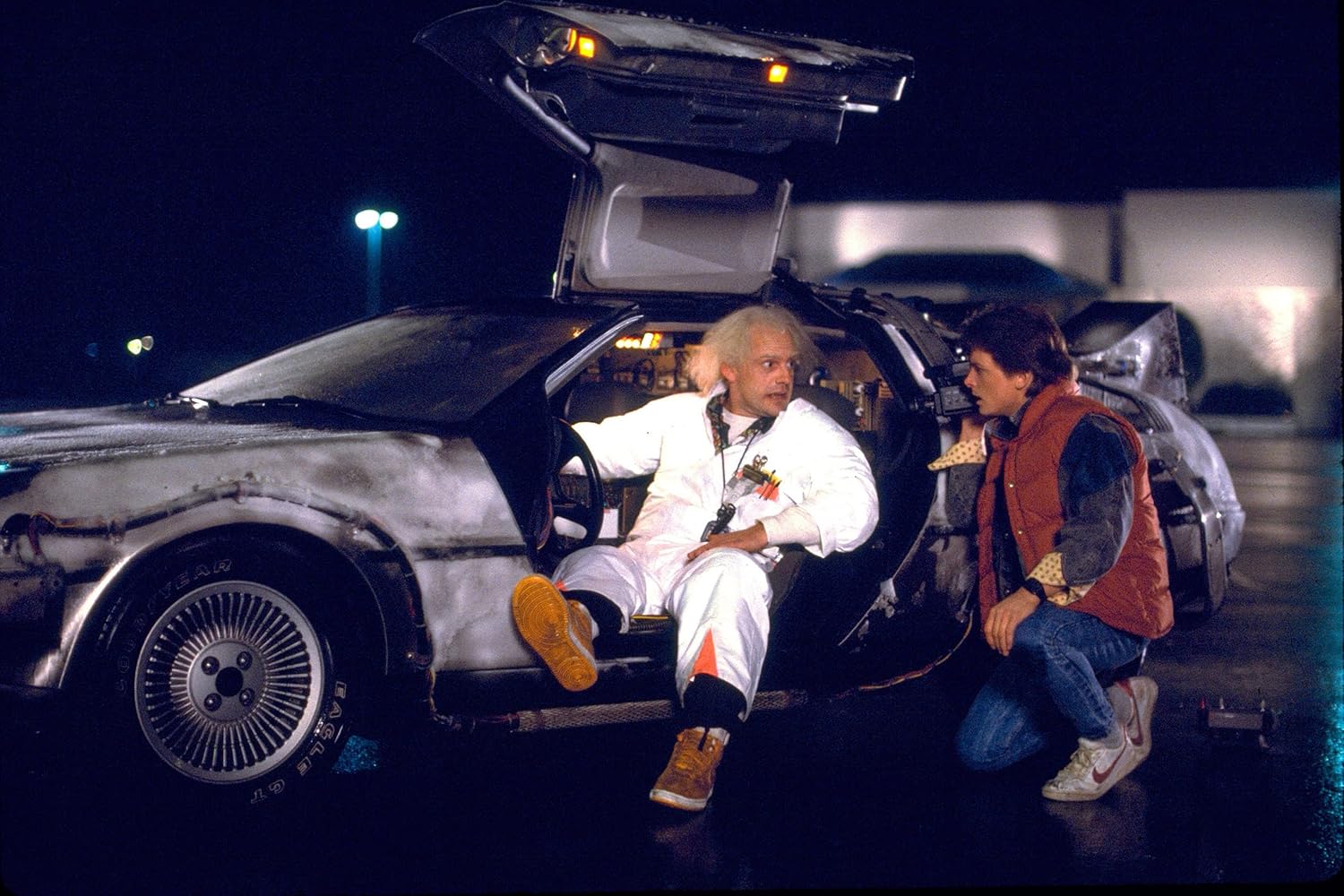
I had to take a day trip to Penang by semi-luxury express bus recently from my home in Subang Jaya near Kuala Lumpur which was five hours each way. The bus was installed with media entertainment akin to what your can find on airliners. After exhausting the current/latest hits of movies on offer, I decided to rewatch the classic 1985 sci-fi, “Back to the future” (BTTF).

The first time I partially watched BTTF was in 1986 when I worked in a summer camp tucked in the Pocono Mountains of Pennsylvania, USA as the baker’s assistant. But, as the film was shown to the campers, naturally workers like me who had to bake some cookies for the campers did not get to watch the entire film.

It was sometimes in the late 1980s when I was working on my doctoral studies in Belfast that I had the chance to fully watch this action-packed, cleverly-plotted sci-fi aired on one of the TV channels. This film was the first of a series of 3 that was produced and I watched them all. The best, as far as I am concern is still the first BTTF.

I found this sci-fi one of the best scripted shows I have ever watched. If you watch all 3 films in the BTTF series, you will be impressed by the way all the plots seem to be seamlessly weaved and intertwined together.

In this festive season, I think I should put up a small quiz for my readers on BTTF. I promise to publish the answers in my next posting! Enjoy the challenge!

(NO CHEATING, Go watch the movie, do not Google these questions!)

Quiz

  1. What is the name of the band engaged to play in the Enchantment Under The Sea dance in Marty’s school in 1955? _________________.
  2. Doc Emmet Brown of the 1950s did not believe that Ronald Regan was the President in 1985. Who did he mention as (a)  the Vice President?  __________________  ? (b) The Secretary of the Treasury _____________?
  3. When Marty bumped into his dad, George McFly of the 1955 at Lou’s Cafe for the first time, what did George order?   _____________________________.
  4. Why band members could not get Marty out of their car boot/trunk after Biff Tannen pushed Marty inside it? _________________________________________.
  5. What did Lorraine Baines (Marty’s “future” mother) say when she kissed Marty for the first time? ___________________________________.
  6. What was written on Marty’s sister T-shirt in the photograph of the three McFly siblings?  ______________________________.
  7. The band leader of called someone after hearing Marty McFly play “”Johnny B. Goode”. Who did he call? What was his relationship to this person? (a) ____________;  (b) ___________.
  8. What mischief did Marty get into when he was eight years old? _____________________.
  9. From 1955, what date and time that Marty originally set in the DeLorean car to travelled back to the future?  ____________________________________________.
  10. What are the names of Marty’s elder siblings?  (a) ______________ &   (b)  ____________.
  11. What are the names of Marty’s uncles and aunts?  (a)_____________; (b) ______________;  (c)___________________;  (d) _____________________________.
  12. What colour was Marty’s underpant when he time travelled back to 1955?  ______________.
  13. What were the parameters that the DeLorean car must meet before Marty could get back to 1985? (a) ____________;  (b) ______________; (c) ____________________.
  14. What was the name of the shop that Marty parked Doc Brown’s car just before he was supposed travel back to the future in the DeLorean car?  __________________________.
  15. When Marty finally managed to travel back to 1985, he found that things had changed. What was the name of the book that his father just published? _________________________.
  16. What was the name of the motel in the main street of Hill Valley?  ____________________.
  17. What was the actual date and time that Marty finally managed to return to the future?
    __________________________.

[The feature image is a combo sourced from:
http://en.wikipedia.org/wiki/Back_to_the_Future#mediaviewer/File:Back_to_the_Future.jpg
http://ecx.images-amazon.com/images/I/91mRbaBaGML._SL1500_.jpg
https://encrypted-tbn2.gstatic.com/images?q=tbn:ANd9GcS1xcMwC7aO66BbFbqi7iNZDqIWnUDsAMN22E5tQbnZ1oc5OIoT]

Compact Calendar for 2015 specifically for Malaysia

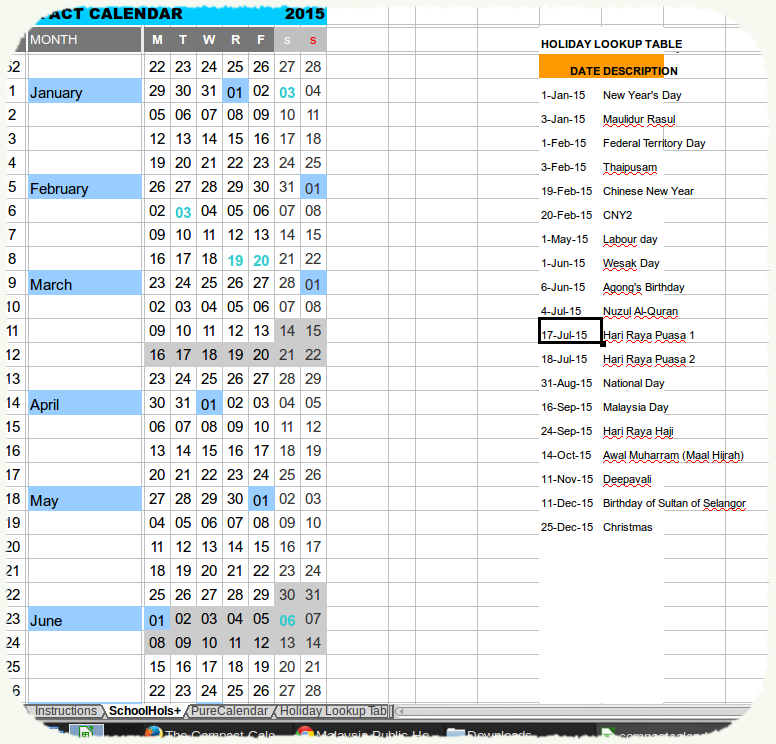
Get a full-year view from this compact calendar to help you plan events without worry of clashing with public or school holidays!

I have adopted David Seah’s creation, a one-page-view-all compact calendar since 2008. Every year, when the public and school holidays for the following year are announced, I will try to spend some time to update David Seah’s spreadsheet and come up with my own version, incorporating Malaysian school holidays as well as public holidays (National & Selangor, where I live).

This planning aid has been great for me whenever I needed to plan work. When I was the deputy principal of a private college, this compact calendar came handy for me to plan out the academic schedules etc. The week number on the first column and the public and school holidays (and we have lots of both in Malaysia) let you look at one view the issues etc. that will cloud anyone planning events, both private and officials.

For the benefit of my readers, I have done up two file format of the Compact Calender for 2015, a PDF version for those who live in Malaysia (especially Selangor state) where you can use the calendar as it is. The other version is .xlsx (Excel) which allows users to edit the file as they want. If you live in another state in Malaysia or if you want to create your own version (if you live in another country), the Excel version is there for you. Be prepare to fiddle with the sheets a little and read the instructions on the 1st sheet before doing any changes. Basically, if you are say, living in Singapore, you just have to edit the “Holiday Look Up Table”, the last sheet, making sure that the dates you put in are in fact 2015! The formulae/macro from David Seah will take care of updating the calendar automatically. You then just have to remove the highlight (in grey to facilitate printing on black and white printers) I made on Malaysian school holidays and cover the dates relevant to Singapore.

Don’t try to re-size the sheets, these have been optimized by Seah to print on one page. If you have a colour printer, it will be best. For wall-mounted version it will be best if you can print the compact calendar out on A3 paper and in colour. I find it just as good (for I have only a cheap b & w laser printer) to use a highlighter pen to go over the holidays which were shaded a bit too light when printed on b & w printer.

These files were in fact edited and created using LibreOffice, but it created issues when the file was saved in Excel file format. Hence you do need Microsoft Excel to open and edit the .xlsx version. I had tried uploading the file Google Docs, it also had some formula issues. It looks like we cannot do away with Microsoft Excel as yet!. However, my LibreOffice file format version works just fine if opened in LibreOffice!

I hope this Compact Calendar will take some pains out of your planning tasks! Please let me know if this compact calendar  proofs to be useful to you.

Please click this link to download Compact Calender 2015 for Malaysia – PDF version.

For the more adventurous, here is the Compact Calendar 2015 for Malaysia – Excel version.

[polldaddy poll=8472179]

The “cheap” in cheap hosting can be costly!

Don’t buy any web hosting or domain name registration till you have read this! You’ve been advised!

I have been playing around with pre-loaded scripts for various applications from my web hosting services for the last 3 years. One of the applications I use a lot is which is powering this blog is in fact WordPress. I also installed the e-learning platform, Moodle for me to put some of the courses I created or obtained from open source sites.

In fact, I was attracted to having my website and applications hosted by the promotion of Mochahosting which gave me 3 years of hosting for US$88.20 (RM299.88). The speed, performance and support provided by Mochahosting however leave much to be desired. Since I was paying something like US$2.45 (RM8.33) per month (and the price was guaranteed for the lifetime of my account), and I was just using it for playing around with the various applications that it has bundled, I was not too bothered by Mochahosting’s shortcomings. I have just renewed the subscription to Mochahosting for another 3 years, setting me back by US$88.20.

There are however many hosting service providers out there which are supposedly better in performance, speed and support. Many do give a very good deal that is similar to Mochahosting. I was attracted to one of these providers, Godaddy about 1 year ago. I was given a free domain name registration (for 1 year) with the hosting cost of US$72.06 (RM237.78). Imagine my shock when the next bill came a few weeks back, to carry on for another year, my hosting cost would be RM359.88 and add to it a domain name registration at full price of US$15.29 (RM51.99), the whole package would cost me US$121.14 (RM411.87)! This is 173.32% of my initial package! This makes the cranky Mochahosting look decidedly low cost in comparison, if I can tolerate living with its quirky service level. To make things worst, WordPress was the only active application I ran using the expensive Godaddy web hosting service.

My aim all along is to have my blog, “As I was Learning” easily found and always available to my followers. That rules out Mochahosting and I am not willing to be “suckered” by Godaddy’s comparatively high cost for my simple WordPress powered blog. I began searching and reading about alternatives and I found one, sort of.

It turns out that WordPress, via WordPress.com (as opposed to WordPress.org) provides a blog hosting service. It will, if you want to use your own domain name registered elsewhere (i.e. not via WordPress.com) allow you the option to map this domain to its free hosting for US$13.00 (RM44.20) a year. However, since I have not invested too much resources in promoting my blog’s domain name, this could be a bit expensive too as I would need to spend at least another US$15.29 (RM51.99) to renew registration of this domain name with Godaddy, making a yearly cost of around US$28.29 (RM96.19).

When I looked further into the various deals provided by WordPress.com, one was very attractive indeed. For US$18.00 (RM61.20) per year, I would be given a year of domain name registration plus the free hosting of WordPress.com. This is the very deal that this blog is sitting on. It did mean I had to abandon the initial domain name of my blog and use a new domain name, theplantcloner.com .

Those people who, like me have got used to having our own WordPress powered blog hosted ourselves would need to adjust a little bit when we switch over to the free hosting of WordPress.com. You will lose the use of all those wonderful WordPress plugin that make the platform a very customizable blog platform. You also no longer be able to use Google Analytics to do the deep probe into the performance of your blog. But WordPress.com’s in-built statistical analytical tool does give a broad analytics of your visitors, but it is far too crude for my liking. Limited customization is possible depending on which free theme that you have chosen. Then again there are paid themes that grant you more customization and features but these come with price tags that can range from US$18 – $150 (RM61.20 – RM510) making it probably worth your while hosting the WordPress blog elsewhere. But if you are like me, have a modest features demand, the US$18.00 (RM61.20) cost per year for having one’s own domain plus hosting is hard to beat.

Transitioning from an externally hosted WordPress blog to one that is hosted by WordPress.com is very simple. It is just a matter of backing up your content from the old site and reloading the content into WordPress.com hosting.

So the next time you are tempted by a “cheap” promotion on web hosting or domain name registration, you should look into the fine print to see how much the service provider will charge you from the time your contract is up (usually one year later). “Cheap” could turn out to be “expensive”! Remember, there is no free lunch in this world!

[polldaddy poll=8463559]

Studying in America: a young Malaysian’s story

Although I am very “British” in my academic “pedigree”, having spent nearly twelve years studying in the United Kingdom, the most enjoyable teaching experience I encountered as an academic was when I taught American Degree Program (ADP) in different colleges in Malaysia. The breadth of knowledge, relatively flexible learning paths and the communication skills of ADP students were the key influencing factors for me to advise my son, Leland to choose to study in the USA.

Leland started to prepare for his Scholastic Aptitude Test (SAT) when he started his Form 4, at the age of 16. We went to major bookstores in town to buy four SAT preparatory books which formed Leland’s main learning sources. He studied diligently on his own and by December 2011 he was ready to take his SAT. He managed to achieve a respectable SAT score which was well above the cut off point of many reputable US state universities.

When he was in Form 5 (the last year of senior high school), Leland and I started to plan his studies with various alternatives in accordance to our modest budget. We knew that our budget would not be able to fund him for a full four-years studies in the US despite the fact that many top ranking US universities give variable amount of financial aids to international students based on merits. Even if one could secure a full tuition fees waiver, the living expenses for full four years in the US would still be a substantial sum. We decided that Leland should enroll in a ADP at a local private college in Malaysia and we opted for the credit transfer route.

With a reasonably satisfactory Sijil Pelajaran Malaysia (SPM) examination performance (a public examination all high school students in Malaysia will take at their graduation year), Leland was fortunate enough to be granted a full scholarship by SEGi University to enroll in its ADP. Right into his second semester in ADP, we started our search for universities that were high enough in the various rankings but with total fees that we could afford. However when Leland wanted to apply to some of the “shortlisted” universities, we encountered our first hurdle. Our SPM certificate being written fully in Bahasa Malaysia would be required to be translated by officials in the Ministry of Education (MoE). Off we went to Putrajaya, (the Malaysian Government’s administrative city where the MoE is located) to get this done, a simple enough process especially if there have been many requests over the years for this translation service, but it took the MoE about 1 month to complete. Because of this, Leland had missed the deadline to complete his application to one of the universities he had applied to and forfeited the US$60 (RM194) application fee. Luckily we still managed to beat the deadline of the University of Nebraska-Lincoln (UNL). However, UNL’s total fees was above our budget and we decided that if he was not successful in securing a scholarship, Leland would apply to another US university with a lower expenditure. In late May 2013 Leland received his official acceptance by UNL with a Global Laureate Scholarship that would cover about 60% of his tuition fees and our budget is just enough to cover the rest of the cost.

The next step was for Leland to secure his US student visa. A very important document called “I20” would have to be issued by UNL and couriered to us. But before this could happen, I as the sponsor would need to show UNL the evidence that I had the fund which could cover Leland’s entire first year cost of US$39,343 (RM127,078).  He also needed to register to pay for the visa application fees of US$200 (RM646) as well as visa processing fees of RM528 (US$160, to be deposited in Standard Chartered Bank in Malaysia). It was another two weeks before an appointment with the US Embassy in Malaysia’s capital, Kuala Lumpur could be secured. In the mean time, we had decided on the choice and booked Leland’s accommodation at UNL. Leland had to fill in the bulk of the information for his student visa application online which was a good thing as it took him just a couple of hours (including waiting time) to secure his student visa. Only then did we contemplate sorting out his flights to Lincoln, Nebraska.

Although as a former deputy principal of a private college in Malaysia I had been personally involved in sending many of my students to the US, little of that prepared me to the kind of complicated processes, procedures and decisions which parents of US-bound students have to make with their children.

My advice to all students (and their parents) who are planning to study in the USA is to:

  • Plan at least one year in advance, watch for the deadlines for applications,
  • Plan to take tests like the SAT, Test of English as a Foreign Language (TOEFL) as early as the student is prepared. This will give the student time to re-take these tests if he/she needs a better score and lastly,
  • Have your funds ready.

If a student decides to take the ADP/credit transfer route via a local Malaysian college, he/she should make sure that the credit hours that he/she plans to study in Malaysia are transferable and he/she may need to adjust the timing of his/her transfer to the US accordingly. Thus I would strongly advise students and parents demand to see evidence of such credit transfer arrangements when they are on the “college hunting” trail.

Leland survived his arduous thirty two hours Journey to the West with 2 layovers and is adapting to life as a sophomore like ducks to the water. I hope he adapts to his studies just as well.

****************************************************

With so many decisions that students aspiring to study in the USA have to make, Dr. Chow’s advice is for them to plan with their parents very early on, preferably by the time they start senior high school (Form 4 in the Malaysian system). If any student or parent requires unbiased advising, Dr. Chow will be most happy to oblige, please click here for more details.

[polldaddy poll=8408606]

Knowledge: use it or risk losing it

No matter how much of an expert you are in an area, if you do not make use of the knowledge and skills acquired for a prolong period of time, sooner or later, as I had discovered about my knowledge of interpreting statistical analysis, you will find that you have lost these skills.

The best way to re-gain your knowledge is in re-learning and using this knowledge. You may, as I did, not only regain your old skills but pick up new skills (in using PSPP) as well!

[show_post_categories show=”category” hyperlink=”yes”]

[show_post_categories show=”tag” hyperlink=”yes”]

In late September 2014 I was chatting with a former colleague, WC who is a young chap working on his MBA project. Our Facebook conversation revolved around WC’s studies which led to his asking me to help him with the statistical analysis of his MBA project which I consented.

One thing I knew I would not be any better than WC. That is the use of the statistical package SPSS to do the number crunching. I have never used SPSS in my life. When I was a doctoral student back in the late 1980s, we had a rudimentary statistical analysis software that ran from the PC but for “serious” number crunching, we would need to key in the raw data into the minicomputer, the VAX.

In the world of the blind, the guy with one-eye is the king!

It was the early days of the PC era and we just saw these funny looking “typewriters” in the university library. It was the IBM XT personal computer, with 5 and a quarter inch magnetic disk drive. Ever the inquisitive soul that I was, through trials and many errors (including many attempts to learn how to save my work!) I managed to learn enough to use the PC for word processing and later data capturing using Lotus 1-2-3. By then more PC would be made available including one in my department. With some reading from a guidebook (that was the period before the era of Internet) I managed to learn how to export data from Lotus 1-2-3 delimited by commas which the VAX could understand. I no longer had to spend hours at the VAX terminal (and having to queue for it) but to do my raw data transcribing using the PC’s spreadsheet programme. When it came to analyzing these data, it would be just a matter of minutes for me to load in the pre-crunched raw data and obtain my statistical analysis within a few minutes. In the world of the “PC semi-literates” I was the “king” of the faculty. Even the computer technicians did not know how to export Lotus 1-2-3 data in comma-delimited text file and they referred many fellow researchers to me.

I was a sought after person for a while! Analysis of variance, T-test, Chi-square etc which I learned as an undergraduate in 1982 was something I understood well throughout my Master’s and doctoral studies. I even helped many fellow postgraduate students in analysing their research data. I also shared my knowledge with some of these guys who in turn were able to pass this skill along to others.

Learning to use PSPP, SPSS’s Open Source equivalent

Fast forward 25 years, when I thought of helping WC, I realised that learning to use PC-based statistical analytical software like SPSS would not be difficult. In fact I found an Open Source version called PSPP that works very well under my Linux-Ubuntu operated 7-years-old hand-me-down laptop from my son.

I used about 2 days to learn how to use PSPP and by the third day, I had familiarized myself enough of the basics to be able to import raw data from WC. I was also able to carry out most of the required statistical analysis using PSPP.

Losing knowledge that’s not used for a long time

However when I tried to make sense of the analysis churned out by PSPP, I suddenly realised that, after over 20 years of not using my core statistical analysis knowledge, I had to relearn how to interpret these results. My previous career as a commercial research scientist in Singapore in the early to mid 1990s did not necessitate the use of much in terms of statistical analysis. We were interested in finding out if a particular treatment work in multiplying good quality plants inside our test-tubes. We would have to move on without much resources to carry out statistically verifiable experiments on these studies. We were worried about the bottom-line. I was not allowed to publish any proprietary research work which had commercial implications. Thus for 20 odd years, I did not have the chance to use my knowledge of statistical analysis, hence my “losing” much of my former flair in this area!

Luckily, together with WC (plus the help of Google Search), I was able to regain the bulk of my knowledge in this area.  WC was happy with the discussion we had which I hope will lead to his getting a good grade for his MBA project. [footnote: WC passed his MBA shortly after this article was written]

Key lessons learned

There are two key take home lessons from this story:

  1. No matter how much of an expert you are in an area, if you do not make use of the knowledge and skills acquired for a prolong period of time, sooner or later, as I had discovered about my knowledge of interpreting statistical analysis, you will find that you have lost these skills.
  2. “Old dog” (a.k.a. yours truly) can still learn new tricks. In my case, I learned as much from WC as he did from me during our long discussion on how he should be analyzing his MBA project data and how he could interpret the statistical analysis.

The best way to re-gain your knowledge is in re-learning and using this knowledge. You may, as I did, not only regain your old skills but pick up new skills (in using PSPP) as well!

Killing your ad with poor music

Some movies have great soundtracks which help to them to sell well, especially the snippets of video and soundtracks used in the trailers.

Great soundtrack can save a “so-so” movie

Some movies on the other hand are very “forgettable” if not for their soundtracks. The classic example is 2001 – A Space Odyssey. The soundtrack, “Also sprach Zarathustra” is highly memorable and those who have watched the movie will, upon listening to this piece music quickly recall scenes of the movie. But aside from the theme song and a few scenes such as the “spinning wheels” space station scenes, I did not remember much of the storyline. But I can always associate Also sprach Zarathustra with the movie. This is the strong influence that a good soundtrack can have on a movie.

2001-space-oddesy

(Picture from : http://www.imdb.com/media/rm261462016/tt0062622?ref_=ttmi_mi_all_sf_48#)

Catchy jingles rule the day

The creative people making videos as TV commercials had discovered the power of a good jingle or key pieces of a soundtrack very early on. Those of us who were around since the 1970s would have been exposed to the theme song of Coca Cola, “I’d Like to Teach the World to Sing (In Perfect Harmony)”. Through the years Coca Cola’s advertising people have been producing these “jingle hit” songs. More than both the TV and cinema commercials, these Coke songs were the driving force of the message that Coca Cola wanted to convey to its consumers and conveyed they did.

How to spoil a good TV commercial with crappy soundtrack

There is a TV commercial by a health drink company which has been running for over a year or so in Malaysia which tries to promote the company’s chicken essence. The message that this company wants to put forward to the viewers is that this product brings vitality and energy to the users which work to increase their brain power so that the whole world will be at his/her hands. A very good idea with reasonably good video that tells the intended story. But the let down is the sound track.

Towards the middle of the commercial the tempo of the song was changed. I remember that the soundtrack for earlier versions of this commercial (both the English and Mandarin versions) was reasonably catchy and not out of tune. But somehow the commercial’s was altered. Now the soundtrack has deteriorated to the extent that from the middle part of the clip, the song is out of tune. To someone like me who has a good hearing, it is a torture listening to this commercial now. This is compounded by the fact that the same out-of-tune soundtrack is also used in the company’s radio commercials. The singer now sounds as if he is so lethargic after consuming this brand of chicken essence that viewers will get an unintended message: drink it and you will feel tired!  I will usually switch station when I hear this commercial while driving to avoid further irritation to my hearing.

I wonder why the people putting the commercial on air is not listening to their own advertisement! If they do, my guess is they are all tune deaf! I guess the people at the company that hires this particular advertising agency are all tone-deaf too!

This is a classic example of a good commercial being killed by a poor choice or poor quality of a soundtrack. Perhaps advertising agencies may want to consider hiring someone like me, with good hearing to evaluate their TV and radio commercials before these hit the airwaves?

Negative comments on social media ain’t that bad

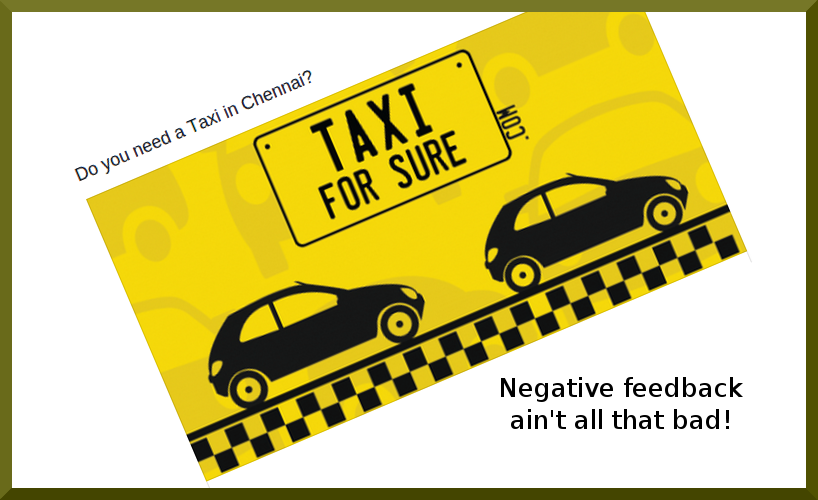
A recent posting by a social media marketer, Praveen Inbarajan on Linkedin describeed a scenario where a Indian cab company’s Facebook promo advertisement was bringing more than the cab company, TaxiForSure (TFS) bargained for: a deluge of negative comments.

Inbarajan went on to give a commentary on some of the more vocal feedback provided by Facebook users whom  the promo advertisement had targeted with good precision. While I agree with Inbarajan’s interpretation of the grouses of the respondents to TFS’s post, I feel that Inbarajan, as a social media marketer, missed the point of such feedback.

Negative feedback is not necessarily equals to bad public relation. No one, least of all a cab company with many drivers, can please every body all the time. The billion dollar question is, how TFS deals with these negative responses.

TFS could have deleted all the negative comments to “protect” its public image and we are none the wiser which fortunate for TFS that it did not. What has turned the tide in TFS’s favour is indeed it readiness to admit the errors as pointed out by the respondents and apologized. In my book, if I am not happy with a company’s services and complained there are three things I will be receptive to which will turn me from an irate respondent to a sympathetic listener:

(a) They apologize for the errors:

This will calm down most people with a grouse with the company’s services or products. It is the first step to resolve a customer relation issue.

(b) They (presumably after looking at the compliant) admit fault:

This will have the effect of defusing any explosive situation. However in some litigious business environment, admitting fault may have implications on compensation etc.  however, a company should always treat this as the first step to stop litigation. In most cases, the complainer just want to get heard. If you hear them out and ascertain the fact that they are right, you can, in most cases win them over.

(c) They offer some token redress to the complainer:

Most people who feel that they have been wronged by a company’s staff, services or products, will be very prepared to accept even token redress such as a Starbucks voucher, or discount coupons. This is because most people do not expect to receive any response from the company, let alone an apology (best from someone with seniority) and a token of appreciation. The good will generated from this gesture is worth many times the face value of the vouchers.

I think what is worst will be a situation where having put up a promo advertisement like TFS did, a company’s staff are not monitoring the Facebook post and respond to feedback in a timely manner. Timely means at most 3 – 4 hours after the comment is made, not three to four days! Wasting the promo ad cost is the least of the problems, giving negative impression to all those who have responded is worst.

I have a situation whereby my team put up a promo on a posting of a new property development project for a company and obtained over 90 responses, some asking to be contacted as these were clearly  prospective customers wanted more information. The RM90.00 (less than US$30) budget spent had created the kind of reach and engagement that we designed. I thought this posting and promo advertisement would have generated some good sales for the properties company. However, the lynch pin of the whole work was of course the timely and accurate engagement by the project owner, the marketing staff of this development project. No one from the marketing team bothered to take the effort to engage with the prospective customers despite desperate pleas from me. In short, no one took ownership for the campaign (except the poor social media guys). We had a situation that not only created negative vibes among the respondents but anyone else looking at the Facebook posting will have a negative impression of the company as a whole. This is the worst kind of social media nightmare compared to the one that TFS has to deal with!

After the above episode, I changed my operational principle: before I set up a campaign on Facebook for anyone, I would get the sign off from the senior manager to confirm that she/he would ensure that her/his staff would not only monitor the posting regularly, but put effort to respond to comments in a timely manner. I needed the buy-in for the whole campaign from the project owner, otherwise it would be no deal from me! This evidently has turned out to be a beneficial move. A social media marketing campaign is as effective as the campaign owner’s preparedness to engage directly, timely and effectively with the intended target audience. This is no rocket science!

Footnote: This article is contributed by Dr. Chow Yong Neng who for a period of close to 10 months was engaged fully with using social media to drive engagement and traffic to his employer’s news portal.