Author’s note: It took over 3 years, but I have finally completed the story on my remote graduation thesis supervision experiences. I thank my good friend and colleague, Dr. Xu Guang Ting for all his help in this endeavour. My gratitude to the leadership of Zhaoqing University for their exceptional decision of granting me the privilege to teach and supervise students online. Last but not least, I thank my 12 graduation thesis students for being good companions in this special learning journey. [As this is a rather long story, I have decided to publish the Chinese version中文版 separately.]
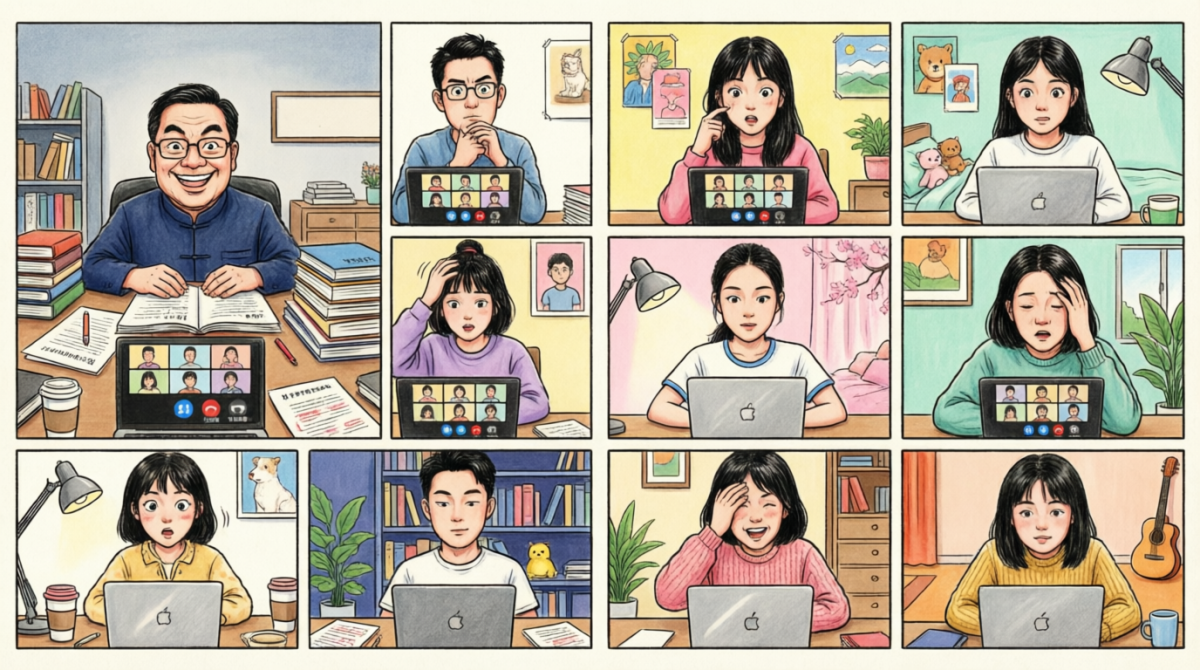
The length of this article prompted me to use Notebooklm (or Gemini Notebook now) to generate a video of the content. This is a sort of TLDR presentation.
On Campus Supervision of Graduation Thesis Students
When I started my teaching stint at Zhaoqing University in March 2019, I was not assigned any graduation thesis supervision duty. By August 2019, when I went back for the new academic year, five students—three from the teacher training classes (Bioscience) and two from the biotechnology classes—were assigned to me. As I had taught these students in different subjects (the Bioscience students were in two different Professional English classes taught by me; the biotechnology students were in my management and then later in my marketing classes), it did not take much for me to get the students to start the ball rolling. The only difficult parts were to find a common “free time” and a suitable venue to have our weekly meetings (as mandated by the University).
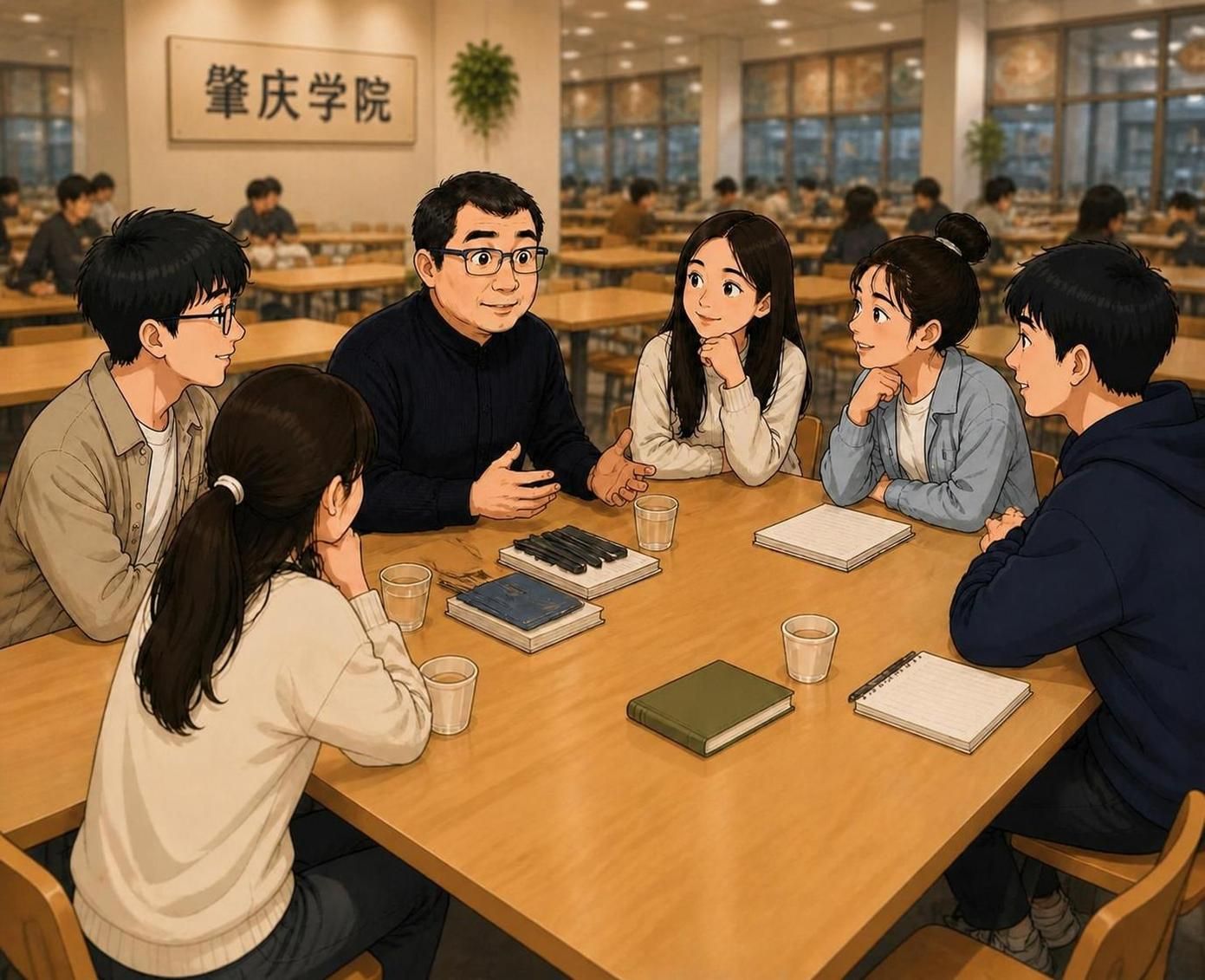
As I was not allocated any office space, and it was a bit too complicated to book a meeting room for the weekly meet-up sessions—and because my small apartment was too small to fit in everyone—I had to look for a suitable venue for our weekly meetings. I discovered a relatively quiet area at the far end of the 3rd floor of Dining Hall Number 4 of our campus which had a few large tables. I would therefore arrange weekly meetings at this venue where my wife and I would go for an early dinner around 5:00 pm, and the meeting would be set at around 5:30 pm. Finding a suitable time during the day was difficult as the students were from three different classes with their own differing timetables, making it very hard for me to find a common “free spot.” I also remembered the advice from one of my Taiwanese colleagues that we should, if possible, meet students within the campus to avoid unwanted problems.
As I did not have any laboratory and my area of research in plant science would take too long for results to be observable, naturally I had chosen to take an interest in other areas of biological science for possible research topics for the students. With the help and guidance of my Taiwanese colleague, Associate Professor Dr. Xu Guang Ting (许光廷副教授), I learned to use moxibustion as a TCM treatment for my broken wrist, which happened in April 2019, and I would like my students to focus on this area. Each student was given a different area relating to moxibustion to work on.
The weekly meetings went on for around 10 weeks; by then (November 2019), the students were getting busy with their preparation for their final examinations near the end of the semester (late December 2019/January 2020). Little did I know that my physical interactions with my students would end abruptly after January 2020, thanks to the COVID-19 Pandemic.
Remote Supervision and The Associated Issues
On January 14, 2020, I left China to return to my home in Malaysia for the winter break/Lunar New Year. With the onset of the COVID-19 Pandemic, I was, like all my Taiwanese colleagues who went home for the winter break, not allowed to return to our campus. By March 2020, the University leadership had decided (in accordance with the national guidelines) to re-open classes via online delivery. However, graduation thesis supervision was put on the back burner, but supervisors were still trying to keep in touch with our students and check on their progress. The semester went by quickly as online teaching came with lots of issues that took a lot of effort on the part of both learners and teaching staff (as well as the technology team at the University).
By August 2020, the authorities in China opened the border selectively; my Taiwanese colleagues were allowed to return (but all who entered China were subjected to a long quarantine period). Sadly, as a Malaysian, the border remained closed to me! At the same time, students were allowed back on campus, but everyone had to adhere to strict COVID-19 prevention procedures. I was also given special permission by the leadership of Zhaoqing University to continue teaching online, and this meant graduation thesis supervision would continue remotely, too. Dr. Xu Guang Ting, who had yet to be assigned graduation thesis students, volunteered to be the co-supervisor for my thesis students. He arranged to meet up with the students regularly. By then, one of the Bioscience students had obtained a one-year break from her studies (she would continue in the next academic year), and hence I was left with four thesis students. By mid-semester, all third-year students were to embark on a six-week internship in the field of their studies. The two Bioscience students were in the teacher training stream; naturally, they were assigned to schools. While Li Min (LM), who was working on the effects of moxibustion patches, was sent to a city school, Xiao Ming (SM) was assigned to a rural school with poor communication facilities. The two Biotechnology students were also assigned internships in biotechnology firms (which by then, in the midst of COVID-19, were very keen to have these students). It was at this time that SM appealed to me to change the topic of her graduation thesis to that of rural students’ life science education to reflect her internship situation, where she could benefit most from the rural education environment. As Dr. Xu, who studied traditional Chinese medicine as a side interest, was very keen to see the results of LM’s work, and LM, being at a city school, had no problem communicating with both Dr. Xu and myself via WeChat. The same could not be said about SM’s situation. The rural school where SM was attached was very remote with a poor internet connection. As a rural trainee teacher, SM was surrounded by young primary students most of the time. She had to find a quiet spot with a reasonable internet connection and away from her students’ distractions to communicate with me via WeChat at all times.
The Disappearing Act of the Duo Biotechnology Students
Towards the end of November and early December 2020, all students on internships were to return to the campus to continue their studies. However, I received a message from Dr. Xu that the two Bioscience students’ attendance at his meetings was good, but the same could not be said about the two Biotechnology students who each only attended one meeting session in September 2020 with Dr. Xu and did not turn up for even a single session after that. They ignored all attempts by Dr. Xu to contact them. On my end, I also sent out many WeChat and QQ messages to these two Biotechnology students to report to Dr. Xu, but they did not comply. I also enlisted the help of the two Bioscience students to physically find and convey Dr. Xu’s and my messages to the Biotechnology students (both SM and LM confirmed that they had seen them on campus). These two Biotechnology students just refused to comply.
In early October 2020, my University had introduced a graduation thesis monitoring and management platform (VGMS platform 维普论文检测系统) on a testing phase. I was allowed to check this out. The VGMS platform tracks students’ and supervisors’ inputs and allows monitoring and appraisal of the students’ work as well as the decisions and inputs of the supervisors by the respective deans and senior academics. The systematic and time-sensitive procedures for the various stages of the thesis preparation and submission would mean that both students and supervisors would be forced to adhere to the schedule decided by the University to ensure timely and orderly completion of this academic process. However, for the Spring 2021 graduation thesis session, the use of VGMS was optional, on a trial basis only with a full implementation in the following academic year being considered.
In early December 2020, after many failed attempts (by myself, Dr. Xu, and the two Bioscience students) to get a response from the two Biotechnology students, I finally issued an ultimatum to the pair: “Either you make contact now (with me or with Dr. Xu) or else I will register a ‘fail’ grade for you both!” And I also asked the Bioscience students to verbally convey this message as well. One would have thought that any student who wanted to graduate would immediately spring to action. But not this pair of Biotechnology students. They continued to ignore the final warning. I then had no choice but to formally inform them that they had “failed” their graduation thesis. {The final submission of their thesis was not due until late April/early May 2021}.
In February 2021, out of the blue, I received a WeChat message (followed by a QQ message) from one of my Biotechnology thesis students. These messages were followed by a few more from the second Biotechnology student. The pair were anxious and desperately wanted to contact me. I made it very clear to them that, as far as I was concerned, they had failed their graduation thesis. I was busy preparing for the start of the Spring semester in March 2021. Dr. Xu informed me that at that stage, it would be best for me to supervise the two Bioscience students myself, with him backing me up in any administrative work related to thesis supervision. I was happy that both thesis students were progressing well. LM had already done the bulk of the fieldwork—getting volunteers from among female staff and students to try putting moxibustion patches at the “sanyinjiao” (三阴交) pressure points and recording their responses. SM, on the other hand, was busy collecting survey responses for her thesis work.
Data Collection and Statistical Analysis
In preparation to teach a Biostatistics class to Biotechnology students I had taught myself some fundamentals of R language from August to November 2020 (and learning R language helped me to relearn the subject better). From SM and LM I learned that all Bioscience students also took a course in Biostatistics which was similar to the one offered to Biotechnology students. In addition, all students had to attend classes on thesis preparation (which was taught by other colleagues). Hence, I had no issue with my supervisees’ background knowledge of statistical analyses. However, tackling the tasks of analyzing and, more crucially, interpreting the statistical analyses of the data collected would be much tougher to accomplish effectively unless, of course, one’s major is in statistics (or related fields). Thus, I took it upon myself (with my basic knowledge of R language) to analyze all my supervisees’ raw data. At the onset I set out to optimize the data collection method of both SM and LM so that we could render an easier path to import the data into R for analysis. We used Excel to do some of the raw data crunching and data cleanup, and I used R language to perform the required statistical analyses for both students. I also guided them with the interpretation of the statistical analyses. We used VGMS to help us keep to the timeline at all times.
The Resurfacing of The Pair of Biotechnology Students
May 2021 was a tense time for both graduating students and their thesis supervisors. This was because of the need to finalize the thesis, submit the work accordingly, and prepare for the defense of the thesis. Defending the thesis was perhaps the hardest part for most graduating students. More so if your thesis supervisor could not be physically present during the crucial 20-30 minutes of your presentation and question-and-answer session. Although the “hand-holding” work was done well by Dr. Xu, who was present at both SM’s and LM’s thesis defense sessions, I felt that my absence would dent the students’ confidence. In 2021 it was too complicated to do a Tencent Meeting session during the presentation and defense sessions of my two students. Missing these was a regret that I feel even today. I was elated to hear from Dr. Xu later that LM sailed past her thesis defense, while SM only needed some minor corrections.
Prior to the thesis presentation and defense sessions, all supervisors were obligated to be graders of theses from students other than their own. As an academic staff of the Biotechnology division of the School of Life Sciences, naturally, I was assigned to grade a great number of theses from Biotechnology students. My biggest surprise was to come… the theses of the two Biotechnology students whom I had failed were among the work that I had to grade. To be fair to all students whose work was graded, the University provided graders with a marking scheme that we were to adhere to rigorously. What surprised me most was how my two “failed” thesis students managed to work so fast on their theses (SM and LM took 3-4 months to gather the data and 3 months to get to the final submission stage). As both of these two “failed” Biotechnology thesis students worked on topics within bioinformatics (and there were other students submitting theses in the same field that I had to grade), I had to dig deep into my knowledge of bioinformatics (and read up a lot to catch up with the subject) in order to grade the students’ work effectively. When I compared my “failed” Biotechnology students’ work with the others, it was clear that the depth and breadth of their work were not on par. Nevertheless, I had to adhere to the marking scheme provided to me. After a thorough review and comparison with the work and grading of the other students whose work was on bioinformatics, both my “failed” Biotechnology students managed to scrape through but with a lot of comments and further questions from me. Interestingly, I was informed by Dr. Xu, who happened to be present during the pair’s presentation and thesis defense sessions, that both of them were thrown off guard by a few basic questions from an examiner. Nevertheless, the examination committee did finally decide to pass the duo. Dr. Xu later learned that the pair wanted to change the topics of their thesis but did not consult anyone formally until I had failed them! If they were to have their intention clearly explained to Dr. Xu (or yours truly) early on, we would have had no issue in releasing them.
In view of the experience I had with my two Biotechnology students, I filed a formal request to my University to implement the VGMS in the next cohort. I was happy to learn shortly later that my suggestion was accepted by the leadership. The implementation of the VGMS meant that in the next cohort, we would spot the “runaway thesis student” early, and interventions could be effected swiftly and timely. Moreover, data of all the steps and stages of the thesis preparation and submission process would be held on record where monitoring by various assigned senior academic staff would be effected to ensure adherence to procedures, quality, and timeliness (in the completion of tasks by both supervisors and students).
Learning from Past Experience Equals a More Systematic Supervision Regime
At the end of the Spring Semester of 2021, I was assigned (or rather randomly picked students from a ballot box, remotely via the helping hands of my colleague, the Academic Secretary of the School of Life Sciences) nine students (who all happened to be from the Bioscience field). The Bioscience student who took leave of her studies previously in 2020 was assigned to return to my supervision group. As there were still no signs of when I could return to China, I had made preparations to supervise all these students remotely. By then Dr. Xu had had his plate full with his own graduation thesis students, and it was inappropriate for me to burden him further.
For the next cohort of graduation thesis students being supervised by me, I decided that I should be more systematic in the initial workflow before the VGMS system took charge of the procedures and processes. I had implemented the following:
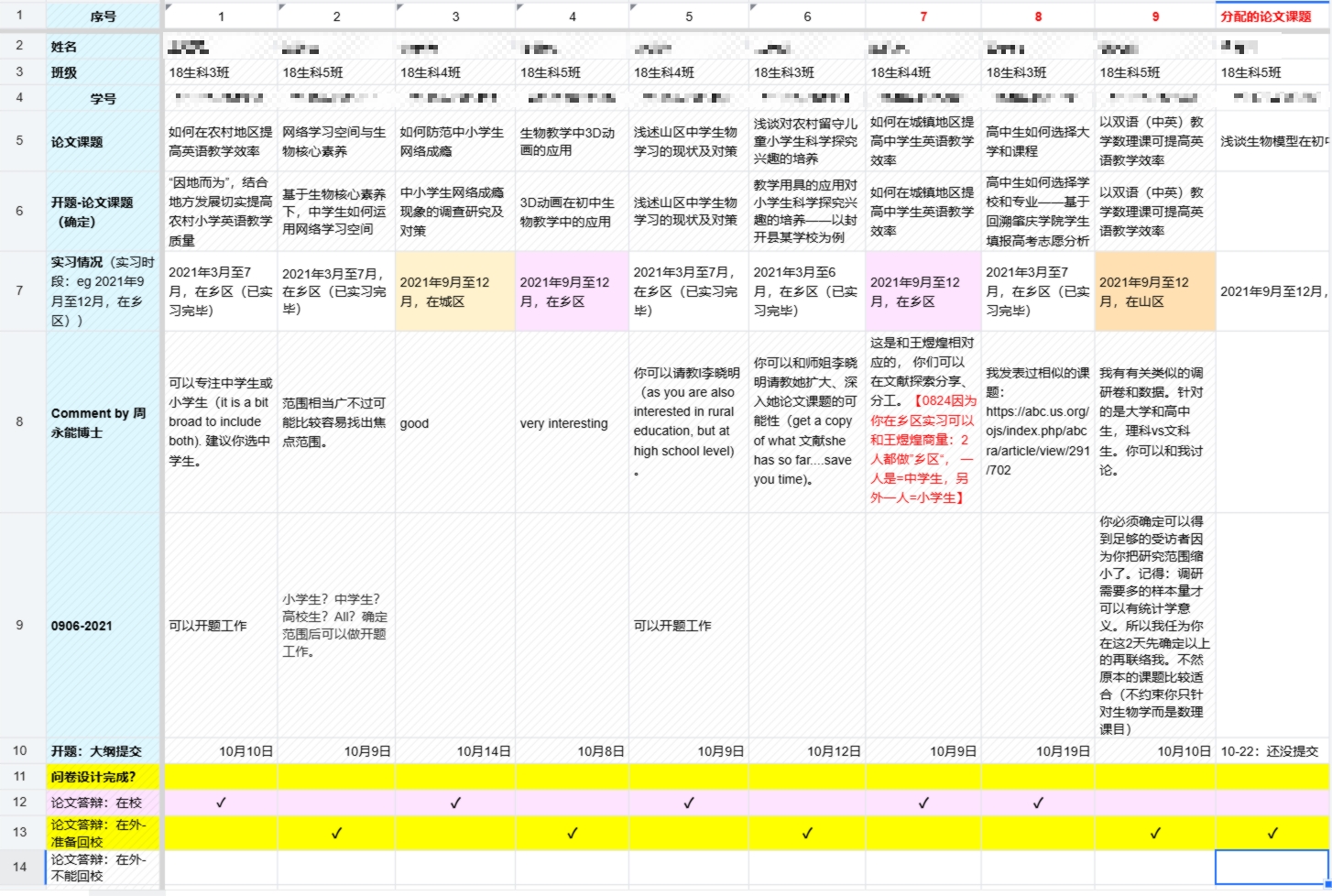
- All students were to indicate their topic of interest (if any) in an appropriate online form which was visible to all students. I had “seeded” the form with possible topics that students could choose, but they were free to propose their own topics (subject to my approval). The students were given a deadline by which they should register their intended topics, after which I would assign thesis topics to those who did not respond in time. By doing this, I was being pragmatic; a student would be more motivated if she/he was to work on a thesis topic that was of interest to him/her. In addition, the research topics would have to be vetted by the Head of the Department (of Bioscience), and his approval must be secured before a student could commence work. Of the 10 students, six picked their own areas of research (with my guidance to finalize thesis titles that were academically appropriate). The remaining four students elected to select their research topics from the list provided by me.
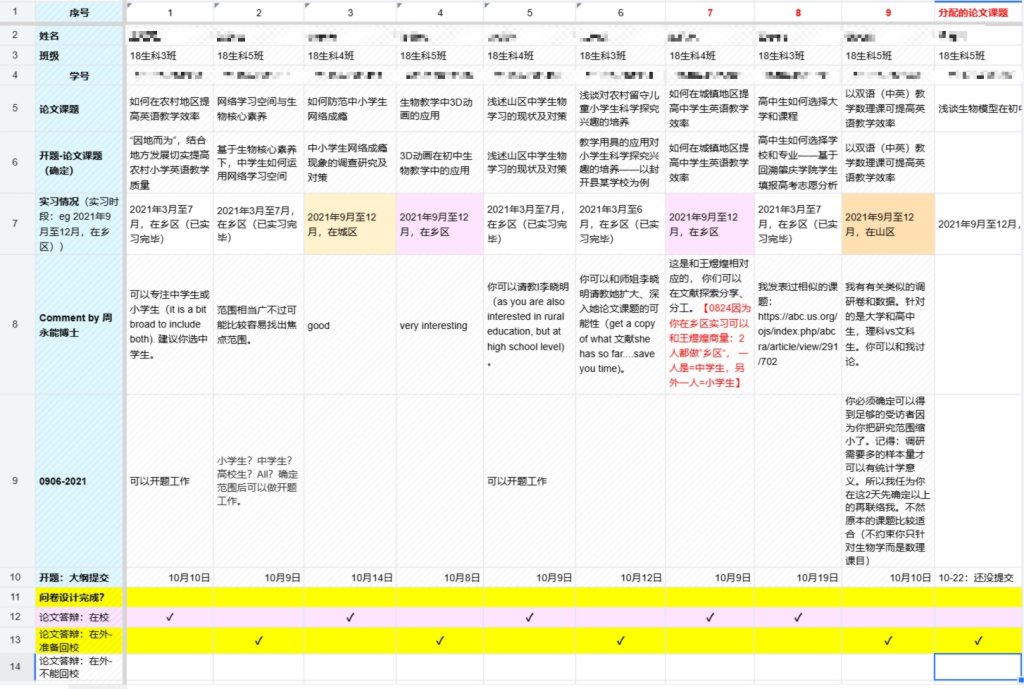
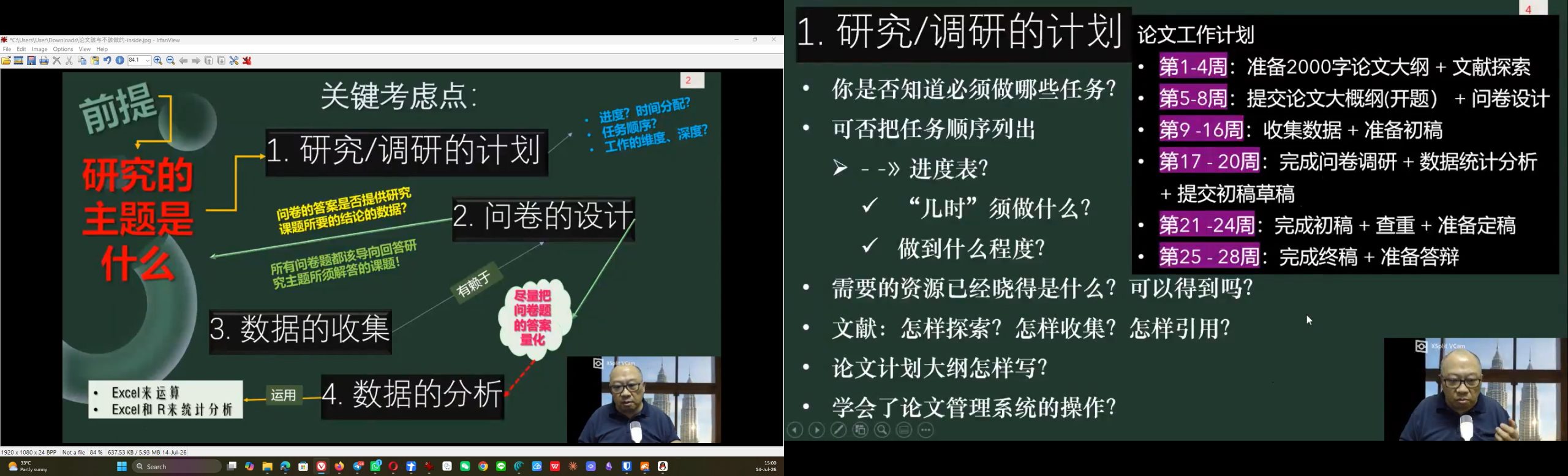
The “live” status form to track students - All my students were mandated to attend a special online lecture where I would (based on my experience with the previous cohort) spell out “what to do and what not to do” in the design of a research project, the data collection, the preparation of writing up, referencing, etc. In particular, I stressed the importance of quantification in survey-type research work. During this session, the supervisees also learned about the proper way to quantify their data and how to design effective data-capturing survey forms.
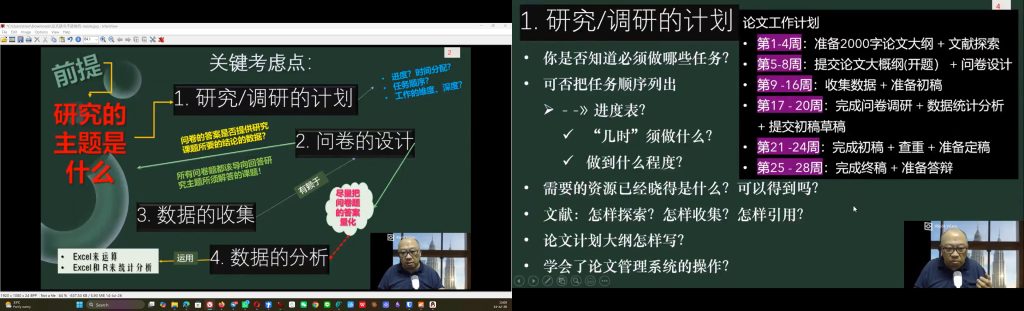
All students were mandated to attend this special “what to do and not to do” of graduation thesis preparation - I had set up a meeting schedule mapping the various deadlines in the VGMS system. All my students were obliged to attend and present any issues that they needed resolving. This was to make sure that the required work at each step of the thesis preparation process (as structured in the VGMS system) would be completed on time. Prior to each meeting, I would finalize my monitoring work on each student’s progress and use “peer guidance and support” to ensure that anyone slacking would be identified and assisted (if needed) by her/his peers. Through the “peer guidance and support” effort, I made sure that students working on overlapping or related topics could exchange references found and assist one another. Peer guidance and support was made easy as all my 10 students were from the Bioscience field. Although they were spread between three different classes, the students would have, at some point during their studies, encountered each other in different subjects or during student activities. I was also able to identify among the 10 one particular student who was most approachable and had good leadership qualities as the unofficial leader of my thesis supervision group. (It was this kind of support that I counted on heavily to keep the morale of my students up at the later part of the process).
Uneventful 2021-2022 Cohort?
Learning from the operation of the 2020-21 cohort graduation thesis supervision, I ran a relatively strict regime. Any student who needed to miss a scheduled meeting was obligated to seek prior permission from me, and she/he was to watch the replay of the recorded session and do the required tasks as assigned by me. Luckily for me, all 10 students I supervised complied with this requirement completely. As all my supervisees were Bioscience students training to be teachers, all the crucial steps/stages of the graduation thesis supervision processes came under the purview of the Head of Bioscience of my School. The VGMS system made it compulsory for supervisors to obtain the approval of the respective Head/Dean to progress their students. The most crucial of all, of course, was the topic of the graduation thesis of each student. In my supervisees’ case, there were three students whose thesis topics were in the teaching and learning of English, one was on internet addiction by students, and one was on how university students selected their field of major. The remaining five worked on topics related to the teaching and learning of life sciences. With all 10 members of my group obtaining the Head of Bioscience’s approval without any further comments, my supervisees and I commenced the hard work swiftly.
Next, to ensure my supervisees could collect data effectively, I paid a lot of attention to guiding them in the design of their data-capturing survey forms. This had the direct effect of allowing the collected data to be analyzed without too much data-cleaning work and ensuring that correct and useful data would be collected. I also made sure that the supervisees collected references that were relevant and from verified sources and shared these with me. I also stressed the prime rule of any thesis work: avoid any form of plagiarism. I went on to share ideas on how to cite others’ work in one’s thesis. I also cited examples of pitfalls that the students should avoid and gave several examples of “good citation work” of their seniors for them to emulate. In addition, I demonstrated how one could effectively and efficiently integrate and synthesize knowledge, viewpoints, and conclusions by compiling key findings of related published work and then constructing a table and commenting and drawing facts from the said table. The VGMS system had an effective plagiarism checker, and all submitted work would have to pass this hurdle before it could be accepted. My prior experience with VGMS’s plagiarism checker had prepared me well to tackle this task, which had floored many a graduation thesis student in the 2020/21 cohort. To facilitate the supervision work, I requested the students to update the progress tracking form that I had set up on their respective internship situations (whether they were on campus, in town, or at a rural location) on a regular basis. This was necessary as the 10 students did not have their internship at the same time, with some doing it earlier (from March – July 2021) and some much later (September – December 2021). The tracking form also allowed me to know, at the last stage of the thesis preparation process, the physical location of each of my supervisees. This was to ensure that every one of my supervisees would be able to attend his/her graduation thesis defense.
As with the 2020-21 cohort, in order to have verifiable, correct, and presentable statistical analysis, I took on the task of using R language to analyze all my supervisees’ data. But prior to the statistical analytical work, each student would have to “clean up” their dataset accordingly so that it could be imported into R language. I spent a good deal of time helping each student to interpret his/her statistical analysis. Surprisingly, the writing-up process for everyone was very uneventful, and the supervisees definitely had learned to write in the correct format as stipulated by the University. The VGMS system also guided my supervisees each step of the way and, where there were issues, these were identified early by me, and rectification by the student concerned was relatively painless (to the student). As the final deadline for submission of their graduation theses approached, naturally some students took the pressure in their stride, while one or two required some moral support and extra guidance. The “peer guidance and support” system set up by me kicked into action, where my supervisees were able to draw on each other’s experience, resources, and encouragement to overcome difficulties faced. This was very important to my group of supervisees as I was physically over 4,000 km away.
Although I was located in Malaysia, my School’s leadership had endeavored to help me in my role as an examiner of graduation thesis of my colleagues’ students. I was given electronic copies of the thesis to grade prior to the presentation and defense sessions. The Chairman of the graduation thesis examination board made sure that I could view all the students’ presentations online via Tencent Meeting (including my 10 supervisees’). However, it was rather taxing for me to hear and view these presentations live over prolonged sessions. Nevertheless, I was able to grade the relevant students’ presentations (except for my own students, which were graded by one of my colleagues) without any issue.
However, when a senior colleague, during the question-and-answer segment near the end of the thesis defense session, passed a comment to one of my students who worked on a topic related to the teaching and learning of English at schools, it sent a huge alarm signal to me (and my supervisees working on topics in this area). The senior academic was of the opinion that as a student of Bioscience, he would expect the student’s research work would have touched on some aspect of life sciences. In my supervisees’ cases, all their thesis topics were duly vetted by me and approved by the Head of Bioscience before they commenced work. As students of education, there was no reason why they could not concentrate their thesis work on the teaching and learning of English. However, academic etiquette dictated that I should not hold any debate with the senior colleague on this and to accept the criticism and do the necessary. I knew that the student working on “how students select their university and major” had no issue as she had, on hindsight, luckily canvassed a large number of her interviewees from the School of Life Sciences (hence the connection to life sciences was established). The other four students had to do extra data acquisition work to fulfill the requirement of “Bioscience element” in their work. This was the time when the leadership of the unofficial leader (who fortunately was not affected) was called upon to pacify and smooth the nerves of some of the affected students. Those who were not affected then rallied together and helped their affected peers to work on the preparation for their addendum. I felt a bit helpless, being 4,000 km away and only able to provide my encouragement via WeChat!
After a few days, all four affected students managed to comply with the “Bioscience element” and resubmitted their thesis. In the end, all my 10 students passed! One general comment from the panel of examiners was: all my supervisees’ data analysis and presentation were good! One colleague even asked my consent to read a supervisee’s thesis for ideas for further research.
Learning Points and Conclusion
Supervision of graduation thesis work can be effectively done remotely provided there are established systems, procedures, and guidelines to handle the various processes.
But the most important point, I think, is the learning and training within the entire graduation thesis work and processes that students have to go through. Embarking on the graduation thesis work requires the student to hone the following skills:
- The skills for strategic selection of a topic for the thesis: the student has to choose a topic of interest to him/her, balancing the reality of his/her internship environment to finalize a topic that not only is relevant to his/her interest but one that also falls into the field of expertise/interest of the supervisor. The critical and strategic thinking involved in this very first step of the graduation thesis work trains students to use all their accumulated skill sets for self-reflection, negotiation (with each other to avoid overlapping of topics), and communication (in this case via electronic means) with the supervisor to convince him of the appropriateness of their final topic selections.
- The skills involved in organizing the graduation thesis work: the students have to be the project managers of their own projects. Although the VGMS platform provides an effective way for supervisors (and senior academic staff) to monitor students’ progress through all crucial steps, it is up to the student to organize and execute the required work in a timely manner. The students are their own “quality assurance managers” in that they are responsible for adhering to the University’s guidelines in producing thesis work that is up to the required standards and doing so in accordance with the timeline as specified by the VGMS system.
- The ability to capture relevant data in a format that is statistically analyzable: the students must think through (with the guidance of the supervisor) an appropriate format of data capturing that would allow them to engage and communicate with respondents of their surveys. That means they need to work out suitable questions as well as answer selections that could render data to yield statistically meaningful results. The prep-talk session given by the supervisor was just the essence of the thesis preparation course, biostatistics, and writing skills course that the students had taken. The students individually must be able to translate the knowledge of these various sources into the final survey data capturing form that is actionable. Although the number-crunching statistical analyses were done using R language by the supervisor, the students needed to have the fundamentals of biostatistics to comprehend the output from R and interpret the results accordingly (guided by the supervisor).
- The skills to compose the final submission: although the VGMS system and the University’s guidelines provided sufficient instructions for the composition of the final draft of the graduation thesis, the students must learn to write, to cite references, to extract and present results from the statistical analyses, and to synthesize new knowledge from their graduation thesis work. The drafting and re-drafting of the final version of the thesis compels the students to be attentive to details in order to comply with the required format. The communication back and forth between the students and the supervisor in the final preparation stage would really test the endurance of both students and the supervisor. This is more so when the supervisor could not be physically present and relied on WeChat and QQ as the conduits!.
- The presentation and debating skills to defend the thesis: it is very daunting for a student to stand in front of the panel of examiners to present and defend her/his graduation thesis. In my students’ case, the lack of a physical presence of their supervisor to provide the reassuring support (in facial expressions and body language) would have a negative impact on their morale. Hence, I think my students had to rely on “peers’ moral support“ in this context. Their disadvantage in this context might have the positive effect of training them to endure the associated pressure and stress which would prepare them better to face greater psychological challenges at work in the future.
In view of the importance of the acquisition of so many skill sets that the graduation thesis work confers, the University’s leniency in dealing with “runaway graduation thesis students” still baffles me. The lack of breadth and depth of the work presented by my two “runaway graduation thesis students” was evident enough that the duo could not produce work of sufficient standing within a “gestation period” of around one-third of the other students. In my humble opinion, in view of the skill sets that a properly executed graduation thesis work could confer (as outlined above), the academic penalty for such “runaway” cases has a lot of room for review.