[show_post_categories show=”category” hyperlink=”yes”]
[show_post_categories show=”tag” hyperlink=”yes”]
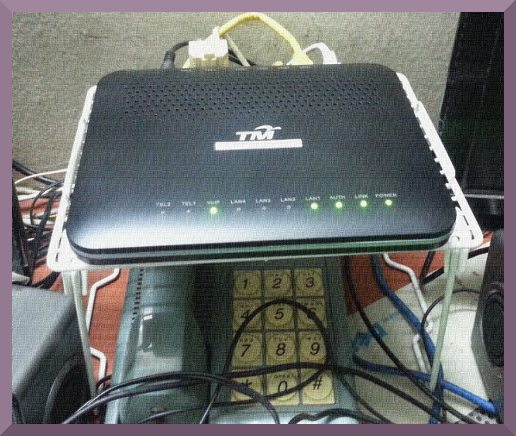
After a lot of considerations and patience with TM’s Unifi broadband internet service, the last straw snapped. After yet another “throttling & upgrade” ploy where we experienced a typical slow down of internet speed follow by another call to “upgrade to 50 Megabits per second (from 30 Megabits per second) for RM10 extra”, we made up our minds to switch.
What was stopping the switch
- Change of broadband provider necessitates a change in telephone number. But our landline only rings at most once a week! Hardly anyone will reach for any of us via our landline. We doubt most of our contacts even know our landline numbers! Thus the change of landline telephone number is no longer a consideration for us.
- The fastest (and cheapest, bit by bit) provider, Time dotcom may come to our residential area. I had contacted Time a few times, they could not say if their service will ever reach my part of USJ (they are at USJ 9 business centre already). Thus we would have to rule out Time as a potential replacement for Unifi. This leaves just Maxis Fibre. And Maxis Fibre did not get a good review when it was launched.
What favoured the switch
- Maxis Fibre has been giving a good promotion. For the same speed of 30 Megabits per second (Mbps), the price differential between Unifi and Maxis Fibre is RM40 per month. With a price guarantee of 24 months, compared to Unifi, we will be saving close to RM1,000.
- Unifi which forces subscribers to pay a minimum of RM25 extra for HyppTV that is devoid of good channels and hence not viewed by most “forced subscribers”. Thus this not only adds extra to Unifi’s bill but the bad taste felt by subscribers for being taken for a ride (as opined by this author before) is the driver that pushes us to switch. Channels being taken out suddenly with no replacements are the norm.
- Bouts of “throttling followed by offer to upgrade” became too frequent and this ploy got stale. We hardly get internet speed that is anywhere near the 30 Mbps that we have paid for.
- The poor customer service of TM Unifi with no-follow up after complaints by subscribers like us is another push factor.
Anyone wishing to switch will need to do so soon. I was informed by the Maxis people that this promotion will end soon .
Maxis Fibre’s deal… any good?
We are getting the same package of 30 Mbps speed as our previous Unifi package. The internet speed tests have always turn in a good result which ranged from 20 Mbps to 32 Mbps (Downloading) and 7 Mbps to 31 Mbps (uploading). Maxis Fibre essentially is riding on Unifi’s backbone for the “last mile” to the customers. The difference… it could be that Maxis Fibre is not as congested as Unifi.

We do not have to be forced to pay for any IPTV that we do not need. This together with the higher price for the 30 Mbps deal of Unifi means we are paying RM40 less (if we put GST as “zero rated” for both players).
We are still getting a landline. And unlike Unifi’s phone service whose landline phone calls are free only for landline-to-landline calls, Maxis Fibre gives us free calls to all networks, including mobile phones numbers. Thus Maxis Fibre subscribers like us will not have to pay extra if we use the landline to call mobile phones.
In addition (though we have not yet found out how to activate this service), Maxis Fibre gives us free subscription to iflix video on demand service.

So far, the internet speed is good. The router that came with the package gives both a 2.4 GHz and a 5 GHz wifi channel. But for some reasons, devices like our security webcams that need to be logged into the network at all times have issues with this router. Luckily we have another router for these devices to logged on to and this solved the problem.