
Evolution of sugar and starch reserves during acclimatization
|
|
Evolution of sugar and starch reserves during acclimatization |
|
Figs. 1 and 2 show the evolution of the main carbohydrates (starch, sucrose, glucose and fructose) in leaves of Spathiphyllum and Calathea shootlets during acclimatization. In Spathiphyllum (Fig. 1), which has a autotrophic metabolism at transplantation, net photosynthesis is high enough to sustain all the energy demands and any surplus was directly incorporated in starch. The starch reserves enlarged continuisly during acclimatization. |
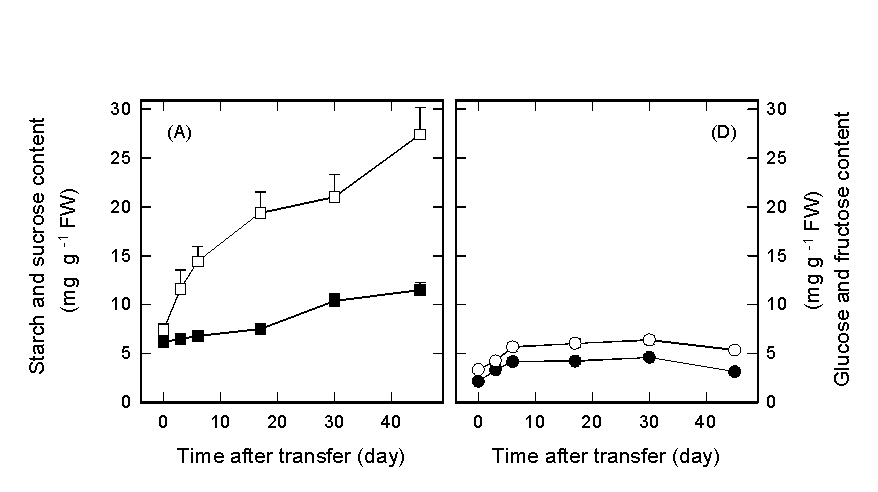
Fig. 1. Changes in carbohydrate
content during acclimatization
of Spathiphyllum (A) starch (open
squares) and sucrose (closed
squares) and (D) fructose (open
circles) and glucose (closed circles) content.
|
In Calathea (Fig. 2), with a mixotrophic metabolism at transplantation, no accumulation of starch was observed. On the other hand reserves of glucose and fructose were consumed during the first weeks. The mixotrophic leaves seem to act as sinks and storage organs during in vitro culture, and the accumulated reserves are used to overcome the initial stress period during which a transition from mixotrophy towards autotrophy occurs. |

Fig. 2. Changes in carbohydrate
content during acclimatization
of Calathea (A) starch (open
squares) and sucrose (closed
squares) and (D) fructose (open
circles) and glucose (closed circles) content.