Evolution of photosynthesis during acclimatization
|
|
Evolution of photosynthesis during acclimatization |
|
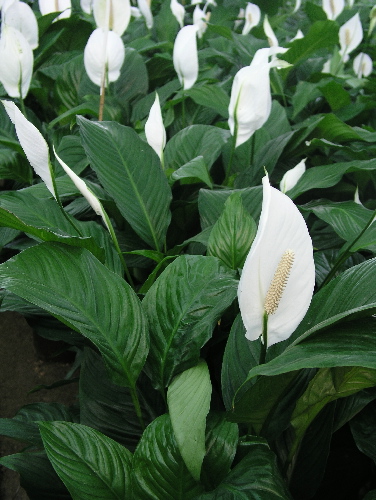
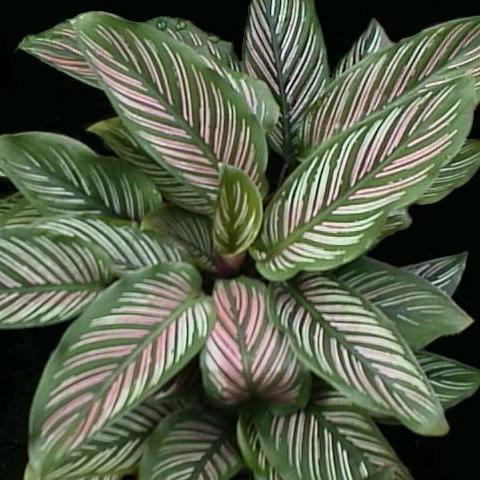
Directly after transfer to the greenhouse, tissue cultured plants have to develop a functional photosynthetic apparatus. Some researchers divided cultured plants in two distinct groups: one in which in vitro leaves never develop photosynthetic capacity when grown on a medium with sucrose, and one in which leaves are able to adapt to autotrophic conditions. In Fig. 1 the evolution of net photosynthesis and dark respiration for both in vitro and ex vitro formed leaves of Spathiphyllum and Calathea plantlets is followed during the acclimatization. Micropropagated Spathiphyllum plantlets are characterized by a positive photosynthetic response at transplantation (autotrophic plant), while Calathea is an example of a mixotrophic culture. In both plant species new developed leaves have a higher photosynthetic capacity. |
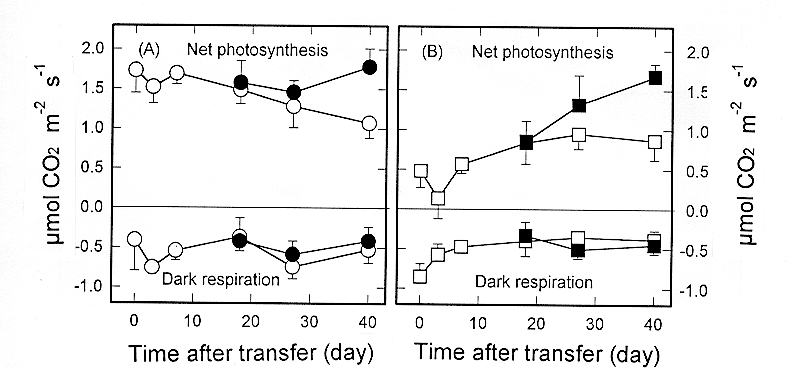
Fig.1. Dark respiration and net photosynthesis measured at 80 µmol m-2 s-1 (PPFD) during acclimatization of micropropagated (A) Spathiphyllum and (B) Calathea,for in vitro (open symbols) and ex vitro (closed symbols) formed leaves.
|
|
|
|
Chlorophyll a fluorescence analysis shows also clearly the difference between both systems (Fig.2). The Fv/Fm for Spathiphyllum plantlets at transplantation (0.77) is typically in the range of 0.75-0.85 for non-stressed plants, while the 0.66 for Calathea indicates a lower quantum yield of net photosynthesis. Quenching analysis reveals that in Spathiphyllum at day 0 most of the overall quenching is photochemical, which is typical for healthy leaves. Calathea plantlets show a preferential quenching by non photochemical mechanisms, typical for leaves in which energy conversion is suppressed. Conditions of excess light and limiting carbon metabolism induce this process. Directly after transplanting a decrease in Fv/Fm is observed in both plant species, indicating they suffer due to changes in environmental conditions. These observed changes were more pronounced in Calathea, compared to Spathiphyllum. After the initial stress period, plants recover during the second and third week after transplanting. In Calathea leaves a switch from mixotrophic metabolism to autotrophy took place, and this transition is evidenced by an increased photochemical quenching and a recovery of Fv/Fm . |
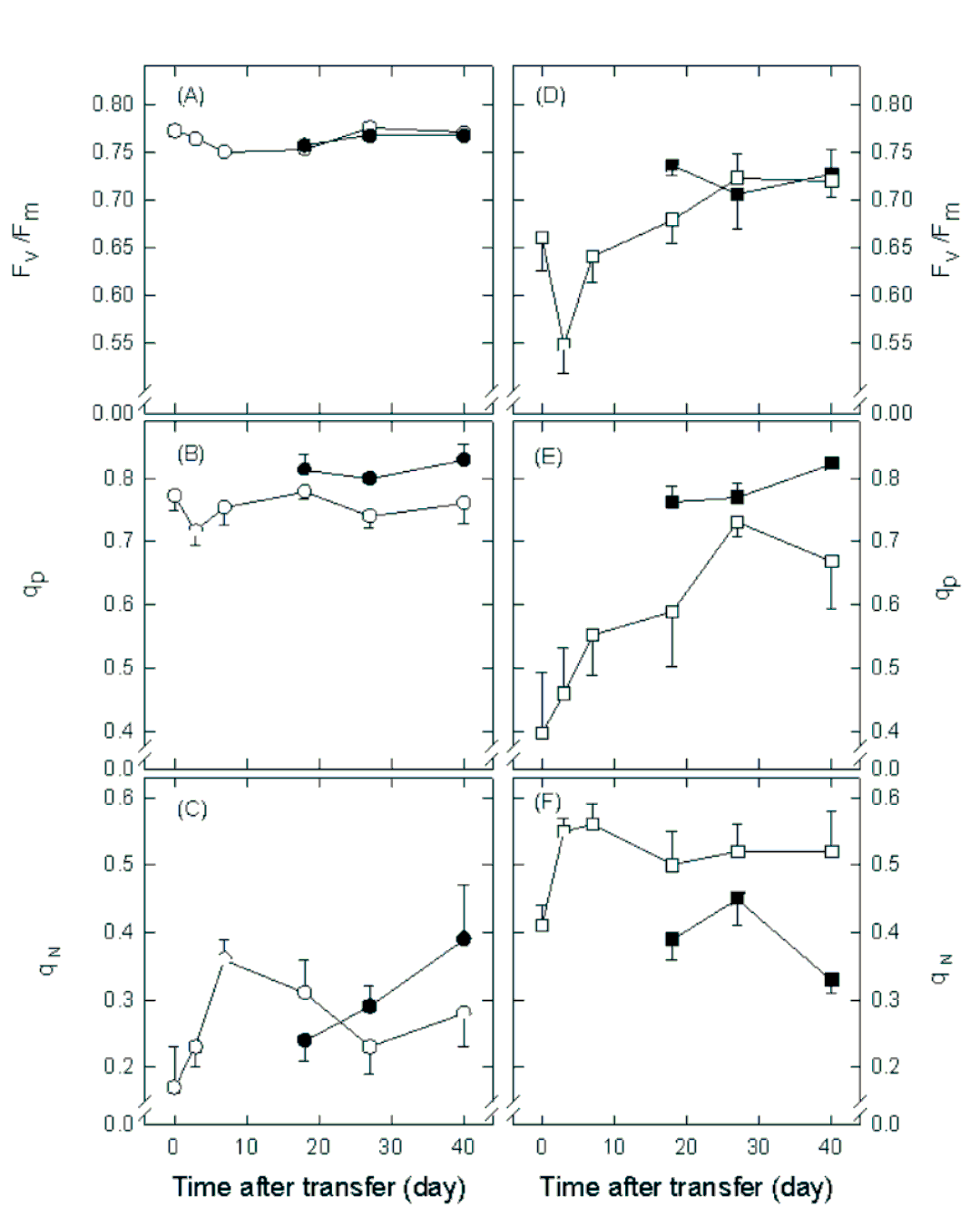
Fig. 2. Fluorescence parameters Fv/Fm
(A, D), photochemical quenching (B, E)
and non photochemical
quenching (C, F) during acclimatization of micropropagated
(A, B,
C) Spathiphyllum and (D, E, F) Calathea, for in vitro (open symbols)
and ex
vitro (closed symbols) formed leaves.