|
Differentiation |
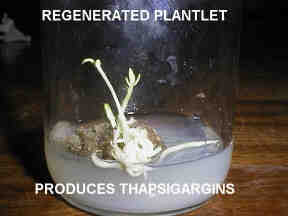
| In many callus and suspension culture systems it has been found that the cells do not produce the secondary metabolites found in the mother plant. However, when differentiation takes place, either shoot/root organogenesis or somatic embryogenesis, the differentiated tissues start producing the same secondary metabolites as the mother plant. |
|
Thapsia garganica:Thapsigargins, calicum-ATP'ase inhibitors,
|
Reasons for the lack of secondary metabolite
production in cell culture could be:
|