
Bioconversion
|
Bioconversion |
| Plant cell cultures contain enzymes that can carry out a vast number of reactions. In the plant enzymes will biosynthesize the secondary metabolites normally found in that particular plant, but in cell cultures it is possible to use the enzymes more creatively. The very important advantage cell cultures have over chemists is that cell cultures produce purely stereochemical compounds. |
| By feeding a precursor, often cheap and freely available, the yield of secondary metabolites can be increased. The precursor is converted using the same biosynthetic pathways as in the intact plant. However, sometimes cell cultures convert precursors into new compounds not found in the plant. |
| Another possibility is to feed a foreign compound to a cell culture. The cell culture might then use its enzymatic machinery to convert the compound to another compound. It could for example be a step in a chemical synthesis that is very difficult to do in the test tube, but easy to do for the cell culture with its powerfull enzymes. |
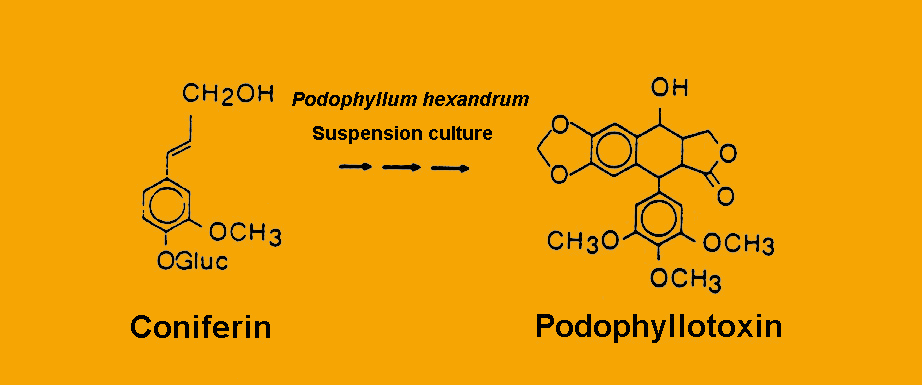
Example of bioconversion in cell culture: Coniferin is fed
to a suspension culture of Podophyllum
hexandrum and podophyllotoxin is produced. Podophyllotoxin is used to produce
anti-cancer drugs.