
Cytokinins
|
Cytokinins |
Cytokinins are N-6 substituted adenines that in conjunction with auxins bring about cell division in plants. Zeatin was the first natural cytokinin isolated. Kinetin and benzyladenine were first produced synthetically, but have recently been shown to be produced naturally in certain plant species. They are both widely used in tissue culture today. Cytokinins are mainly synthesized in plant roots from where they are transported to the shoots. They play a major role in shoot formation and organogenesis in tissue culture.
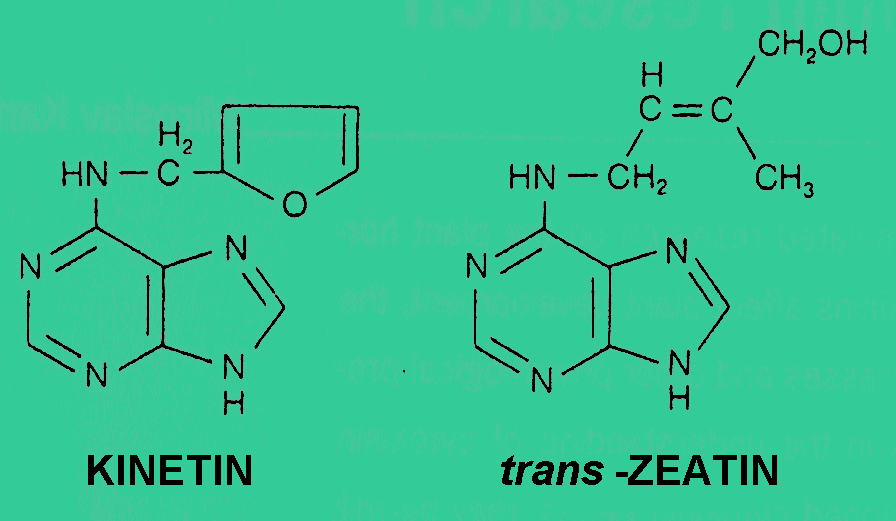
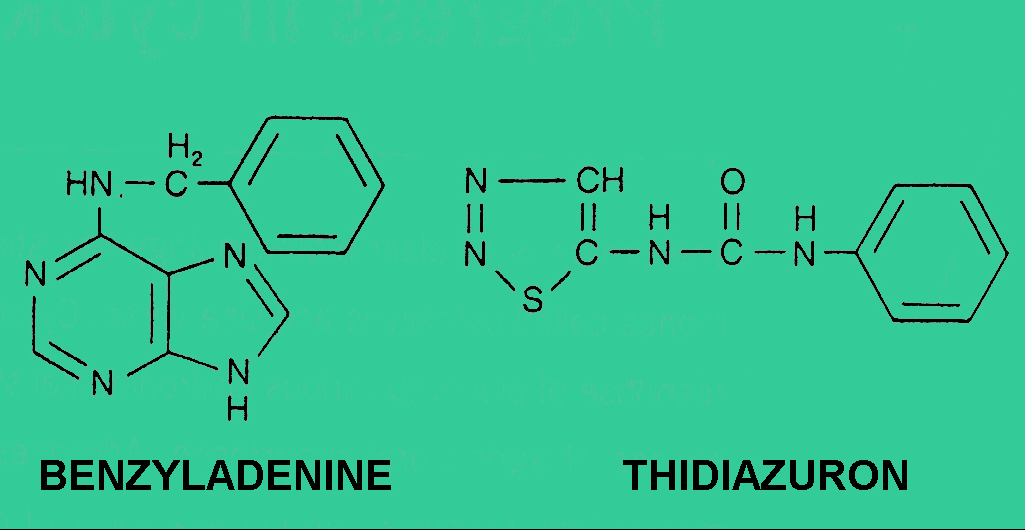
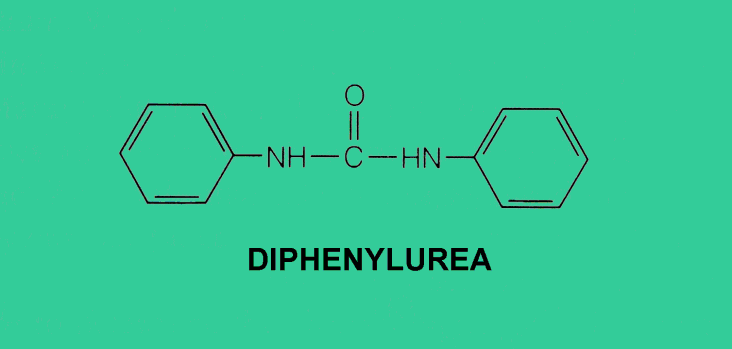
A number of synthetic cytokinins were developed following the discovery that diphenylurea (DPU) has cytokinin-like activity. DPU isolated from coconut milk is frequently used as an additive in micropropagation. Later it was shown that this was an artifact and that zeatin is the major cytokinin in coconut milk. This serendipitous discovery led to the development of a whole new class of cytokinin-like compounds of which thidiazuron is an important example. Thidiazuron (TDZ) is extensively used in tissue culture today. TDZ inhibits cytokinin oxidase and the resulting decrease in cytokinin metabolism leads to higher levels of cytokinins in the tissue culture.
| Cytokinins are commonly used to stimulate shoot initiation in culture as is shown by shoot/bulblet formation on bulb scales of Bowiea volubilis. Benzyladenine was used here to stimulate shoot growth. |
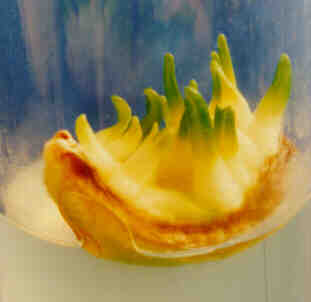 shoot/bulblet formation on bulb scales of Bowiea volubilis |