
|
Southern blotting |
| Southern blotting is a powerful tool used to study gene structure and confirm the integration of genes in transgenic plants. The chromosomal DNA is cut with one or several restriction enzymes. The resulting DNA fragments are then resolved according to size using agarose electrophoresis. The DNA in the gel is chemically denatured into a single stranded form then transferred to a membrane (nitrocellulose or nylon) using capillary action. |
| The DNA molecules are bound to the membrane forming a replica of the DNA on the gel. The membrane can be probed with the cloned gene or oligonucleotide (synthesized DNA). The probe is rendered into single stranded form through chemical or heat denaturation. The ssDNA probe will hybridize to specific molecules containing a complimentary sequence. The unbound probe is washed off the membrane and the bound probe can then be detected using radioactive or non radioactive colourimetric methods. |
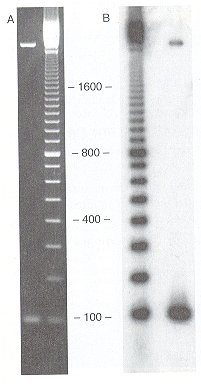 |
A - An agarose gel after electrophoresis of DNA fragments. The gel is stained with ethidium bromide and the DNA visualized under UV B - The membrane replica |
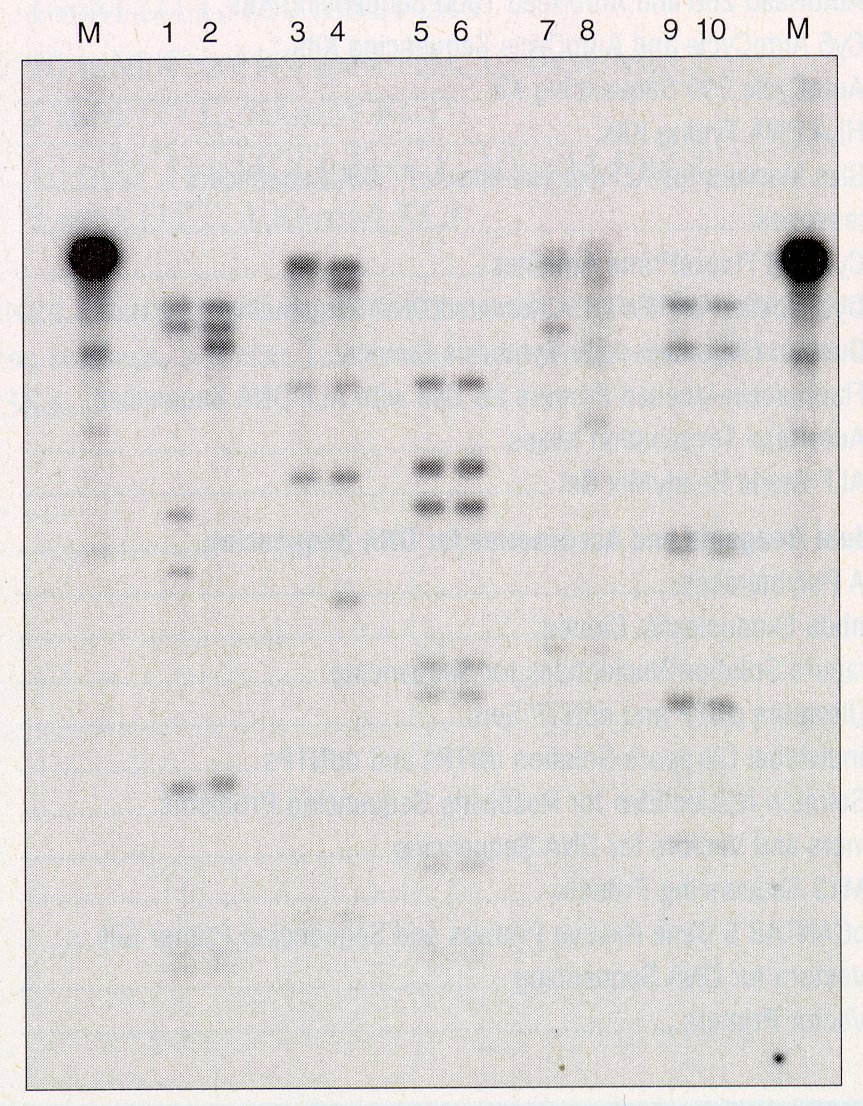 |
Probed blot showing genomic DNA digested with different restriction enzymes (RE) Lanes M - uncut genomic DNA from different varieties |