
Types of cells
|
Types of cells |
| Suspension cultures rarely consisted of single cells only. Most comprise of cell aggregates as well as free floating cells. Cells in the cell aggregates are This contributes to the lack of
|
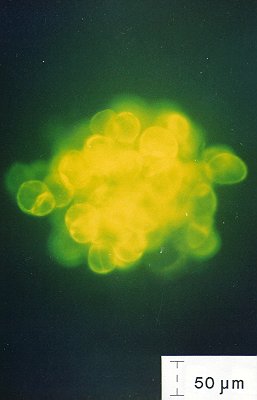
A typical aggregate of small, viable, |
 |
 |
 |
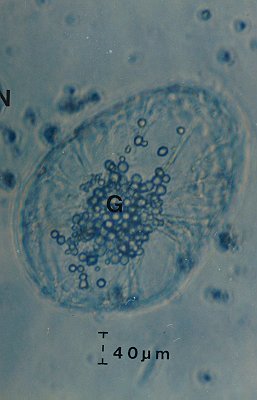 |
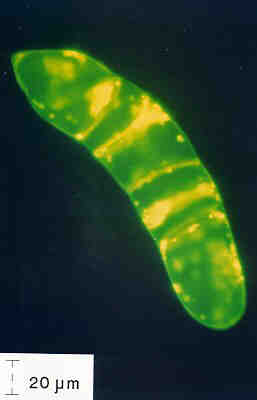
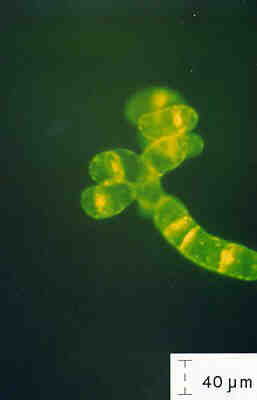
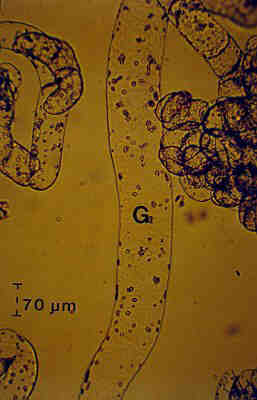
| A filamentous cell of a shoot cell suspension of Erythrina | A filamentous septated cell of a shoot cell suspension of Erythrina dividing actively at one end to form an aggregate | A giant filamentous cell (G) in a shoot cell suspension of Erythrina. Note the differnce in the size between the giant cell, the smaller generally occurring filamentious cells and the isodiametric cell. | A giant (G) and normal (N) isodiametric cell in a shoot cell suspension culture of Erythrina. |